 MinuteRead
30 min
Book summary
by Michael S. Malone
Premium summary · Opens in the app · 30 min read
Every great company has a founding myth. Apple has the garage. Hewlett-Packard has the Palo Alto house with the famous shed. Google has the Stanford dorm room. Intel's story is different. It begins not with poverty and scrappy improvisation, but with three men walking away from the most successful semiconductor company in the world because they believed they could build something better.
**Author:** Michael S. Malone
**Estimated Reading Time:** 45 minutes
**What You'll Learn:**
- How three radically different leaders built the most important company of the digital age - Why Moore's Law became more than a prediction: it became a corporate religion - How Intel's willingness to abandon its own successful products saved the company repeatedly - What Operation Crush reveals about winning markets before competitors understand the game - Why Intel's culture of "constructive confrontation" produced both brilliance and burnout
**Who This Book Is For:**
Anyone who wants to understand how great technology companies are actually built. Entrepreneurs who need to see what real leadership looks like under extreme pressure. Managers who want to learn how to build teams that challenge each other without destroying each other. Students of business history who want to understand how Silicon Valley became Silicon Valley. And anyone curious about the company that put the silicon in Silicon Valley.
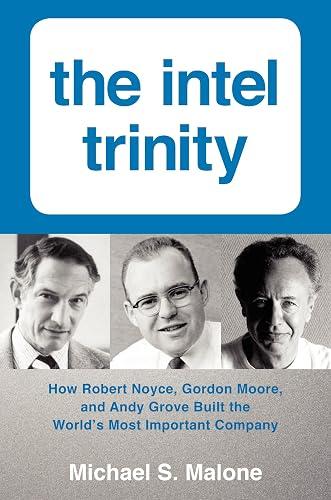
Every great company has a founding myth. Apple has the garage. Hewlett-Packard has the Palo Alto house with the famous shed. Google has the Stanford dorm room. Intel's story is different. It begins not with poverty and scrappy improvisation, but with three men walking away from the most successful semiconductor company in the world because they believed they could build something better. The year was 1968. Robert Noyce and Gordon Moore were already legends. They had co-founded Fairchild Semiconductor, the company that had essentially created the modern semiconductor industry. Noyce had co-invented the integrated circuit, one of the most important inventions in human history. Moore had articulated a simple observation about transistor density that would become the most famous prediction in technology. They were wealthy, respected, and at the top of their field. And they were miserable. Fairchild had become a victim of its own success. The parent company in New York treated the California operation as a cash cow rather than a source of innovation. Promotions went to East Coast executives who didn't understand the technology. Stock options that had been promised to key employees never materialized. The culture that Noyce and Moore had built was being dismantled by distant corporate overlords who saw semiconductors as just another product line. So they left. And they took with them a young Hungarian immigrant named Andy Grove, a chemical engineer with a PhD from Berkeley who had been Noyce's assistant at Fairchild. Grove was not famous. He was not wealthy. He was intense, demanding, and brilliant in ways that complemented his two more celebrated partners. The company they founded would go on to become the most important technology company of the twentieth century. Not the most glamorous. Not the most beloved. But arguably the most consequential. Intel's…
Continue reading in the MinuteRead app
Get the complete 30-minute summary of The Intel Trinity
Get the complete summary in the appGreat companies are built by great teams with complementary skills, not by lone geniuses.
Moore's Law became a self-fulfilling prophecy because the entire industry believed in it and invested accordingly.
The microprocessor was invented almost by accident, for a calculator. Transformative innovations often emerge from munda
Operation Crush won the microprocessor market by focusing on the total system solution, not just the chip.
The IBM PC partnership established Intel as the dominant player in the most important computing platform in history.
Exiting the memory business was painful but necessary. The willingness to let go of the past creates space for the futur
"The Intel Trinity" is a strong fit if you want practical ideas around business, technology, biography, especially themes like great companies are built by great teams with complementary skills, not by lone geniuses; moore's law became a self-fulfilling prophecy because the entire industry believed in it and invested accordingly. The MinuteRead summary distills these concepts into a focused read, whether you're deciding whether to buy the book or applying its lessons at work.
Motivated to help readers with "Intel was a start-up company, Michael S. Malone wrote “The Intel Trinity” to package those ideas for a fast, focused read. In “The Intel Trinity”, Michael S. Malone focuses on "Intel was a start-up company. Through “The Intel Trinity”, Michael S. Malone distills the core ideas on business into lessons readers can absorb in a single short sitting. Readers turn to this work when they want Michael S. Malone's perspective on the subject without working through the ent…
Continue Reading
Access the complete 30-minute summary and thousands more nonfiction books in the MinuteRead app.

Continue reading the complete summary in the MinuteRead app.






