 MinuteRead
30 min
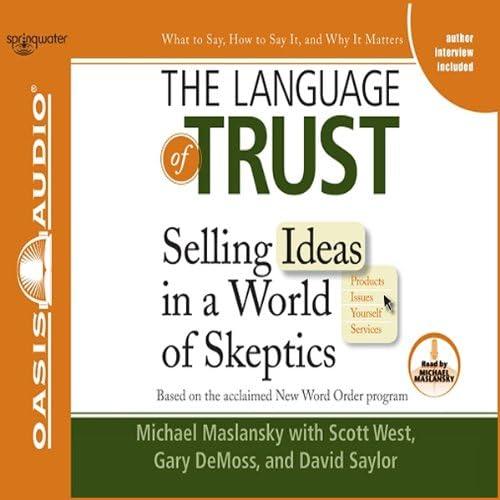
Book summary
by Michael Maslansky
Premium summary · Opens in the app · 30 min read
There was a time when people believed what they were told. When a company said its product was the best, consumers nodded and reached for their wallets. When a politician made a promise, voters gave them the benefit of the doubt. When a doctor recommended a treatment, patients followed the advice without question.
**Author:** Michael Maslansky **Estimated Reading Time:** 45 minutes
Why people no longer believe what you say, how skepticism became the default setting of modern life, and what you can do about it. This book reveals the specific language patterns that either destroy or restore credibility in a world where trust has become the scarcest resource.
Anyone who must persuade others: executives, salespeople, marketers, healthcare professionals, financial advisors, nonprofit leaders, politicians, and anyone who has ever wondered why their message fell flat despite being factually correct. If you communicate for a living, or if communication determines whether you succeed, this book is for you.
There was a time when people believed what they were told. When a company said its product was the best, consumers nodded and reached for their wallets. When a politician made a promise, voters gave them the benefit of the doubt. When a doctor recommended a treatment, patients followed the advice without question. That time is gone. We now live in what Michael Maslansky calls the post-trust era. It is a world where skepticism is not an occasional reaction but a default setting. Where people assume ulterior motives before considering honest intentions. Where the phrase "trust me" produces the opposite of its intended effect. Where facts alone are no longer persuasive because the audience questions not just the facts but the person presenting them. The evidence of this shift surrounds us. A global survey by Edelman found that 77 percent of consumers refuse to buy from companies they distrust. That number would have been unthinkable a generation ago. But today, it barely raises an eyebrow. We have become accustomed to disappointment. We have been burned by corporate scandals, political spin, misleading advertising, and institutional failures. We have learned, through repeated experience, that the people asking for our trust are often the least deserving of it. The consequences of this shift extend far beyond consumer behavior. Companies find themselves targets of regulation and criticism even when acting with good intentions. A well-designed 401(k) auto-enrollment program, intended to help employees save for retirement, gets rejected because workers assume the employer must be benefiting somehow. A hospital's life-saving work gets overshadowed by impersonal language that makes patients feel like case numbers rather than people. A financial advisor's sound investment advice gets dismissed because the jargon sounds like a smokescreen. The old rules of communication no longer apply. Stating facts does not convince skeptics. Relying on authority does not impress them. Positive claims invite suspicion rather than acceptance. The very strategies that worked for decades have become liabilities. This book offers a different approach. It argues that language is the key to rebuilding trust. Not spin, not manipulation, not clever messaging…
Continue reading in the MinuteRead app
Get the complete 30-minute summary of The Language of Trust
Get the complete summary in the appSkepticism is the default. Assume your audience doubts you and communicate accordingly.
Start with the audience. Answer "What's in it for me?" before anything else.
Be plainspoken. If they cannot understand you, it is your fault.
Be positive. Focus on benefits and solutions, not fears and problems.
Be plausible. Acknowledge flaws rather than claiming perfection.
Engage before discussing. Find common ground before making arguments.
"The Language of Trust" is a strong fit if you want practical ideas around business, self help, psychology, especially themes like skepticism is the default. assume your audience doubts you and communicate accordingly; start with the audience. answer "what's in it for me?" before anything else. The MinuteRead summary distills these concepts into a focused read, whether you're deciding whether to buy the book or applying its lessons at work.
Motivated to help readers with 1) Welcome to the Post-Trust Era: Skepticism is the New Default 2) Language is the Key to Rebuilding Trust 3), Michael Maslansky wrote “The Language of Trust” to package those ideas for a fast, focused read. In “The Language of Trust”, Michael Maslansky focuses on 1) Welcome to the Post-Trust Era: Skepticism is the New Default 2) Language is the Key to Rebuilding Trust 3). Through “The Language of Trust”, Michael Maslansky distills the core ideas on business into l…
Continue Reading
Access the complete 30-minute summary and thousands more nonfiction books in the MinuteRead app.

Continue reading the complete summary in the MinuteRead app.






