 MinuteRead
30 min
Book summary
Premium summary · Opens in the app · 30 min read
Every leader eventually confronts the same frustrating reality: having the right answer is not enough. You can possess flawless logic, compelling data, and a meticulously constructed argument, yet still watch your message fail to land. People nod politely, return to their desks, and continue doing exactly what they were doing before.
**Author:** Stephen Denning
**Estimated Reading Time:** 45 minutes
**What You'll Learn:**
* Why stories work when facts and directives fail * Eight distinct narrative patterns for different leadership challenges * How to craft stories that spark action, build trust, and transmit values * Practical techniques for taming rumors and navigating uncertainty * A systematic approach to becoming a more persuasive leader
**Who This Book Is For:**
Leaders who need to inspire change, managers who struggle to get buy-in for new ideas, executives who want to build stronger organizational cultures, and anyone who has ever watched a well-crafted presentation fall flat despite having all the right data.
Every leader eventually confronts the same frustrating reality: having the right answer is not enough. You can possess flawless logic, compelling data, and a meticulously constructed argument, yet still watch your message fail to land. People nod politely, return to their desks, and continue doing exactly what they were doing before. Stephen Denning discovered this truth in one of the world's most analytically rigorous institutions: the World Bank. Surrounded by economists, data analysts, and development experts, he found himself trying to communicate a vision for organizational change. The traditional approach would have been to assemble reports, create presentations, and build a case based on evidence. But Denning discovered something unexpected. When he began telling a simple story about a health worker in Zambia, people leaned forward. They asked questions. They remembered what he said. And eventually, they acted. The problem with conventional organizational communication is not that it lacks intelligence. It is that it lacks narrative. Human beings are not primarily analytical machines that process information and make rational decisions. We are storytelling creatures who understand the world through narrative. We remember stories. We feel stories. We retell stories. We are moved by stories in ways that bullet points and spreadsheets can never achieve. This presents a challenge for leaders. Most leadership training emphasizes analysis, strategy, and decision-making. These skills matter, but they are incomplete. A leader who cannot tell a compelling story is like a musician who understands music theory but cannot play an instrument. The knowledge is there, but the ability to move an audience is missing. The deeper problem is that organizational life has become increasingly complex and fast-moving. Change initiatives fail at alarming rates. Employees report feeling disconnected from leadership. Customers struggle to understand what companies stand for. In this environment, the old tools of command-and-control management and information dissemination no longer work. People do not want to be told what to think. They want to be invited into a narrative that helps them make sense of their world. Storytelling offers a way forward. A well-chosen story can bypass resistance,…
Continue reading in the MinuteRead app
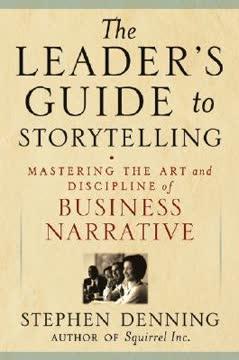
Get the complete 30-minute summary of The Leader's Guide to Storytelling
Get the complete summary in the appStories engage the whole person: emotions, imagination, and intellect. Facts alone cannot achieve this.
Match the story to the objective. Different situations require different narrative patterns.
Springboard stories ignite action by showing what is possible, not arguing for what is necessary.
Identity stories build trust by revealing who you are and what you stand for.
Values are transmitted through stories, not statements.
Collaborative storytelling builds trust, psychological safety, and shared understanding.
"The Leader's Guide to Storytelling" is a strong fit if you want practical ideas around business, leadership, communication, especially themes like stories engage the whole person: emotions, imagination, and intellect. facts alone cannot achieve this; match the story to the objective. different situations require different narrative patterns. The MinuteRead summary distills these concepts into a focused read, whether you're deciding whether to buy the book or applying its lessons at work.
Stephen Denning is an author and management consultant known for his work on leadership, storytelling, and organizational change. He has written several books on these topics, drawing from his extensive experience in various leadership roles. Denning gained significant insights during his tenure at the World Bank, where he discovered the power of storytelling in driving organizational initiatives. His work focuses on how narrative techniques can be applied in business settings to inspire, motiva…
View all summaries by Stephen DenningContinue Reading
Access the complete 30-minute summary and thousands more nonfiction books in the MinuteRead app.

Continue reading the complete summary in the MinuteRead app.






