 MinuteRead
30 min
Book summary
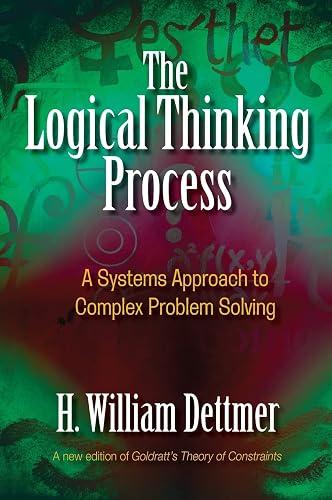
by H. William Dettmer
Premium summary · Opens in the app · 30 min read
Most organizations are drowning in problems they cannot seem to solve. They hire consultants, launch improvement initiatives, adopt new technologies, and reorganize departments. Yet the fundamental issues persist. Quality remains inconsistent. Delivery dates slip. Costs climb. Employees grow cynical about yet another program that promises transformation and delivers disappointment.
**Author:** H. William Dettmer **Estimated Reading Time:** 45 minutes
**What You'll Learn:**
- Why systems thinking is the foundation of effective management - How to identify the one constraint limiting your organization's performance - The Five Focusing Steps for continuous improvement - How to use logical tools to solve complex problems systematically - Why policy constraints matter more than physical ones - How to measure what actually drives organizational success
**Who This Book Is For:**
Managers and executives frustrated by improvement initiatives that fail to deliver lasting results. Engineers and analysts seeking structured approaches to complex problems. Change agents who need practical tools for navigating organizational resistance. Anyone who suspects that their organization's biggest obstacles are invisible, self-imposed, and entirely solvable.
Most organizations are drowning in problems they cannot seem to solve. They hire consultants, launch improvement initiatives, adopt new technologies, and reorganize departments. Yet the fundamental issues persist. Quality remains inconsistent. Delivery dates slip. Costs climb. Employees grow cynical about yet another program that promises transformation and delivers disappointment. H. William Dettmer wrote The Logical Thinking Process to address a simple but profound question: why do so many well-intentioned efforts to improve organizations fail? The answer, he argues, is not that managers lack intelligence or dedication. The answer is that most managers lack a systematic way of thinking about their organizations. They see problems as isolated events rather than symptoms of deeper structural issues. They apply solutions to the wrong parts of the system. They optimize local performance while degrading the whole. They treat human resistance to change as an obstacle to overcome rather than a predictable response to be managed. Dettmer builds his work on the foundation laid by Eliyahu Goldratt, the physicist who developed the Theory of Constraints. Goldratt's insight was revolutionary in its simplicity: every system has a constraint, and improvement efforts should focus on that constraint. But Goldratt's work, as powerful as it was, left many practitioners asking a critical question: how do we actually identify the constraint when the system is complex and the problems are tangled together? This is where Dettmer's contribution becomes essential. He recognized that the Theory of Constraints needed a rigorous set of thinking tools to complement its philosophical insights. The Logical Thinking Process provides those tools. It offers a structured method for moving from a vague sense that something is wrong to a clear understanding of root causes, from root causes to effective solutions, and from solutions to successful implementation. The stakes are higher than most people realize. Organizations are systems, and systems behave in counterintuitive ways. Actions taken to improve one part of a system often harm the whole. Policies designed to solve problems often create new ones.…
Continue reading in the MinuteRead app
Get the complete 30-minute summary of The Logical Thinking Process
Get the complete summary in the appEvery system has a constraint that limits its performance.
Improving non-constraints does not improve the system.
Most constraints are policy constraints, not physical constraints.
Identify the constraint before taking action.
Exploit the constraint before elevating it.
Subordinate everything else to the constraint.
"The Logical Thinking Process" is a strong fit if you want practical ideas around business, management, leadership, especially themes like every system has a constraint that limits its performance; improving non-constraints does not improve the system. The MinuteRead summary distills these concepts into a focused read, whether you're deciding whether to buy the book or applying its lessons at work.
Motivated to help readers with deming maintained that real quality improvement isn't possible without profound knowledge, H. William Dettmer wrote “The Logical Thinking Process” to package those ideas for a fast, focused read. In “The Logical Thinking Process”, H. William Dettmer focuses on deming maintained that real quality improvement isn't possible without profound knowledge. Through “The Logical Thinking Process”, H. William Dettmer distills the core ideas on business into lessons readers c…
Continue Reading
Access the complete 30-minute summary and thousands more nonfiction books in the MinuteRead app.

Continue reading the complete summary in the MinuteRead app.






