MinuteRead
30 min
Book summary
by Dorothy Day
Premium summary · Opens in the app · 30 min read
Dorothy Day did not set out to become a Catholic. She did not set out to found a movement, to be called a saint, or to spend her life in houses full of strangers who needed food and shelter and someone to listen. She set out to be a writer, to live intensely, to love deeply, and to change the world through political action. The fact that she ended up doing all of those things while also becoming one of the most significant American Catholics of the twentieth century is a story that surprised eve
**Author:** Dorothy Day **Estimated Reading Time:** 2 hours 15 minutes
**What You'll Learn**
You will learn what happens when a restless young journalist, radical activist, and single mother follows a spiritual hunger into the heart of Catholic faith and then refuses to separate that faith from the gritty work of feeding the hungry, sheltering the homeless, and opposing war. You will learn why Dorothy Day believed that the deepest human ache is not poverty or injustice but loneliness, and why she spent her life building communities where no one would have to be alone.
**Who This Book Is For**
This book is for anyone who suspects that faith should cost something. For anyone who has felt the pull toward a life of greater purpose but fears what must be given up. For anyone who wonders whether radical social commitment and deep spiritual practice can coexist, or whether the institutional church can ever be a home for those who challenge it. And for anyone who has known the particular ache of feeling rootless in a world that promises connection but delivers isolation.
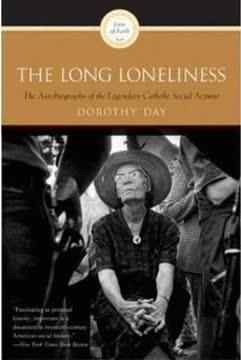
Dorothy Day did not set out to become a Catholic. She did not set out to found a movement, to be called a saint, or to spend her life in houses full of strangers who needed food and shelter and someone to listen. She set out to be a writer, to live intensely, to love deeply, and to change the world through political action. The fact that she ended up doing all of those things while also becoming one of the most significant American Catholics of the twentieth century is a story that surprised even her. The Long Loneliness is Day's spiritual autobiography, published in 1952, when she was in her mid-fifties and the Catholic Worker Movement she co-founded was nearly two decades old. It is not a tidy conversion story. It is not a theological treatise. It is the account of a woman trying to make sense of a life that kept pulling her toward God even when she was not looking, toward the poor even when she would have preferred comfort, and toward community even when she treasured solitude. The book exists because Day needed to answer a question that others kept asking her: How did you get here? How did a young woman raised without religion, a journalist who covered labor strikes and socialist rallies, a woman who had an abortion and a common-law marriage and a baby out of wedlock, end up kneeling at a Catholic altar and then spending the rest of her life running houses of hospitality for the destitute? The answer is not simple, and Day does not pretend it is. She…
Continue reading in the MinuteRead app
Get the complete 30-minute summary of The Long Loneliness
Get the complete summary in the appThe long loneliness is the fundamental human problem. Community is the answer.
The works of mercy are not optional. They are the heart of Christian life.
Perform the works of mercy personally and directly. Do not delegate them.
Action and contemplation must be held together. Prayer without service is empty. Service without prayer burns out.
Community is hard work. It requires patience, forgiveness, and a willingness to welcome difficult people.
Pacifism is not passive. It is active resistance to violence and active work for justice.
"The Long Loneliness" is a strong fit if you want practical ideas around biography, memoir, religion, especially themes like the long loneliness is the fundamental human problem. community is the answer; the works of mercy are not optional. they are the heart of christian life. The MinuteRead summary distills these concepts into a focused read, whether you're deciding whether to buy the book or applying its lessons at work.
Dorothy Day was an American journalist, social activist, and convert to Catholicism. Born in 1897, she led a bohemian youth before experiencing a profound spiritual transformation. In the 1930s, Day co-founded the Catholic Worker movement with Peter Maurin, combining direct aid for the poor with nonviolent activism. Her life was characterized by a commitment to social justice, pacifism, and living out Gospel values. Day's writing and activism made her a significant figure in American Catholicism…
View all summaries by Dorothy DayContinue Reading
Access the complete 30-minute summary and thousands more nonfiction books in the MinuteRead app.

Continue reading the complete summary in the MinuteRead app.