MinuteRead
30 min
Book summary
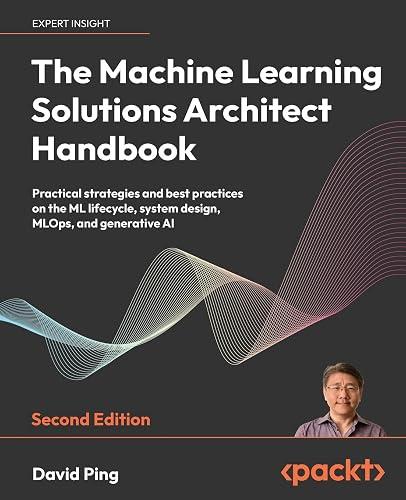
by David Ping
Premium summary · Opens in the app · 30 min read
Most books about machine learning start with algorithms. They walk through linear regression, decision trees, neural networks, and gradient descent. They explain the math, show code examples, and leave readers with a solid understanding of how individual models work.
**Author:** David Ping
**Estimated Reading Time:** 45 minutes
**What You'll Learn:**
- How machine learning is transforming six major industries with real applications - The complete ML life cycle from business problem to deployed solution - What an ML solutions architect actually does and why the role matters - The technical and organizational challenges of building ML platforms - How to apply ML concepts to real business problems immediately
**Who This Book Is For:**
This book is for technical professionals who want to move beyond understanding machine learning algorithms and into designing complete ML solutions. Whether you are a data scientist looking to expand your architectural skills, a software engineer transitioning into ML, a technical manager overseeing ML initiatives, or a business leader who needs to understand what it takes to make ML work in practice, this book provides the bridge between theoretical knowledge and real-world implementation.
Most books about machine learning start with algorithms. They walk through linear regression, decision trees, neural networks, and gradient descent. They explain the math, show code examples, and leave readers with a solid understanding of how individual models work. Then those readers step into a real organization and face a completely different set of problems. The model that worked perfectly on a clean dataset fails when connected to messy production data. The infrastructure that trained a model on a laptop cannot handle millions of daily predictions. The brilliant algorithm never reaches users because nobody figured out how to integrate it with existing business systems. Security teams block deployment because compliance requirements were never addressed. The project dies not because the machine learning was wrong, but because the solution architecture was missing. This is the gap David Ping addresses in The Machine Learning Solutions Architect Handbook. The book exists because organizations do not need better algorithms. They need better ways to turn algorithms into working solutions. They need people who understand both the business problem and the technical landscape. They need professionals who can design systems that are scalable, secure, maintainable, and actually deliver value. The challenge is real. Machine learning projects fail at alarming rates. Industry studies consistently show that a significant percentage of ML initiatives never make it into production. The reasons rarely involve model accuracy. They involve unclear business objectives, data quality issues, infrastructure limitations, integration problems, and organizational misalignment. These are architectural problems, not algorithmic ones. The role of the ML solutions architect emerged to address exactly these challenges. This person sits at the intersection of business strategy, data science, software engineering, and IT operations. They translate vague business goals into concrete technical requirements. They design the platforms that support the entire ML life cycle. They ensure that models can…
Continue reading in the MinuteRead app
Get the complete 30-minute summary of The Machine Learning Solutions Architect Handbook
Get the complete summary in the appMachine learning creates value only when embedded in a complete solution that addresses a real business problem.
The ML life cycle includes business understanding, data acquisition, data preparation, model development, evaluation, de
Business understanding and problem framing are the most neglected and most important stages of the ML life cycle.
The ML solutions architect bridges business and technical worlds, covering business understanding, ML techniques, system
The ML platform shapes behavior by making some things easy and others difficult. Design it to make the right things easy
Security and compliance must be designed into ML systems from the beginning, not added at the end.
"The Machine Learning Solutions Architect Handbook" is a strong fit if you want practical ideas around technical, technology, computer science, especially themes like machine learning creates value only when embedded in a complete solution that addresses a real business problem; the ml life cycle includes business understanding, data acquisition, data preparation, model development, evaluation, de. The MinuteRead summary distills these concepts into a focused read, whether you're deciding whether to buy the book or applying its lessons at work.
Motivated to help readers with mL is a form of AI that learns how to perform a task using different learning techniques, David Ping wrote “The Machine Learning Solutions Architect Handbook” to package those ideas for a fast, focused read. In “The Machine Learning Solutions Architect Handbook”, David Ping focuses on mL is a form of AI that learns how to perform a task using different learning techniques. Through “The Machine Learning Solutions Architect Handbook”, David Ping distills the core ide…
Continue Reading
Access the complete 30-minute summary and thousands more nonfiction books in the MinuteRead app.

Continue reading the complete summary in the MinuteRead app.