MinuteRead
30 min
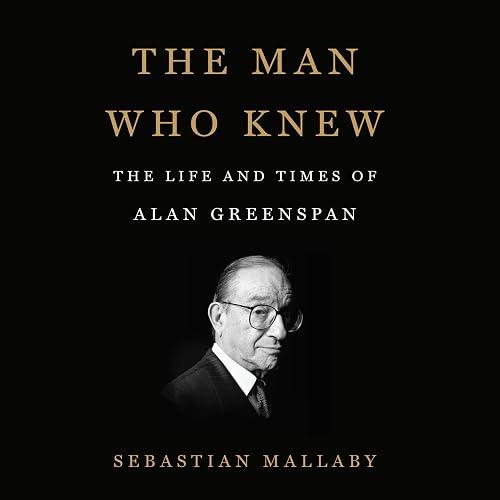
On October 19, 1987, the stock market fell by more than 22 percent in a single day. It remains the largest one-day percentage decline in American history. In the chaos that followed, one man's voice cut through the panic. Alan Greenspan, barely two months into his tenure as chairman of the Federal Reserve, issued a one-sentence statement: the central bank stood ready to serve as a source of liquidity to support the economic and financial system.
**Author:** Sebastian Mallaby
**Estimated Reading Time:** 45 minutes
**What You'll Learn:** How Alan Greenspan's six-decade journey from jazz musician to the most powerful economic policymaker in the world reshaped modern finance, and why his story reveals uncomfortable truths about the limits of economic knowledge.
**Who This Book Is For:** Anyone seeking to understand the forces that shaped the modern financial system, the nature of power in economic policy, and the complex relationship between ideology, evidence, and action.
On October 19, 1987, the stock market fell by more than 22 percent in a single day. It remains the largest one-day percentage decline in American history. In the chaos that followed, one man's voice cut through the panic. Alan Greenspan, barely two months into his tenure as chairman of the Federal Reserve, issued a one-sentence statement: the central bank stood ready to serve as a source of liquidity to support the economic and financial system. That sentence, delivered with characteristic understatement, marked a turning point in the history of central banking. It signaled that the Federal Reserve would no longer stand apart from financial markets, treating them as a sideshow to the real economy of goods and services. Instead, the central bank would embrace its role as the ultimate backstop for a financial system that had grown vastly more complex, interconnected, and fragile than anyone had fully appreciated. The man behind that statement had spent decades preparing for exactly this moment, though few would have predicted his path. Alan Greenspan was not a product of the elite economics departments that would later dominate policy circles. He did not hold a PhD from Harvard or MIT. He spent his formative years playing saxophone in a jazz band, reading deeply about philosophy and economics on the side, and building a private consulting practice that gave him an intimate understanding of how American businesses actually worked. Sebastian Mallaby's biography of Greenspan is not a simple story of triumph or tragedy. It is a nuanced portrait of a man who understood the American economy better than almost anyone of his generation, yet whose very success in managing crises may have sown the seeds of future instability. Greenspan's story is, in many ways, the story of modern finance itself: its extraordinary creativity, its capacity for wealth creation, and its recurring vulnerability to excess. The problem this book addresses is fundamental. How should we think about economic knowledge when the economy itself keeps changing? Greenspan spent his career arguing that economic models were too simplistic, that the real world was too complex for rigid rules, and that policymakers needed to remain humble about what they could know. Yet this very humility, combined with his extraordinary confidence in his…
Continue reading in the MinuteRead app
Get the complete 30-minute summary of The Man Who Knew
Get the complete summary in the appAlan Greenspan's unconventional background, from jazz musician to economic advisor, gave him a unique perspective that d
His intellectual journey was marked by a gradual evolution from rigid libertarian principles to a more nuanced understan
Greenspan recognized the growing importance of financial markets earlier than most economists, understanding that financ
He transformed monetary policy by shifting from rigid rules to flexible risk management, an approach that gave central b
His political skill was essential to his effectiveness, allowing him to maintain the Federal Reserve's independence whil
Greenspan's humility about the limits of economic knowledge made him adaptable in crises but also reluctant to act preem
"The Man Who Knew" is a strong fit if you want practical ideas around biography, economics, finance, especially themes like alan greenspan's unconventional background, from jazz musician to economic advisor, gave him a unique perspective that d; his intellectual journey was marked by a gradual evolution from rigid libertarian principles to a more nuanced understan. The MinuteRead summary distills these concepts into a focused read, whether you're deciding whether to buy the book or applying its lessons at work.
Motivated to help readers with "I was more concerned about whether the Brooklyn Dodgers were winning than whether France was falling." Early, Sebastian Mallaby wrote “The Man Who Knew” to package those ideas for a fast, focused read. In “The Man Who Knew”, Sebastian Mallaby focuses on "I was more concerned about whether the Brooklyn Dodgers were winning than whether France was falling." Early. Through “The Man Who Knew”, Sebastian Mallaby distills the core ideas on biography into lessons readers…
View all summaries by Sebastian MallabyContinue Reading
Access the complete 30-minute summary and thousands more nonfiction books in the MinuteRead app.

Continue reading the complete summary in the MinuteRead app.