 MinuteRead
30 min
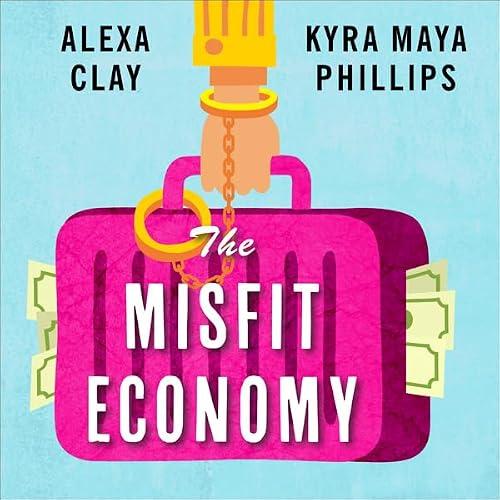
Book summary
by Alexa Clay
Premium summary · Opens in the app · 30 min read
Walk through any business school, startup incubator, or corporate innovation lab and you will hear the same vocabulary repeated with religious conviction. Disruption. Scalability. Synergy. Growth hacking. The assumption underneath all of it is that the formal economy, with its venture capital, its patent offices, its MBA programs, and its carefully structured innovation pipelines, holds a monopoly on creativity and progress.
**Author:** Alexa Clay with Kyra Maya Phillips
**Estimated Reading Time:** 45 minutes
**What You'll Learn:** How underground innovators, from pirates to hackers to gang leaders, have developed powerful approaches to creativity, problem-solving, and resilience that can transform how you think about innovation and success.
**Who This Book Is For:** Entrepreneurs frustrated by conventional business advice, corporate leaders seeking fresh perspectives, creatives who feel like outsiders, and anyone who suspects that the most interesting ideas come from the edges rather than the center.
Walk through any business school, startup incubator, or corporate innovation lab and you will hear the same vocabulary repeated with religious conviction. Disruption. Scalability. Synergy. Growth hacking. The assumption underneath all of it is that the formal economy, with its venture capital, its patent offices, its MBA programs, and its carefully structured innovation pipelines, holds a monopoly on creativity and progress. This assumption is wrong. The most inventive people on earth rarely appear on magazine covers. They do not give TED talks. They do not have LinkedIn profiles. They operate in the shadows, in the informal markets, in the gray zones where formal systems fail or refuse to go. They are pirates, hackers, gang leaders, black market traders, prison entrepreneurs, and dissidents. They work in slums and in underground collectives. They build things without permission, solve problems without resources, and create value in places where the formal economy sees only absence. Alexa Clay and Kyra Maya Phillips spent years studying these underground innovators. What they discovered is that the formal economy does not possess a monopoly on innovation. In fact, some of the most powerful principles for creating value, building resilient organizations, and solving complex problems have been developed and refined in the world's informal and underground economies. The book they wrote, The Misfit Economy, is an investigation into what these unconventional innovators can teach the rest of us. It is not a celebration of criminality or a romanticization of poverty. It is a serious attempt to understand what happens when people are forced to innovate without resources, without permission, and without the safety nets that formal institutions provide. The stories in this book are not the typical entrepreneurial hagiographies. There is no garage in Silicon Valley, no dorm room at Harvard, no pitch deck that lands a million dollars in seed funding. Instead, there is a Saudi entrepreneur and an Amish farmer building a camel milk market in the United States. There is a former prisoner who spent twenty-one years behind bars and emerged to build a legal information service for inmates. There is a gang leader who transformed one of the most notorious street gangs in America into a civic organization. There is a young hacker…
Continue reading in the MinuteRead app
Get the complete 30-minute summary of The Misfit Economy
Get the complete summary in the appInnovation does not belong to the formal economy. The underground is a rich source of creativity and problem-solving.
Hustle is the art of making something out of nothing. Start with what you have, not with what you wish you had.
Copying is a legitimate strategy for learning and innovation. Study what works and adapt it to new contexts.
Hacking is about understanding systems deeply enough to change them. Question assumptions and look for leverage points.
Provocation opens up new possibilities. Challenge orthodoxies and imagine alternatives.
Pivoting is the courage to change direction. Let go of what no longer serves you and embrace the unknown.
"The Misfit Economy" is a strong fit if you want practical ideas around business, entrepreneurship, economics, especially themes like innovation does not belong to the formal economy. the underground is a rich source of creativity and problem-solving; hustle is the art of making something out of nothing. start with what you have, not with what you wish you had. The MinuteRead summary distills these concepts into a focused read, whether you're deciding whether to buy the book or applying its lessons at work.
Motivated to help readers with the free market economy does not possess a monopoly on innovation, Alexa Clay wrote “The Misfit Economy” to package those ideas for a fast, focused read. In “The Misfit Economy”, Alexa Clay focuses on the free market economy does not possess a monopoly on innovation. Through “The Misfit Economy”, Alexa Clay distills the core ideas on business into lessons readers can absorb in a single short sitting. Readers turn to this work when they want Alexa Clay's perspective…
Continue Reading
Access the complete 30-minute summary and thousands more nonfiction books in the MinuteRead app.

Continue reading the complete summary in the MinuteRead app.






