MinuteRead
30 min
Book summary
by Joseph D'Agnese
Premium summary · Opens in the app · 30 min read
Most personal finance books are written for people with paychecks. They assume a steady income, an employer who withholds taxes, a 401(k) with matching contributions, and a benefits package that includes health insurance. They assume you know exactly how much money will arrive every two weeks and can budget accordingly.
**Author:** Joseph D'Agnese
**Estimated Reading Time:** 45 minutes
**What You'll Learn:**
- Why traditional financial advice fails independent workers and what to do instead - How to build a complete financial system that works with irregular income - The three savings accounts every freelancer needs before anything else - How to pay off debt without derailing your financial future - How to align your money with your values and build lasting prosperity
**Who This Book Is For:**
Anyone who earns income outside a traditional salaried job. Freelancers, part-timers, contractors, gig workers, artists, writers, designers, consultants, and small business owners. If your income varies from month to month and no employer handles your taxes, retirement, or benefits, this book is for you.
Most personal finance books are written for people with paychecks. They assume a steady income, an employer who withholds taxes, a 401(k) with matching contributions, and a benefits package that includes health insurance. They assume you know exactly how much money will arrive every two weeks and can budget accordingly. But what happens when you are the employer and the employee? What happens when your income arrives in unpredictable bursts, when clients pay late or not at all, when tax season brings a bill instead of a refund, and when no one is automatically setting aside money for your retirement? Millions of people live this reality every day. Freelancers, independent contractors, part-timers, gig workers, artists, writers, designers, consultants, and small business owners all share a common challenge. They earn money, sometimes good money, but they struggle to build financial stability because the traditional rules do not apply to their situation. The result is predictable. Independent workers often live in a state of low-grade financial anxiety. They worry about slow months. They dread tax season. They postpone saving for retirement because they never know how much they will earn next month. They feel guilty about spending money on themselves because they might need it for taxes or emergencies. They work hard, sometimes harder than salaried employees, but they never feel financially secure. Joseph D'Agnese wrote this book because he lived this reality. As a freelance journalist and author, he experienced the feast-or-famine cycle firsthand. He knew what it felt like to land a big assignment and feel flush, only to face months of drought. He understood the temptation to spend money when it arrived because who knew when more would come. He also recognized that this approach was a recipe for perpetual stress and eventual financial disaster. The problem is not that freelancers earn too little. Many independent workers earn substantial incomes. The problem is that they lack a system for managing money that accounts for the unique challenges of…
Continue reading in the MinuteRead app
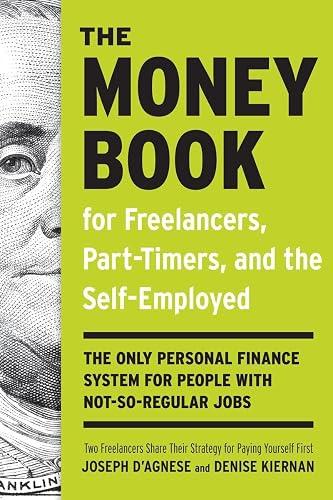
Get the complete 30-minute summary of The Money Book for Freelancers, Part-Timers, and the Self-Employed
Get the complete summary in the appOpen separate accounts for spending, emergencies, retirement, and taxes.
Allocate a fixed percentage of every payment to each account before you spend anything.
Start small with your percentages, even 1 to 3 percent per account.
Build your Emergency Account to cover three to six months of living expenses.
Set aside 25 to 30 percent of every payment for taxes.
Contribute to a retirement account every month, even if the amount is small.
"The Money Book for Freelancers, Part-Timers, and the Self-Employed" is a strong fit if you want practical ideas around business, finance, money, especially themes like open separate accounts for spending, emergencies, retirement, and taxes; allocate a fixed percentage of every payment to each account before you spend anything. The MinuteRead summary distills these concepts into a focused read, whether you're deciding whether to buy the book or applying its lessons at work.
Motivated to help readers with 1) Embrace the Freelance Finance System: Pay Yourself First 2) Establish the Holy Trinity of Savings:, Joseph D'Agnese wrote “The Money Book for Freelancers, Part-Timers, and the Self-Employed” to package those ideas for a fast, focused read. In “The Money Book for Freelancers, Part-Timers, and the Self-Employed”, Joseph D'Agnese focuses on 1) Embrace the Freelance Finance System: Pay Yourself First 2) Establish the Holy Trinity of Savings:. Through “The Money Book…
Continue Reading
Access the complete 30-minute summary and thousands more nonfiction books in the MinuteRead app.

Continue reading the complete summary in the MinuteRead app.