 MinuteRead
30 min
Book summary
Premium summary · Opens in the app · 30 min read
In the aftermath of the September 11 attacks, a curious ritual began repeating itself across Western media. Whenever a terrorist act was claimed in the name of Islam, commentators rushed to assure audiences that the perpetrators had "hijacked" a peaceful religion. Political leaders insisted that Islam was a religion of tolerance. University professors explained that the real problem was poverty, or American foreign policy, or misunderstanding. The one explanation that could not be offered was th
**Author:** Robert Spencer
**Estimated Reading Time:** 42 minutes
**What You'll Learn:**
- How the idea of Islamic tolerance became accepted in the West despite centuries of contrary evidence - What the dhimma system actually required of non-Muslims living under Islamic rule - How classical Islamic law codified the inferior status of Jews, Christians, and other religious minorities - Why contemporary Islamist movements draw directly on traditional doctrines - What genuine reform would require and why it remains so difficult
**Who This Book Is For:**
Readers who want to understand the historical relationship between Islam and religious minorities beyond slogans and wishful thinking. This book is for those willing to examine primary sources, legal traditions, and historical records to assess claims about Islamic tolerance critically. It is also for anyone concerned about religious freedom, human rights, and the challenges facing reformers within Muslim communities.
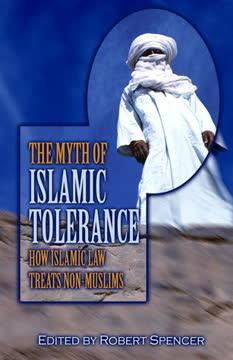
In the aftermath of the September 11 attacks, a curious ritual began repeating itself across Western media. Whenever a terrorist act was claimed in the name of Islam, commentators rushed to assure audiences that the perpetrators had "hijacked" a peaceful religion. Political leaders insisted that Islam was a religion of tolerance. University professors explained that the real problem was poverty, or American foreign policy, or misunderstanding. The one explanation that could not be offered was that the attackers might have found something in Islamic doctrine itself that justified their actions. Robert Spencer wrote *Myth of Islamic Tolerance* to challenge this assumption. His argument is direct: the widespread belief that Islam historically treated religious minorities with tolerance and respect is not supported by the historical record. Instead, he contends, the actual relationship between Muslim rulers and non-Muslim subjects was defined by a system of legalized subordination known as dhimmitude. This system, rooted in the Quran and elaborated by centuries of Islamic jurisprudence, systematically degraded non-Muslim communities until many of them simply disappeared. The topic matters because it shapes how Western societies respond to real challenges. If Islam is inherently tolerant, then any Muslim who commits violence in its name must be acting outside the faith. If, however, traditional Islamic doctrine contains elements that justify conquest, subjugation, and discrimination, then ignoring those elements makes it impossible to understand the motivations of Islamist movements or to support reformers who are trying to change them. Spencer's approach differs from much of what passes for analysis of Islam in the West. Rather than relying on the statements of modern apologists, he goes back to the primary sources: the Quran, the hadith collections, the classical legal manuals, and the historical chronicles. He asks what these texts actually say about how Muslims should treat non-Muslims. The answer, he argues, is uncomfortable. The preponderance of…
Continue reading in the MinuteRead app
Get the complete 30-minute summary of Myth of Islamic Tolerance
Get the complete summary in the appThe myth of Islamic tolerance is a modern invention that contradicts the historical record.
The dhimma system was a legal framework of subordination, not tolerance.
The Quran and hadith contain numerous passages asserting Muslim supremacy.
All four Sunni schools of law codified discrimination against non-Muslims.
Non-Muslim populations declined steadily under Islamic rule.
Islamist movements explicitly seek to restore the dhimma system.
"Myth of Islamic Tolerance" is a strong fit if you want practical ideas around islam, politics, history, especially themes like the myth of islamic tolerance is a modern invention that contradicts the historical record; the dhimma system was a legal framework of subordination, not tolerance. The MinuteRead summary distills these concepts into a focused read, whether you're deciding whether to buy the book or applying its lessons at work.
Robert Spencer is a prominent author and expert on Islam, having written 17 books, including New York Times bestsellers. As director of Jihad Watch, he has led seminars for various government agencies and intelligence communities. Spencer has appeared on numerous media outlets, discussing Islamic terrorism and jihad. His work has been translated into multiple languages and has sparked controversy, leading to his ban from entering the UK. Spencer holds an MA in Religious Studies and has been stud…
View all summaries by Robert SpencerContinue Reading
Access the complete 30-minute summary and thousands more nonfiction books in the MinuteRead app.

Continue reading the complete summary in the MinuteRead app.