 MinuteRead
30 min
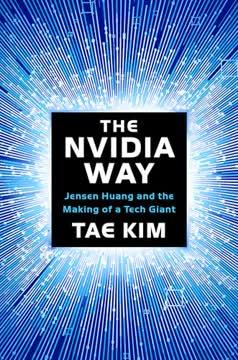
In the spring of 1993, three men sat in a booth at a Denny's restaurant in San Jose, California, sketching out the future of computing on paper napkins. They had no product, no customers, and no revenue. What they had was a conviction that computer graphics would transform how people interacted with machines, and that they could build a company to lead that transformation.
**Author:** Tae Kim
**Estimated Reading Time:** 45 minutes
**What You'll Learn:** How a struggling startup founded in a Denny's booth became one of the most valuable companies in history, the leadership principles Jensen Huang used to build it, and the strategic decisions that positioned Nvidia at the center of the artificial intelligence revolution.
**Who This Book Is For:** Anyone who wants to understand how great technology companies are built, leaders seeking a model for high-performance culture, and readers curious about the people and decisions behind the AI era.
In the spring of 1993, three men sat in a booth at a Denny's restaurant in San Jose, California, sketching out the future of computing on paper napkins. They had no product, no customers, and no revenue. What they had was a conviction that computer graphics would transform how people interacted with machines, and that they could build a company to lead that transformation. One of those men was Jensen Huang. He was thirty years old, a former dishwasher and table-tennis club janitor who had worked his way through engineering school to become a director at LSI Logic. The other two were Curtis Priem, a brilliant chip architect who had designed graphics processors at IBM and Sun Microsystems, and Chris Malachowsky, a manufacturing expert who understood how to turn silicon designs into physical products. The company they founded, Nvidia, would go on to become one of the most valuable corporations in the world. Its graphics processing units, originally designed to render video game imagery, became the engines of artificial intelligence. Its software platform, CUDA, became the foundation upon which the modern AI revolution was built. And its leader, Jensen Huang, became one of the most admired and studied CEOs of his generation. But the path from that Denny's booth to global dominance was not a straight line. It was marked by near-bankruptcy, failed products, brutal competition, and a corporate culture so demanding that many talented people chose to leave. The story of Nvidia is not a story of easy success. It is a story of pain, resilience, and an almost irrational willingness to bet everything on a vision. This book tells that story. It explains how Nvidia survived its early failures, how it outmaneuvered competitors, and how it positioned itself to ride the AI wave that would reshape the global economy. It also examines the management philosophy that Jensen Huang developed over three decades, a philosophy built on high standards, direct communication, and a relentless focus on speed. Understanding Nvidia matters because Nvidia is no longer just a technology company. It is a bellwether for the future of computing. The decisions made in its Santa Clara headquarters influence the direction of artificial…
Continue reading in the MinuteRead app
Get the complete 30-minute summary of The Nvidia Way
Get the complete summary in the appGreatness requires the willingness to endure pain and persevere through failure.
Focus is more important than feature breadth. Do one thing exceptionally well.
Speed is a competitive advantage. Ask how fast something can be done, and why it is not being done that fast.
Technical depth is a form of leadership credibility. Understand the details.
Failure is a teacher. Learn from mistakes and come back stronger.
Long-term thinking creates competitive advantage. Be willing to invest in the future.
"The Nvidia Way" is a strong fit if you want practical ideas around business, technology, biography, especially themes like greatness requires the willingness to endure pain and persevere through failure; focus is more important than feature breadth. do one thing exceptionally well. The MinuteRead summary distills these concepts into a focused read, whether you're deciding whether to buy the book or applying its lessons at work.
Tae Kim is a technology journalist with extensive experience covering the semiconductor industry. He has followed Nvidia's journey for years, conducting numerous interviews with key personnel. Kim's background as both an enthusiast and business analyst contributes to the book's depth and accuracy. His writing style is praised for its clarity and ability to explain complex technical concepts. This is Kim's first book, showcasing his expertise in the field and his ability to craft a compelling nar…
View all summaries by Tae KimContinue Reading
Access the complete 30-minute summary and thousands more nonfiction books in the MinuteRead app.

Continue reading the complete summary in the MinuteRead app.






