MinuteRead
30 min
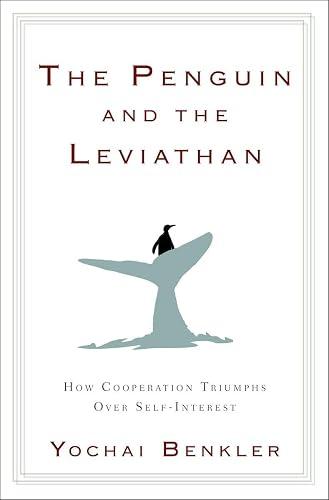
Book summary
by Yochai Benkler
Premium summary · Opens in the app · 30 min read
For more than half a century, a particular story about human nature has dominated our institutions, our policies, and our understanding of ourselves. It is a story that says people are fundamentally selfish. That we act primarily out of self-interest. That without the threat of punishment or the promise of reward, we will not cooperate, contribute, or care for one another.
By Yochai Benkler
**Estimated Reading Time:** 45 minutes
**What You'll Learn:**
* Why the belief that humans are fundamentally selfish is wrong * How cooperation, not competition, built the modern world * What neuroscience reveals about our cooperative instincts * Why paying people can destroy their motivation to help * How the internet enables collaboration at unprecedented scale * Practical ways to design systems that bring out our best nature
**Who This Book Is For:**
This book is for anyone who has ever suspected that the story we tell ourselves about human nature is incomplete. It is for managers who wonder why bonuses fail to inspire, for citizens puzzled by the gap between economic theory and lived experience, for designers of online communities, and for anyone curious about what actually motivates people to work together, share, and sacrifice for others.
For more than half a century, a particular story about human nature has dominated our institutions, our policies, and our understanding of ourselves. It is a story that says people are fundamentally selfish. That we act primarily out of self-interest. That without the threat of punishment or the promise of reward, we will not cooperate, contribute, or care for one another. This story has a name: homo economicus. The economic man. A creature of pure calculation, always weighing costs and benefits, always asking what is in it for him. This story is not merely an academic abstraction. It shapes how companies are structured, how governments design policies, how schools motivate students, and how we understand everything from crime to charity. If people are selfish, the reasoning goes, then we need strict rules, close monitoring, and material incentives to get anything done. We need the Leviathan, the powerful state that Hobbes imagined, to keep our selfish impulses in check. Or we need the invisible hand of the market to channel our greed toward productive ends. But what if this story is wrong? Yochai Benkler, a professor at Harvard Law School and one of the world's leading thinkers on the intersection of technology, economics, and society, argues that the evidence tells a very different story. Across decades of research in evolutionary biology, neuroscience, psychology, and experimental economics, a consistent finding emerges: humans are not primarily selfish. We are fundamentally cooperative. Consider the simple observation that opens this book. In practically no human society examined under controlled conditions have the majority of people consistently behaved selfishly. Across cultures, across continents, across experimental settings, the pattern holds. Roughly half of people behave cooperatively by default. Only about thirty percent act purely out of self-interest. The rest fall somewhere in between, influenced by context, social norms, and the behavior of those around them. This is…
Continue reading in the MinuteRead app
Get the complete 30-minute summary of The Penguin and the Leviathan
Get the complete summary in the appHumans are fundamentally cooperative, not fundamentally selfish. This is an empirical finding, not a sentimental hope.
Cooperation is built into our biology. It activates reward centers in the brain and is supported by hormones like oxytoc
Empathy and solidarity drive cooperation. We feel what others feel and identify with groups whose interests matter to us
Communication is crucial for cooperation. Talk is not cheap. It creates obligations, establishes norms, and builds relat
Fairness matters more than self-interest. People will sacrifice to punish unfairness and reward fairness.
Social norms and moral values shape behavior. Communities often regulate themselves without formal law.
"The Penguin and the Leviathan" is a strong fit if you want practical ideas around business, psychology, economics, especially themes like humans are fundamentally cooperative, not fundamentally selfish. this is an empirical finding, not a sentimental hope; cooperation is built into our biology. it activates reward centers in the brain and is supported by hormones like oxytoc. The MinuteRead summary distills these concepts into a focused read, whether you're deciding whether to buy the book or applying its lessons at work.
Motivated to help readers with in practically no human society examined under controlled conditions have the majority of people consistently, Yochai Benkler wrote “The Penguin and the Leviathan” to package those ideas for a fast, focused read. In “The Penguin and the Leviathan”, Yochai Benkler focuses on in practically no human society examined under controlled conditions have the majority of people consistently. Through “The Penguin and the Leviathan”, Yochai Benkler distills the core ideas on …
Continue Reading
Access the complete 30-minute summary and thousands more nonfiction books in the MinuteRead app.

Continue reading the complete summary in the MinuteRead app.