MinuteRead
30 min
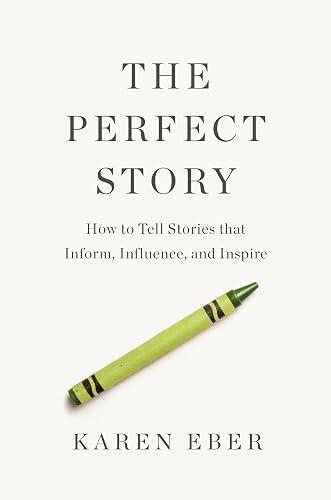
Book summary
by Karen Eber
Premium summary · Opens in the app · 30 min read
Every day, you tell stories. You tell them in meetings when you explain why a project matters. You tell them at dinner when you describe what happened at work. You tell them to yourself when you decide what something means.
**Author:** Karen Eber **Estimated Reading Time:** 42 minutes
**What You'll Learn:** - Why stories are the most powerful communication tool humans possess - How the brain responds to narrative and why it matters for influence - A practical framework for crafting stories that connect and persuade - How to combine data with narrative for maximum impact - Techniques for delivering stories with authenticity and presence
**Who This Book Is For:** Leaders who need to inspire teams. Professionals who want their ideas to stick. Speakers who want to move audiences. Anyone who has ever struggled to make their message matter in a world drowning in information.
Every day, you tell stories. You tell them in meetings when you explain why a project matters. You tell them at dinner when you describe what happened at work. You tell them to yourself when you decide what something means. Most of these stories are accidental. They happen without intention, without craft, without awareness of the power they hold. And because they are accidental, they often fail. They ramble. They lose their audience. They miss the moment when they could have changed a mind or opened a heart. This book exists because that failure is unnecessary. Karen Eber has spent her career helping leaders, teams, and organizations discover what happens when storytelling becomes deliberate. Her work sits at the intersection of neuroscience, leadership development, and human connection. She has seen firsthand what changes when someone stops merely reporting information and starts truly telling stories. The problem most people face is not a lack of stories. It is a lack of understanding about how stories work. We live in a culture that treats storytelling as a soft skill, something nice to have but not essential. We prioritize data, facts, and bullet points. We believe that if we just present enough information, people will make the right decisions. But that belief is wrong. The human brain does not make decisions based on information alone. It makes decisions based on emotion, then uses information to justify those decisions. Stories are the bridge between emotion and action. They are how humans have always made sense of the world, from ancient cave paintings to modern boardrooms. The challenge is that most people were never taught how to tell stories well. They learned to write essays with thesis statements and supporting arguments. They learned to create presentations with slides and bullet points. They learned to communicate in ways that ignore how the brain actually processes and retains information. This book offers a different path. Eber's approach is grounded in neuroscience but expressed through practical application. She explains why stories work by revealing what happens in the brain when we hear them.…
Continue reading in the MinuteRead app
Get the complete 30-minute summary of The Perfect Story
Get the complete summary in the appStories exchange energy between storyteller and audience. This energy is what creates connection, memory, and influence.
Start with your audience, not your story. Understand who you are speaking to before you decide what to say.
Use the four-part structure: context, conflict, outcome, takeaway. This framework works for stories of any length.
Conflict is the engine of story. Without tension, there is no engagement.
Show, do not tell. Use specific details and sensory language to bring your audience into the experience.
Data needs story to be meaningful. Lead with narrative, then support it with evidence.
"The Perfect Story" is a strong fit if you want practical ideas around writing, self help, business, especially themes like stories exchange energy between storyteller and audience. this energy is what creates connection, memory, and influence; start with your audience, not your story. understand who you are speaking to before you decide what to say. The MinuteRead summary distills these concepts into a focused read, whether you're deciding whether to buy the book or applying its lessons at work.
Motivated to help readers with stories exchange energy between the storyteller and the audience, Karen Eber wrote “The Perfect Story” to package those ideas for a fast, focused read. In “The Perfect Story”, Karen Eber focuses on stories exchange energy between the storyteller and the audience. Through “The Perfect Story”, Karen Eber distills the core ideas on writing into lessons readers can absorb in a single short sitting. Readers turn to this work when they want Karen Eber's perspective on th…
Continue Reading
Access the complete 30-minute summary and thousands more nonfiction books in the MinuteRead app.

Continue reading the complete summary in the MinuteRead app.