 MinuteRead
30 min
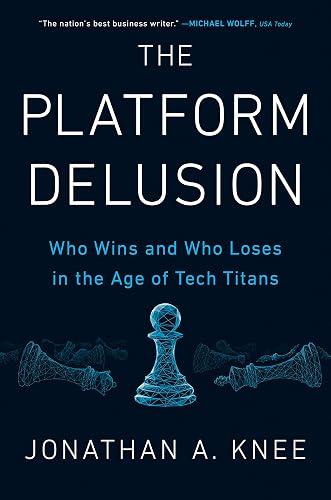
Book summary
by Jonathan A. Knee
Premium summary · Opens in the app · 30 min read
Every era has its governing myth. In the 1990s, it was the belief that any company with a website deserved a valuation measured in billions. In the housing boom, it was the conviction that real estate prices could only go up. Today, we live under the spell of the platform myth.
**Author:** Jonathan A. Knee
**Estimated Reading Time:** 45 minutes
**What You'll Learn:**
- Why network effects alone rarely create lasting competitive advantage - How the most successful digital companies actually build durable moats - What separates winning platforms from failed ones - How to evaluate any digital business with clear-eyed rigor - Where genuine opportunities exist beyond the dominant tech giants
**Who This Book Is For:**
Investors trying to separate digital substance from hype. Entrepreneurs building platform businesses. Executives competing against digital incumbents. And anyone who has ever wondered whether the tech giants are truly invincible or merely beneficiaries of a compelling story we have all been telling ourselves.
Every era has its governing myth. In the 1990s, it was the belief that any company with a website deserved a valuation measured in billions. In the housing boom, it was the conviction that real estate prices could only go up. Today, we live under the spell of the platform myth. The story goes something like this. Digital platforms benefit from network effects. Network effects mean that each new user makes the platform more valuable to every other user. This creates a virtuous cycle that leads inexorably to winner-take-all outcomes. Once a platform achieves scale, it becomes unstoppable. Competition is futile. The only rational strategy is to get in early, grow at all costs, and let the network effects do their work. This narrative has justified astonishing valuations. It has fueled a venture capital ecosystem that pours billions into unprofitable companies on the promise of future dominance. It has convinced regulators that the tech giants are natural monopolies. And it has terrified traditional businesses into believing they have no choice but to submit to the platforms or be destroyed by them. Jonathan Knee calls this the Platform Delusion. It is not that network effects are imaginary. They are real, and they can be powerful. The delusion lies in the leap from "network effects exist" to "network effects guarantee durable competitive advantage." That leap is not just an oversimplification. It is often flatly wrong. The evidence is everywhere once you look for it. MySpace had enormous network effects in social networking. It collapsed. Groupon had seemingly unstoppable network effects in local deals. It became a cautionary tale. Countless ride-sharing companies have tried to challenge Uber in local markets, and while Uber has proven resilient, the broader point holds: network effects did not prevent Lyft from emerging, nor did they prevent Uber from losing money for years on end. The problem is that network effects are only one source of competitive advantage among many. They can be powerful, but they can also be fragile. They can be undermined by changing user behavior, by…
Continue reading in the MinuteRead app
Get the complete 30-minute summary of The Platform Delusion
Get the complete summary in the appNetwork effects are not a guarantee of durable competitive advantage.
The most successful digital companies combine scale, network effects, and customer captivity.
Winner-take-all outcomes are rare. Most digital markets are competitive.
The FAANG companies are not a monolith. Each is different.
Amazon's advantage is operational, not network effects.
Specialization can beat scale in the right markets.
"The Platform Delusion" is a strong fit if you want practical ideas around business, technology, economics, especially themes like network effects are not a guarantee of durable competitive advantage; the most successful digital companies combine scale, network effects, and customer captivity. The MinuteRead summary distills these concepts into a focused read, whether you're deciding whether to buy the book or applying its lessons at work.
Motivated to help readers with "The Platform Delusion has a dual meaning, Jonathan A. Knee wrote “The Platform Delusion” to package those ideas for a fast, focused read. In “The Platform Delusion”, Jonathan A. Knee focuses on "The Platform Delusion has a dual meaning. Through “The Platform Delusion”, Jonathan A. Knee distills the core ideas on business into lessons readers can absorb in a single short sitting. Readers turn to this work when they want Jonathan A. Knee's perspective on the subject…
Continue Reading
Access the complete 30-minute summary and thousands more nonfiction books in the MinuteRead app.

Continue reading the complete summary in the MinuteRead app.






