MinuteRead
30 min
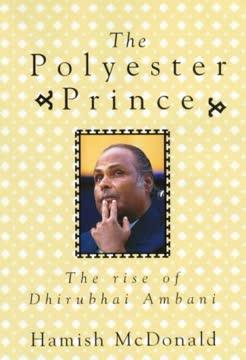
Book summary
Premium summary · Opens in the app · 30 min read
In 1958, a young man stepped off a ship in Bombay carrying little more than a few thousand dollars in savings and an ambition that would eventually reshape Indian capitalism. Dhirubhai Ambani was twenty-six years old, had no college degree, no family fortune, and no connections in the corridors of power. Within three decades, he would build Reliance Industries into one of the largest companies in Asia and become one of the most admired and reviled figures in Indian public life.
**Author:** Hamish McDonald **Estimated Reading Time:** 3 hours 15 minutes
**What You'll Learn**
How a schoolteacher's son from a dusty Gujarati village built India's largest private company, reshaped the relationship between business and government, revolutionized Indian capital markets, and left a legacy that continues to define corporate ambition in the world's largest democracy.
**Who This Book Is For**
This book is for anyone who wants to understand how modern India was built. It is for entrepreneurs who sense that the official story of how business succeeds is incomplete. It is for investors who want to see how capital markets really work when the rules are still being written. It is for students of power who recognize that wealth, politics, and influence are never truly separate. And it is for readers who simply want to encounter one of the most extraordinary and controversial business figures of the twentieth century.
In 1958, a young man stepped off a ship in Bombay carrying little more than a few thousand dollars in savings and an ambition that would eventually reshape Indian capitalism. Dhirubhai Ambani was twenty-six years old, had no college degree, no family fortune, and no connections in the corridors of power. Within three decades, he would build Reliance Industries into one of the largest companies in Asia and become one of the most admired and reviled figures in Indian public life. The story of Dhirubhai Ambani is not a simple rags-to-riches tale. It is something far more complicated and far more revealing. It is a story about how business actually gets done in a country where the state controls everything and the rules change depending on who is asking. It is a story about how one man understood the gap between the formal economy and the informal economy, between what was written in law and what was possible in practice, and built an empire in that gap. Hamish McDonald, an Australian journalist who covered India during the transformative economic reforms of the 1990s, spent years investigating the Ambani phenomenon. What he discovered was not the sanitized version of the Reliance story that appeared in corporate brochures and friendly media coverage. He found a far more textured reality: a man of genuine brilliance and genuine ruthlessness, a company that created enormous wealth while operating in ways that raised serious questions, and a system that was far more pliable than most Indians had been led to believe. The book's title, The Polyester Prince, captures the duality at the heart of the Ambani story. Polyester was the synthetic fabric that made Dhirubhai's fortune. It was the material of the common man, the affordable alternative to cotton that millions of ordinary Indians could buy. But it…
Continue reading in the MinuteRead app
Get the complete 30-minute summary of The Polyester Prince
Get the complete summary in the appDhirubhai Ambani built Reliance Industries from a small trading company into one of the largest companies in Asia throug
In a system where the government controls access to resources, influence is the most valuable asset an entrepreneur can
The democratization of Indian capital markets was one of Dhirubhai's most enduring achievements. He brought millions of
Vertical integration, moving backward from textiles to petrochemicals to oil refining, gave Reliance significant cost ad
Dhirubhai's willingness to push boundaries and bend rules made him enormously successful but also enormously controversi
Political relationships are built on mutual benefit. Politicians need businessmen as much as businessmen need politician
"The Polyester Prince" is a strong fit if you want practical ideas around biography, business, india, especially themes like dhirubhai ambani built reliance industries from a small trading company into one of the largest companies in asia throug; in a system where the government controls access to resources, influence is the most valuable asset an entrepreneur can. The MinuteRead summary distills these concepts into a focused read, whether you're deciding whether to buy the book or applying its lessons at work.
Hamish McDonald is an experienced Australian journalist and author with extensive expertise in Asian affairs. He has worked as a correspondent in various Asian countries, including India, Japan, and China. McDonald's time in India from 1990 to 1997 coincided with the country's economic reforms, providing him with valuable insights for his work. He has held prestigious positions such as political editor for the Far Eastern Economic Review and foreign editor for the Sydney Morning Herald. In 2005,…
View all summaries by Hamish McDonaldContinue Reading
Access the complete 30-minute summary and thousands more nonfiction books in the MinuteRead app.

Continue reading the complete summary in the MinuteRead app.