 MinuteRead
30 min
Book summary
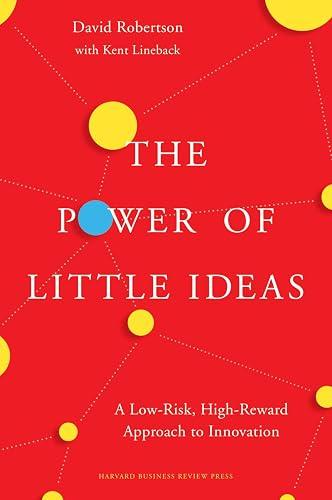
by David C. Robertson
Premium summary · Opens in the app · 30 min read
Every business leader eventually faces the same terrifying question: How do we grow?
**Author:** David C. Robertson **Estimated Reading Time:** 42 minutes
**What You'll Learn:**
- Why the choice between incremental tweaks and radical disruption is a false one - How companies like LEGO, Gatorade, and CarMax built remarkable success through complementary innovation - The four critical decisions that determine whether a Third Way strategy succeeds - How to discover what customers truly need by following the customer, the money, and the product - Practical methods for testing ideas quickly and cheaply before committing resources - How to lead an organization through the cultural shifts this approach demands
**Who This Book Is For:**
This book is for leaders, product managers, entrepreneurs, and anyone responsible for growth who feels trapped between two unattractive options: making small improvements that barely move the needle, or betting the company on a moonshot that will probably fail. If you have ever wondered how certain companies keep winning without constantly reinventing themselves, this book will show you their secret.
Every business leader eventually faces the same terrifying question: How do we grow? The conventional answers come in two flavors. The first is incremental improvement. Make the product a little better, a little cheaper, a little faster. Squeeze out another percentage point of margin. This path feels safe, but it rarely produces meaningful growth. Competitors catch up. Customers stop noticing. The improvements become table stakes rather than differentiators. The second answer is radical disruption. Create something entirely new. Disrupt yourself before someone else does. This path promises enormous rewards but carries enormous risk. Most disruptive innovations fail. The companies that pursue them often spend years and fortunes chasing a breakthrough that never arrives. And even when disruption works, it can cannibalize the very business that funded it. David Robertson spent years studying innovation at companies around the world. He noticed something strange. Some of the most successful companies were doing neither of these things. They were not making tiny improvements to their core products, and they were not abandoning those products for radical new ventures. Instead, they were doing something in between. LEGO did not replace its iconic brick. It surrounded the brick with movies, video games, theme parks, and digital experiences. Gatorade did not stop selling sports drinks. It built an entire ecosystem around athletic performance, from nutrition bars to smart bottles to training apps. CarMax did not invent a new kind of car. It reinvented the entire experience of buying one. These companies discovered a third path. Robertson calls it the Third Way. The Third Way is deceptively simple. Instead of trying to make the core product dramatically better, or replacing it entirely, you surround it with a family of complementary innovations. Each individual innovation may be modest.…
Continue reading in the MinuteRead app
Get the complete 30-minute summary of The Power of Little Ideas
Get the complete summary in the appThe Third Way is a middle path between incremental improvement and radical disruption: surround a strong core product wi
A promise is a specific, compelling commitment to your key customer, not a marketing slogan.
The four critical decisions are: key product, promise, complementary innovations, and delivery mechanisms.
The solution integrator is a leader with authority to coordinate the entire innovation system across departments.
Follow the customer, follow the money, and follow the product to gain deep customer understanding.
The best predictor of innovation success is asking customers if they would buy, not expert opinion.
"The Power of Little Ideas" is a strong fit if you want practical ideas around business, entrepreneurship, management, especially themes like the third way is a middle path between incremental improvement and radical disruption: surround a strong core product wi; a promise is a specific, compelling commitment to your key customer, not a marketing slogan. The MinuteRead summary distills these concepts into a focused read, whether you're deciding whether to buy the book or applying its lessons at work.
Motivated to turn hard-won expertise into something readers can use every day, David C. Robertson wrote “The Power of Little Ideas” to distill the ideas behind the work into clear, actionable lessons. Through “The Power of Little Ideas”, David C. Robertson distills the core ideas on business into lessons readers can absorb in a single short sitting. Readers turn to this work when they want David C. Robertson's perspective on the subject without working through the entire original volume. The boo…
Continue Reading
Access the complete 30-minute summary and thousands more nonfiction books in the MinuteRead app.

Continue reading the complete summary in the MinuteRead app.






