MinuteRead
30 min
Book summary
Premium summary · Opens in the app · 30 min read
I am the prodigal son every time I search for unconditional love where it cannot be found.
**Author:** Henri J.M. Nouwen **Estimated Reading Time:** 45 minutes
**What You'll Learn**
The parable of the prodigal son is one of the most familiar stories ever told. But Henri Nouwen believed most of us have never truly heard it. Through his encounter with Rembrandt's masterpiece painting of the same name, Nouwen discovered that this story is not about one lost son. It is about three people. And each one represents a stage in our own spiritual journey. You will learn to see yourself in the younger son's desperate flight, the elder son's bitter resentment, and the father's radical compassion. You will discover why homecoming is not a single event but a lifelong practice. And you will face the hardest question the book poses: Are you willing to stop being the child and become the parent, offering the same costly love you have received?
**Who This Book Is For**
This book is for anyone who has ever felt distant from home, whether that home is a place, a relationship, or a spiritual center. It is for those who have tried to earn love and found the effort exhausting. It is for people who have done everything right and still feel empty. It is for anyone who suspects that the love they most deeply desire has been waiting for them all along, and that the real work of life is learning to receive it and then give it away.
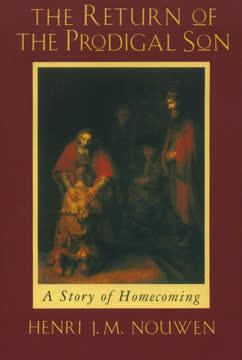
The painting changed everything. In 1983, Henri Nouwen visited the village of Treguier in France. He had gone there exhausted, seeking rest from a demanding schedule of teaching and speaking. A friend directed him to the Hermitage Museum in Leningrad, where he might see Rembrandt's "The Return of the Prodigal Son." Nouwen made the trip, sat before the painting, and found he could not leave. He stayed for hours. The painting seemed to hold him in place. It depicted the moment from Jesus's parable when the wayward son, ragged and broken, kneels before his father, who bends forward with infinite tenderness, hands resting on the boy's shoulders. Light falls on the father's face and hands. The son's head is shaved, his clothes torn, one sandal fallen from his foot. He has returned from a distant country where he squandered everything. But Nouwen saw more than a biblical scene. He saw himself. He saw every human being who has ever left home searching for love in places that cannot provide it. He saw the elder brother standing in the shadows, watching with crossed hands, unable to join the celebration. And he saw the father, whose compassion defies every human instinct for fairness and retribution. That encounter launched a years-long meditation. Nouwen returned to the…
Continue reading in the MinuteRead app
Get the complete 30-minute summary of The Return of the Prodigal Son
Get the complete summary in the appYou are the younger son every time you seek love where it cannot be found. The distant country always disappoints.
You are the elder son every time resentment tells you that your obedience should earn you special treatment. Comparison
The father's love is not earned. It is given freely and equally to both sons. There is always enough.
Homecoming is not a single event. It is a lifelong practice of returning to your true identity as a beloved child.
The ultimate call is not just to be loved but to become a lover. Spiritual maturity means moving from child to parent.
Grief, forgiveness, and generosity are the three disciplines that form the image of the father in you.
"The Return of the Prodigal Son" is a strong fit if you want practical ideas around christian, religion, theology, especially themes like you are the younger son every time you seek love where it cannot be found. the distant country always disappoints; you are the elder son every time resentment tells you that your obedience should earn you special treatment. comparison. The MinuteRead summary distills these concepts into a focused read, whether you're deciding whether to buy the book or applying its lessons at work.
Henri Jozef Machiel Nouwen was a Dutch Catholic priest and prolific author who wrote 40 books on spirituality. His works are widely read by both Catholics and Protestants. Nouwen taught at prestigious institutions before joining L'Arche Daybreak, a community for people with developmental disabilities. His spirituality was influenced by his friendship with Jean Vanier. Nouwen's most famous works include "The Wounded Healer" and "Inner Voice of Love." He struggled with clinical depression, which h…
View all summaries by Henri J.M. NouwenContinue Reading
Access the complete 30-minute summary and thousands more nonfiction books in the MinuteRead app.

Continue reading the complete summary in the MinuteRead app.