MinuteRead
30 min
Book summary
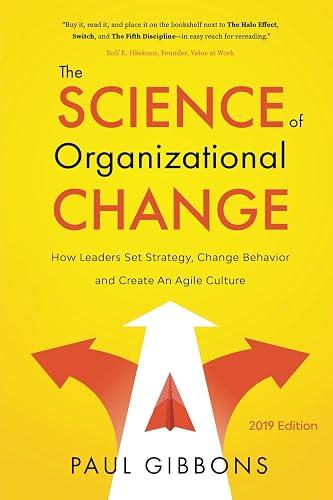
by Paul Gibbons
Premium summary · Opens in the app · 30 min read
Every year, organizations around the world pour billions of dollars into change initiatives that never deliver what they promise. Mergers that destroy value instead of creating it. Technology implementations that cost fortunes and get abandoned. Cultural transformations that generate cynicism rather than commitment. Reorganizations that leave companies more confused than before.
**Author:** Paul Gibbons
**Estimated Reading Time:** 45 minutes
**What You'll Learn:**
- Why most organizational change fails and what actually causes those failures - How to build organizations that thrive amid constant disruption - The psychological traps that sabotage even the smartest leaders - Evidence-based approaches to changing behavior and influencing people - How to lead with farsight and build institutions that last
**Who This Book Is For:**
Leaders who are tired of watching change initiatives collapse. Executives who suspect the conventional wisdom about transformation is wrong. Managers who want practical, science-based tools instead of platitudes. Anyone responsible for guiding an organization through uncertain times.
Every year, organizations around the world pour billions of dollars into change initiatives that never deliver what they promise. Mergers that destroy value instead of creating it. Technology implementations that cost fortunes and get abandoned. Cultural transformations that generate cynicism rather than commitment. Reorganizations that leave companies more confused than before. The numbers are sobering. Depending on which survey you consult, somewhere between half and three-quarters of significant organizational changes fail to achieve their objectives. The precise figure matters less than the implication: failure is not the exception. It is the norm. Paul Gibbons opens his book with a stark claim. Failed change, he argues, is the single largest preventable cost to business. Not failed strategy. Not market downturns. Not competitive pressures. Failed change. The money organizations lose through botched transformations, abandoned projects, and initiatives that quietly fade away represents a staggering drain on global productivity. Yet here is the puzzle. We have been studying organizational change for decades. There are thousands of books on the subject. Consulting firms charge fortunes to guide companies through transformations. Business schools teach change management as a core discipline. And still, the failure rates barely move. Why? Gibbons offers an uncomfortable answer. Most of what we think we know about organizational change is wrong. Not slightly wrong. Fundamentally wrong. The models we use are outdated. The assumptions we make about people are flawed. The tools we apply are unsuited to the complexity we face. And the entire field has operated for too long on intuition, anecdote, and tradition rather than evidence. Consider the language we use. We talk about "unfreezing" organizations, as if they were blocks of ice that could be melted, reshaped, and refrozen into a new stable form. We distinguish between "business as usual" and "change initiatives," as if change were an interruption to normal operations rather than the permanent condition of modern business. We separate the "hard stuff" of technical implementation from the "soft stuff" of human concerns, as if systems and people existed in different universes. These distinctions are not merely academic. They shape how…
Continue reading in the MinuteRead app
Get the complete 30-minute summary of The Science of Successful Organizational Change
Get the complete summary in the appChange is continuous, not episodic. Build change-agility, not change management.
The VUCA environment demands organizations that are antifragile: systems that benefit from disorder.
Strategic coherence trumps tactical fixes. Align your change portfolio with your strategy.
Human beings are systematically biased in their assessment of risk. Use pre-mortems and probabilistic thinking to counte
Complex systems require experimentation, not analysis. Diagnose the nature of the system before choosing your approach.
Cognitive biases are predictable. Recognize them and take active steps to counteract them.
"The Science of Successful Organizational Change" is a strong fit if you want practical ideas around business, management, leadership, especially themes like change is continuous, not episodic. build change-agility, not change management; the vuca environment demands organizations that are antifragile: systems that benefit from disorder. The MinuteRead summary distills these concepts into a focused read, whether you're deciding whether to buy the book or applying its lessons at work.
Motivated to help readers with "Failed (or failing) change is the single largest preventable cost to business." The pervasive problem, Paul Gibbons wrote “The Science of Successful Organizational Change” to package those ideas for a fast, focused read. In “The Science of Successful Organizational Change”, Paul Gibbons focuses on "Failed (or failing) change is the single largest preventable cost to business." The pervasive problem. Through “The Science of Successful Organizational Change”, Paul G…
Continue Reading
Access the complete 30-minute summary and thousands more nonfiction books in the MinuteRead app.

Continue reading the complete summary in the MinuteRead app.