 MinuteRead
30 min
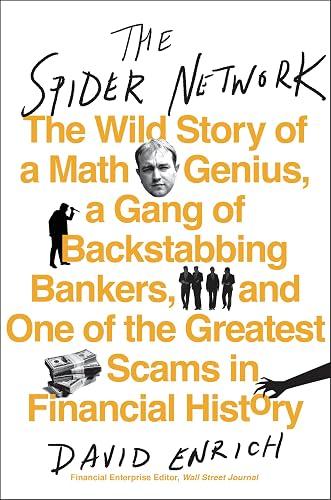
Book summary
by David Enrich
Premium summary · Opens in the app · 30 min read
In the early hours of a December morning in 2012, a team of police officers and Serious Fraud Office investigators gathered outside a modest house in a small English town. They were there to arrest a man named Tom Hayes, a former trader who had spent years working at some of the world's largest banks. The charges against him would eventually center on a financial benchmark that almost nobody outside the banking industry had heard of, yet one that affected the interest rates on trillions of dolla
**Author:** David Enrich
**Estimated Reading Time:** 4 hours
**What You'll Learn:** How a small group of traders and brokers manipulated the world's most important number, why the global financial system was vulnerable to such a scheme, and what the LIBOR scandal reveals about accountability in modern banking.
**Who This Book Is For:** Anyone who wants to understand how financial markets actually work, why white-collar crime so often goes unpunished, and how a socially awkward math prodigy became the public face of a scandal that implicated dozens of banks and brokers across three continents.
In the early hours of a December morning in 2012, a team of police officers and Serious Fraud Office investigators gathered outside a modest house in a small English town. They were there to arrest a man named Tom Hayes, a former trader who had spent years working at some of the world's largest banks. The charges against him would eventually center on a financial benchmark that almost nobody outside the banking industry had heard of, yet one that affected the interest rates on trillions of dollars in loans, mortgages, and financial contracts around the world. That benchmark was called LIBOR, the London Interbank Offered Rate. It was supposed to represent the average interest rate at which major banks could borrow money from one another. It was calculated daily based on submissions from a panel of banks, each reporting what it believed it would cost to borrow funds in various currencies and for various time periods. These submissions were supposed to be honest estimates. They were not. For years, traders across the banking industry had been nudging, cajoling, and sometimes outright bribing the people responsible for submitting those rates. They did this because even a tiny movement in LIBOR, a fraction of a percentage point, could translate into millions of dollars in profits or losses on the complex derivatives contracts that traders held. The practice was so widespread, so casual, and so deeply embedded in the culture of trading floors that many participants did not even think of it as wrong. It was just how business was done. David Enrich's book tells the story of how this manipulation worked, who was involved, and why it took so long for anyone to notice or care. It is a story about a financial system that had grown so complex and so opaque that even the people running it did not fully understand how it worked. It is a story about regulators who were outmatched, outgunned, and often unwilling to confront powerful institutions. And it is a story about how one man, Tom Hayes, became the symbol of a scandal that was far larger than any single individual. The book's…
Continue reading in the MinuteRead app
Get the complete 30-minute summary of The Spider Network
Get the complete summary in the appLIBOR, the world's most important number, was based on unverified estimates from banks that had every incentive to lie.
The manipulation of LIBOR was widespread, open, and normalized across the banking industry.
Tom Hayes was a socially awkward math prodigy who became the public face of a scandal that was far larger than any singl
The spider network of traders, brokers, and bank employees worked together to move LIBOR in favorable directions.
The culture of the trading floor rewarded profit above all else, creating powerful incentives for manipulation.
The 2008 financial crisis exposed the flaws in LIBOR that had existed for decades.
"The Spider Network" is a strong fit if you want practical ideas around business, finance, true crime, especially themes like libor, the world's most important number, was based on unverified estimates from banks that had every incentive to lie; the manipulation of libor was widespread, open, and normalized across the banking industry. The MinuteRead summary distills these concepts into a focused read, whether you're deciding whether to buy the book or applying its lessons at work.
Motivated to help readers with he cherished the simplicity, David Enrich wrote “The Spider Network” to package those ideas for a fast, focused read. In “The Spider Network”, David Enrich focuses on he cherished the simplicity. Through “The Spider Network”, David Enrich distills the core ideas on business into lessons readers can absorb in a single short sitting. Readers turn to this work when they want David Enrich's perspective on the subject without working through the entire original volume. …
View all summaries by David EnrichContinue Reading
Access the complete 30-minute summary and thousands more nonfiction books in the MinuteRead app.

Continue reading the complete summary in the MinuteRead app.






