MinuteRead
30 min
Book summary
Premium summary · Opens in the app · 30 min read
There is a moment familiar to almost everyone who has tried to change something important. You decide, with absolute sincerity, that this time will be different. You create a plan. You feel motivated. You might even take dramatic action in the first few days. And then, quietly or spectacularly, it falls apart.
**Author:** Robert Maurer, Ph.D.
**Estimated Reading Time:** 45 minutes
**What You'll Learn:** - Why radical change often fails and what to do instead - How tiny actions bypass your brain's fear response - Practical kaizen techniques for business, health, and personal growth - How to build lasting habits without willpower or motivation - The surprising connection between small questions and breakthrough innovation
**Who This Book Is For:** This book is for anyone who has ever felt stuck. For the manager struggling to engage a resistant team. For the person who knows they should exercise more, eat better, or save money but cannot seem to make it stick. For the entrepreneur facing overwhelming challenges. For anyone who has tried dramatic change and failed, and wondered if something was wrong with them.
Nothing is wrong with you. You were just using the wrong approach.
There is a moment familiar to almost everyone who has tried to change something important. You decide, with absolute sincerity, that this time will be different. You create a plan. You feel motivated. You might even take dramatic action in the first few days. And then, quietly or spectacularly, it falls apart. The diet ends with a late-night snack. The exercise routine lasts two weeks. The new management initiative meets blank stares and quiet resistance. The savings plan gets abandoned when an unexpected expense appears. You feel frustrated, maybe ashamed. You conclude that you lack discipline, or that the goal was unrealistic, or that change is simply too hard. Robert Maurer, a clinical psychologist who has spent decades studying human behavior and working with organizations ranging from hospitals to the U.S. Navy, offers a different explanation. The problem is not you. The problem is the approach. When we attempt big changes, we trigger a deeply wired survival response in the brain. The amygdala, the brain's alarm center, interprets significant change as a threat. It floods the body with stress hormones, shuts down access to the prefrontal cortex where rational thinking and creativity live, and drives us back toward familiar patterns. We experience this as fear, resistance, procrastination, or that mysterious inability to follow through on things we genuinely want to do. This is not a character flaw. It is biology. The Japanese concept of kaizen offers a way around this biological roadblock. The word means "good change," but its deeper meaning points to a philosophy of continuous improvement through small, incremental steps. Kaizen asks a simple question: What is the smallest possible step you could take right now that would move you in the direction you want to go? Not a big step. Not an impressive step. The smallest step. One so small that your brain's alarm system…
Continue reading in the MinuteRead app
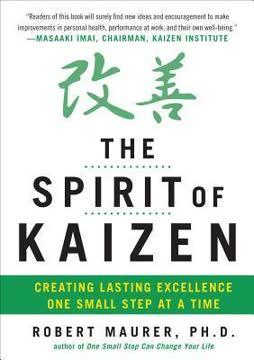
Get the complete 30-minute summary of The Spirit of Kaizen
Get the complete summary in the appKaizen means taking steps so small that they do not trigger the brain's fear response.
Resistance to change is biological, not a character flaw. The amygdala sounds the alarm when it detects anything unfamil
Small questions are more powerful than big questions. They engage curiosity without triggering fear.
Start smaller than you think necessary. If a step feels challenging, it is too big.
Consistency matters more than intensity. New neural pathways are built through repetition.
Small changes compound. Tiny actions taken daily produce significant results over time.
"The Spirit of Kaizen" is a strong fit if you want practical ideas around business, self help, psychology, especially themes like kaizen means taking steps so small that they do not trigger the brain's fear response; resistance to change is biological, not a character flaw. the amygdala sounds the alarm when it detects anything unfamil. The MinuteRead summary distills these concepts into a focused read, whether you're deciding whether to buy the book or applying its lessons at work.
Robert Maurer, Ph.D. is a clinical psychologist affiliated with UCLA and the University of Washington Schools of Medicine. He founded the Science of Excellence consulting firm, specializing in kaizen principles. Maurer travels extensively, presenting seminars and offering consultations on kaizen to diverse organizations, including corporations, hospitals, universities, and even the U.S. Navy. His work focuses on applying kaizen principles to achieve excellence in various fields. Based in Spokane…
View all summaries by Robert MaurerContinue Reading
Access the complete 30-minute summary and thousands more nonfiction books in the MinuteRead app.

Continue reading the complete summary in the MinuteRead app.