 MinuteRead
30 min
Book summary
by Mats Alvesson
Premium summary · Opens in the app · 30 min read
We live in an age that celebrates intelligence. Governments pour billions into higher education. Corporations compete to recruit the brightest graduates from the most prestigious universities. The term "knowledge worker" has become a badge of honor, a signal that one's labor involves sophisticated cognitive activity rather than mere manual effort. The modern economy, we are told, runs on brainpower.
**Author:** Mats Alvesson
**Estimated Reading Time:** 45 minutes
**What You'll Learn:** Why smart organizations routinely make foolish decisions, how functional stupidity operates in everyday work life, and what individuals and organizations can do to cultivate genuine critical thinking.
**Who This Book Is For:** Anyone who has ever sat in a meeting wondering why nobody asked the obvious question, managers who sense their organization is drifting toward conformity, and professionals who suspect their expertise is being underutilized while everyone pretends otherwise.
We live in an age that celebrates intelligence. Governments pour billions into higher education. Corporations compete to recruit the brightest graduates from the most prestigious universities. The term "knowledge worker" has become a badge of honor, a signal that one's labor involves sophisticated cognitive activity rather than mere manual effort. The modern economy, we are told, runs on brainpower. Yet look closely at the daily reality of organizational life and a different picture emerges. Meetings where participants nod along to presentations they privately doubt. Employees who follow procedures they know are counterproductive. Managers who adopt management fads because everyone else is doing so. Professionals who spend more time documenting their work than actually doing it. Highly educated people performing tasks that require a fraction of their intellectual capacity. This is the stupidity paradox. The organizations that most loudly proclaim their smartness are often the ones that systematically discourage genuine thinking. The individuals with the most impressive credentials frequently spend their days engaged in work that demands little reflection. The systems designed to maximize efficiency often produce spectacular foolishness. Mats Alvesson, one of Europe's most influential organizational scholars, has spent decades studying this phenomenon. His conclusion is uncomfortable: functional stupidity is not an accident or an aberration. It is a feature of modern organizational life, deliberately cultivated because it serves important purposes. It reduces conflict. It speeds up decision-making. It protects careers. It maintains the appearance of competence and control. The problem is that the short-term benefits of not thinking come with long-term costs. Problems that could have been caught early fester until they become crises. Organizations drift into activities that nobody believes in but nobody questions. Individuals become disconnected from the meaning of their own work. The gap between rhetoric and reality widens until trust collapses. This book is not a celebration of intelligence or a lament about the decline of critical thinking. It is a clear-eyed examination of why smart people do stupid things at work, how organizations benefit from this arrangement, and what happens when the bill comes due. It is also a practical guide to cultivating what Alvesson calls "negative capabilities": the capacity to tolerate uncertainty, ask uncomfortable questions, and resist the false necessities that structure so…
Continue reading in the MinuteRead app
Get the complete 30-minute summary of The Stupidity Paradox
Get the complete summary in the appFunctional stupidity is the inclination to narrow thinking and avoid questioning assumptions, justifications, and broade
Smart people do stupid things because organizational contexts make stupidity seem reasonable and rewarding.
The knowledge economy is largely a myth; much work is routine and intellectually undemanding.
Leadership models often cultivate compliance rather than critical thinking.
Bureaucracy encourages mindless rule-following and creates experts who are blind to broader issues.
Organizations imitate each other for legitimacy, not effectiveness.
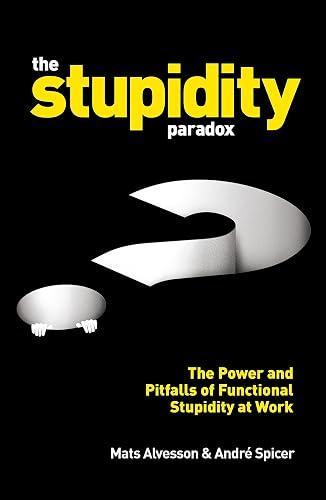
"The Stupidity Paradox" is a strong fit if you want practical ideas around business, psychology, management, especially themes like functional stupidity is the inclination to narrow thinking and avoid questioning assumptions, justifications, and broade; smart people do stupid things because organizational contexts make stupidity seem reasonable and rewarding. The MinuteRead summary distills these concepts into a focused read, whether you're deciding whether to buy the book or applying its lessons at work.
Motivated to help readers with it is time to question much of the hype about the knowledge economy, Mats Alvesson wrote “The Stupidity Paradox” to package those ideas for a fast, focused read. In “The Stupidity Paradox”, Mats Alvesson focuses on it is time to question much of the hype about the knowledge economy. Through “The Stupidity Paradox”, Mats Alvesson distills the core ideas on business into lessons readers can absorb in a single short sitting. Readers turn to this work when they want Ma…
Continue Reading
Access the complete 30-minute summary and thousands more nonfiction books in the MinuteRead app.

Continue reading the complete summary in the MinuteRead app.






