 MinuteRead
30 min
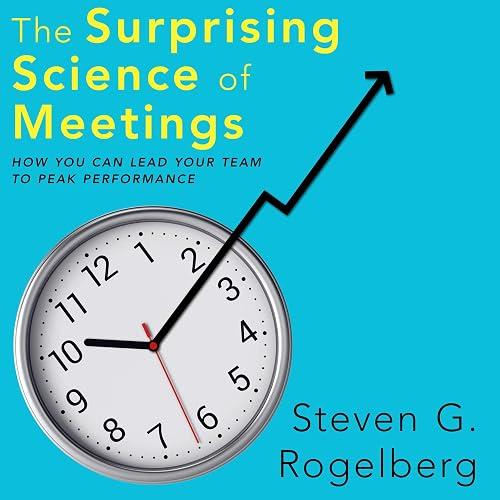
Book summary
by Steven G. Rogelberg
Premium summary · Opens in the app · 30 min read
Every day in the United States, approximately 55 million meetings take place. That is 55 million gatherings of people who step away from their individual work to coordinate, communicate, and collaborate. The investment behind this number is staggering. By one estimate, meetings consume roughly $1.4 trillion annually in the United States alone, representing more than eight percent of the nation's GDP.
**Author:** Steven G. Rogelberg
**Estimated Reading Time:** 45 minutes
**What You'll Learn:**
- Why meetings fail despite enormous organizational investment - How leaders systematically overestimate their meeting effectiveness - Evidence-based techniques to transform meetings from time drains into productive collaboration - Specific strategies for running better in-person, remote, and audio-only meetings - How to create a culture of continuous meeting improvement
**Who This Book Is For:**
Anyone who leads meetings, attends meetings, or bears the cost of meetings. This includes managers, executives, team leaders, project coordinators, and individual contributors who want to reclaim their time while improving collaboration. If you have ever sat through a meeting wondering why you were there, this book is for you.
Every day in the United States, approximately 55 million meetings take place. That is 55 million gatherings of people who step away from their individual work to coordinate, communicate, and collaborate. The investment behind this number is staggering. By one estimate, meetings consume roughly $1.4 trillion annually in the United States alone, representing more than eight percent of the nation's GDP. Yet ask most employees how they feel about meetings, and the response is rarely enthusiastic. In a study of more than three thousand workers, "too many meetings" was cited as the number one time-waster at the office, beating out email, interruptions, and administrative tasks. Nearly half of all respondents identified meetings as their primary drain on productivity. This creates a strange paradox. Organizations pour enormous resources into meetings because they believe collaboration matters. Employees agree that collaboration matters. But the actual experience of meetings leaves many people feeling frustrated, disengaged, and eager to return to their real work. Steven Rogelberg, a professor of organizational science at the University of North Carolina Charlotte, has spent more than a decade studying this paradox. His research has examined thousands of meetings across hundreds of organizations. What he discovered is both troubling and hopeful. The troubling part is that most meeting leaders have no idea how ineffective their meetings actually are. When researchers compare leader self-assessments with attendee feedback, a consistent gap emerges. Leaders rate their meetings as productive, well-run, and engaging. Attendees often disagree, sometimes dramatically. This gap exists because leaders rarely receive honest feedback about their meeting facilitation. People are reluctant to tell their boss that the meeting was a waste of time. The hopeful part is that meeting effectiveness is not a mystery. Rogelberg's research identified specific, evidence-based practices that reliably improve meeting outcomes. These practices are not complicated. They do not require expensive technology or extensive training. They require awareness, intentionality, and a willingness to experiment. The problem is not that meetings are inherently bad. The problem is that most organizations run meetings…
Continue reading in the MinuteRead app
Get the complete 30-minute summary of The Surprising Science of Meetings
Get the complete summary in the app**Adopt a stewardship mindset.** Treat attendees' time as precious. Ask whether meetings are necessary, who really needs
**Seek honest feedback.** Leaders overestimate their meeting effectiveness. Implement post-meeting surveys to identify b
**Shorten your meetings.** Parkinson's Law applies to meetings. Experiment with 48-minute meetings or 25-minute meetings
**Create purposeful agendas.** Include clear outcome statements and time limits for each item. Distribute agendas in adv
**Invite fewer people.** Every additional attendee increases cost and reduces engagement. Invite only those essential to
**Use brainwriting.** Silent, written idea generation produces more and better ideas than traditional brainstorming.
"The Surprising Science of Meetings" is a strong fit if you want practical ideas around business, leadership, management, especially themes like **adopt a stewardship mindset.** treat attendees' time as precious. ask whether meetings are necessary, who really needs; **seek honest feedback.** leaders overestimate their meeting effectiveness. implement post-meeting surveys to identify b. The MinuteRead summary distills these concepts into a focused read, whether you're deciding whether to buy the book or applying its lessons at work.
Motivated to help readers with "Too many meetings" was the number one time-waster at the office, Steven G. Rogelberg wrote “The Surprising Science of Meetings” to package those ideas for a fast, focused read. In “The Surprising Science of Meetings”, Steven G. Rogelberg focuses on "Too many meetings" was the number one time-waster at the office. Through “The Surprising Science of Meetings”, Steven G. Rogelberg distills the core ideas on business into lessons readers can absorb in a single short s…
Continue Reading
Access the complete 30-minute summary and thousands more nonfiction books in the MinuteRead app.

Continue reading the complete summary in the MinuteRead app.






