 MinuteRead
30 min
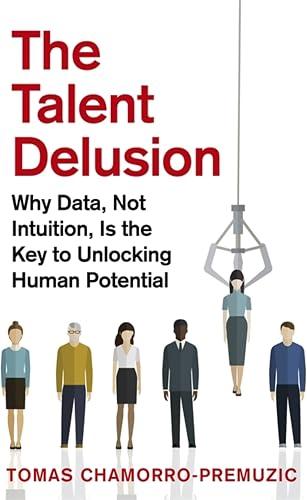
Book summary
by Tomas Chamorro-Premuzic
Premium summary · Opens in the app · 30 min read
Every organization claims to value talent. Every executive insists that people are their most important asset. Every annual report celebrates the quality of the workforce. Yet beneath this confident rhetoric lies an uncomfortable truth: most organizations have no idea what talent actually is, how to measure it, or how to develop it.
**Author:** Tomas Chamorro-Premuzic
**Estimated Reading Time:** 45 minutes
**What You'll Learn:**
Why most organizations are terrible at identifying talent, what actually predicts high performance, and how to build systems that find and develop the right people for the right roles.
**Who This Book Is For:**
Leaders who make hiring and promotion decisions, HR professionals responsible for talent management, and anyone who wants to understand why some people excel while others struggle in the same environment.
Every organization claims to value talent. Every executive insists that people are their most important asset. Every annual report celebrates the quality of the workforce. Yet beneath this confident rhetoric lies an uncomfortable truth: most organizations have no idea what talent actually is, how to measure it, or how to develop it. The result is a massive failure of judgment that costs companies billions of dollars every year. People are hired because they interview well, not because they can do the job. Promotions go to those who play office politics rather than those who deliver results. High-potential programs anoint favorites who flame out spectacularly. Meanwhile, genuinely talented individuals sit unrecognized, their abilities wasted in roles that fail to engage them. Tomas Chamorro-Premuzic has spent his career studying this problem. As a professor of business psychology at University College London and Columbia University, and as CEO of Hogan Assessment Systems, he has worked with organizations across the globe to understand what talent really is and how to identify it. His conclusion is blunt: the talent industry is built on delusion. The problem begins with definition. Ask ten executives what talent means and you will receive ten different answers. Some point to intelligence. Others emphasize charisma. Many simply say they know it when they see it. This vagueness would be unacceptable in any other business function. No CFO would tolerate a budgeting process based on gut feeling. No operations director would accept quality control by intuition. Yet when it comes to people, the most expensive and important resource in any organization, subjective judgment reigns supreme. The consequences are severe. Bad hires cost organizations between 30 and 50 percent of the employee's annual salary, and that figure only captures direct costs. It does not account for the damage done by incompetent managers, the productivity lost to disengaged employees, or the innovation stifled when the wrong people hold power. When organizations systematically fail to identify talent, they systematically undermine their own performance. Chamorro-Premuzic offers a different approach. Drawing on decades of psychological research, he argues that talent can be defined, measured, and developed with scientific rigor. The tools exist. The evidence is clear. What is missing is the willingness to abandon comfortable delusions in favor of uncomfortable truths. This…
Continue reading in the MinuteRead app
Get the complete 30-minute summary of The Talent Delusion
Get the complete summary in the appTalent is unevenly distributed: 20 percent of people produce 80 percent of results.
Talent is performance minus effort. Look for people who achieve more with less.
Talent is personality in the right place. Context matters.
The RAW model: Rewarding, Able, and Willing. The best performers combine all three.
Science beats intuition. Use structured interviews, cognitive ability tests, and work samples.
Self-awareness is the foundation of development. Seek feedback and act on it.
"The Talent Delusion" is a strong fit if you want practical ideas around business, management, leadership, especially themes like talent is unevenly distributed: 20 percent of people produce 80 percent of results; talent is performance minus effort. look for people who achieve more with less. The MinuteRead summary distills these concepts into a focused read, whether you're deciding whether to buy the book or applying its lessons at work.
Motivated to help readers with there is a universal rule in economics that predicts that in any organisation, Tomas Chamorro-Premuzic wrote “The Talent Delusion” to package those ideas for a fast, focused read. In “The Talent Delusion”, Tomas Chamorro-Premuzic focuses on there is a universal rule in economics that predicts that in any organisation. Through “The Talent Delusion”, Tomas Chamorro-Premuzic distills the core ideas on business into lessons readers can absorb in a single short sitting.…
Continue Reading
Access the complete 30-minute summary and thousands more nonfiction books in the MinuteRead app.

Continue reading the complete summary in the MinuteRead app.






