 MinuteRead
30 min
Book summary
Premium summary · Opens in the app · 30 min read
Every few years, a new technology arrives with the promise of transforming business. The internet, mobile computing, social media, cloud platforms, artificial intelligence. Each wave brings predictions of disruption, reinvention, and obsolescence. Companies respond by purchasing software, hiring consultants, launching digital initiatives, and announcing transformation programs. Yet most of these efforts fail to produce meaningful change.
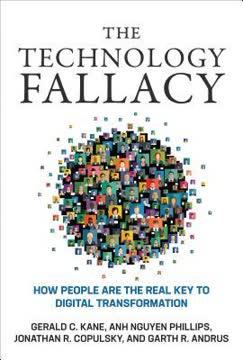
**Author:** Gerald C. Kane with Anh Nguyen Phillips, Jonathan R. Copulsky, and Garth R. Andrus
**Estimated Reading Time:** 45 minutes
**What You'll Learn:**
- Why digital disruption is fundamentally a people problem, not a technology problem - How to cultivate digital maturity as an ongoing organizational journey - What separates digitally maturing companies from those stuck in early stages - How to develop digital leadership at every level of your organization - Why cross-functional teams outperform hierarchical structures in digital environments - How to balance innovation with the demands of running your core business - What the future of work requires from individuals and institutions
**Who This Book Is For:**
This book is for leaders, managers, and professionals who sense that technology is changing their industry but feel uncertain about how to respond. It is for executives who have invested heavily in digital tools yet wonder why transformation efforts stall. It is for anyone who suspects that the real barrier to change is not the technology itself, but the people, culture, and organizational structures that surround it.
Every few years, a new technology arrives with the promise of transforming business. The internet, mobile computing, social media, cloud platforms, artificial intelligence. Each wave brings predictions of disruption, reinvention, and obsolescence. Companies respond by purchasing software, hiring consultants, launching digital initiatives, and announcing transformation programs. Yet most of these efforts fail to produce meaningful change. The Technology Fallacy addresses a puzzling disconnect. Organizations have access to more powerful technology than ever before. The tools are affordable, accessible, and increasingly easy to implement. But the expected transformation rarely follows. Something else is getting in the way. The authors of this book, drawing on a multi-year research collaboration between MIT Sloan Management Review and Deloitte, surveyed more than sixteen thousand business professionals across industries, geographies, and organizational levels. They conducted in-depth interviews with executives at companies in various stages of digital maturity. What they discovered challenges the conventional wisdom about digital transformation. The core finding is both simple and profound. Technology does not transform organizations. People do. The technology itself is rarely the obstacle. The real challenge lies in how quickly people, organizations, and institutions adapt to what technology makes possible. Consider the typical pattern. A new technology emerges and spreads rapidly through consumer markets. Individuals adopt it quickly, integrating it into their daily lives within months or years. Organizations, however, move much more slowly. Their structures, processes, cultures, and leadership models were designed for a different era. They resist change. Policies and regulations lag even further behind. This creates what the authors call an adaptation gap, a growing distance between what technology enables and what organizations are prepared to do. This gap explains…
Continue reading in the MinuteRead app
Get the complete 30-minute summary of The Technology Fallacy
Get the complete summary in the appDigital disruption is about people, not technology. The adaptation gap between technological change and organizational r
Digital maturity is a journey, not a destination. The moment you stop adapting, you start falling behind.
A clear digital strategy integrated with business strategy is the single most important determinant of digital maturity.
Leadership must be distributed. Push decision-making authority down and cultivate leadership skills throughout the organ
The digital talent mindset matters more than technical skills. Prioritize change orientation, growth mindset, and contin
Organize around cross-functional teams. They enable faster decision-making and more creative solutions.
"The Technology Fallacy" is a strong fit if you want practical ideas around business, technology, management, especially themes like digital disruption is about people, not technology. the adaptation gap between technological change and organizational r; digital maturity is a journey, not a destination. the moment you stop adapting, you start falling behind. The MinuteRead summary distills these concepts into a focused read, whether you're deciding whether to buy the book or applying its lessons at work.
Gerald C. Kane is a Professor of Information Systems at Boston College's Carroll School of Management. He has extensively researched digital transformation and its impact on organizations. Kane co-authored The Technology Fallacy with Anh Nguyen Phillips, Jonathan R. Copulsky, and Garth R. Andrus, drawing on their collective expertise in business, technology, and consulting. The book is based on a multi-year study conducted in partnership with MIT Sloan Management Review and Deloitte, surveying o…
View all summaries by Gerald C. KaneContinue Reading
Access the complete 30-minute summary and thousands more nonfiction books in the MinuteRead app.

Continue reading the complete summary in the MinuteRead app.






