 MinuteRead
30 min
Book summary
by Steve Zaffron
Premium summary · Opens in the app · 30 min read
Imagine two salespeople working the same territory with the same product, the same pricing, and the same training. One consistently outperforms the other. Now imagine two factories with identical equipment, identical processes, and identical markets. One thrives while the other stagnates. What explains the difference?
**Author:** Steve Zaffron with Dave Logan **Estimated Reading Time:** 45 minutes
**What You'll Learn:**
- Why people in the same situation perform differently - How hidden assumptions about the future drive present behavior - What "linguistic clutter" is and how it blocks performance - How to rewrite your default future and create breakthrough results - How leaders can transform entire organizations by shifting what situations mean
**Who This Book Is For:**
Leaders who have tried every strategy and still face resistance. Professionals who sense that something invisible is holding them back. Anyone who has ever wondered why smart people make self-defeating decisions. And readers who suspect that the key to performance lies not in doing more, but in seeing differently.
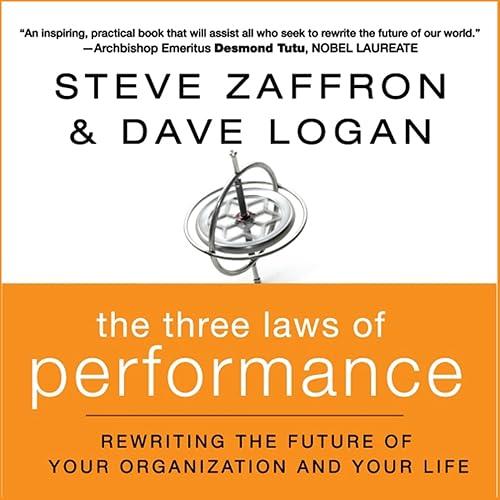
Imagine two salespeople working the same territory with the same product, the same pricing, and the same training. One consistently outperforms the other. Now imagine two factories with identical equipment, identical processes, and identical markets. One thrives while the other stagnates. What explains the difference? Most of us reach for familiar answers. The successful salesperson works harder. The thriving factory has better management. The struggling ones lack discipline, talent, or resources. We assume that performance is a function of effort, skill, and circumstance. But Steve Zaffron spent decades working with organizations around the world and discovered something that challenges this entire framework. He found that performance is not primarily determined by what people do. It is determined by how situations occur to them. This is a radical claim. It suggests that the key to transforming performance lies not in changing behavior directly, but in changing the way people perceive and interpret their circumstances. It suggests that the future people expect, often without articulating it, shapes their present actions more powerfully than any strategic plan or incentive program. Zaffron's work emerged from a lineage of thinkers who explored the relationship between language, perception, and human action. He drew on the work of philosophers like Martin Heidegger and J.L. Austin, who argued that language does not merely describe reality but actively creates it. He combined these philosophical insights with decades of hands-on consulting experience with companies ranging from mining operations to aerospace manufacturers. The result is a practical framework built on three deceptively simple laws. The first law states that how people perform correlates to how situations occur to them. The second law states that how situations occur arises in language. The third law states that future-based language transforms how situations occur. These laws explain why change initiatives so often fail. They explain why people resist even when resistance hurts them. They explain why some organizations seem trapped in cycles of dysfunction while others break free. And they offer a path forward…
Continue reading in the MinuteRead app
Get the complete 30-minute summary of The Three Laws of Performance
Get the complete summary in the appPerformance is driven by how situations occur, not by objective facts.
Everyone lives inside a default future that shapes their actions without their awareness.
Language creates reality. How situations occur arises in language.
Rackets are persistent complaints with hidden payoffs that keep you trapped.
Future-based language creates new possibilities that did not exist before.
Completing the past is essential to creating a new future.
"The Three Laws of Performance" is a strong fit if you want practical ideas around business, leadership, self help, especially themes like performance is driven by how situations occur, not by objective facts; everyone lives inside a default future that shapes their actions without their awareness. The MinuteRead summary distills these concepts into a focused read, whether you're deciding whether to buy the book or applying its lessons at work.
Motivated to help readers with how people perform correlates to how situations occur to them, Steve Zaffron wrote “The Three Laws of Performance” to package those ideas for a fast, focused read. In “The Three Laws of Performance”, Steve Zaffron focuses on how people perform correlates to how situations occur to them. Through “The Three Laws of Performance”, Steve Zaffron distills the core ideas on business into lessons readers can absorb in a single short sitting. Readers turn to this work when …
Continue Reading
Access the complete 30-minute summary and thousands more nonfiction books in the MinuteRead app.

Continue reading the complete summary in the MinuteRead app.






