MinuteRead
30 min
Book summary
Premium summary · Opens in the app · 30 min read
For most of the twentieth century, the stock market occupied a distinct place in American life. It was serious. It was adult. It was the domain of men in suits who spoke in careful language about earnings reports and dividend yields. The financial crisis of 2008 shook public confidence in that world, but it did not fundamentally change its character. The institutions remained. The rituals remained. The gatekeepers remained.
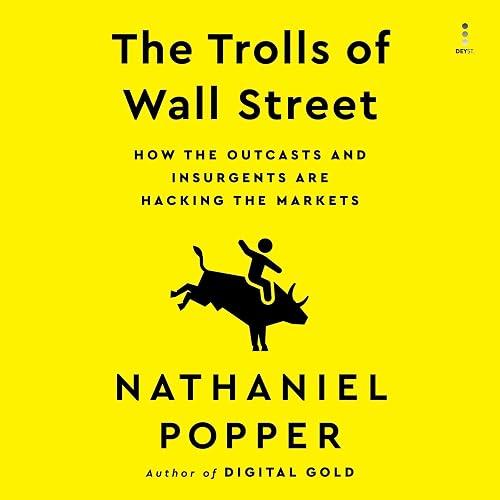
**Author:** Nathaniel Popper
**Estimated Reading Time:** 42 minutes
**What You'll Learn:** How an anonymous internet forum upended the financial establishment, the people behind the movement, and what happens when investing becomes entertainment.
**Who This Book Is For:** Anyone trying to understand the new world of retail investing, the cultural forces reshaping Wall Street, and the collision between social media and financial markets.
For most of the twentieth century, the stock market occupied a distinct place in American life. It was serious. It was adult. It was the domain of men in suits who spoke in careful language about earnings reports and dividend yields. The financial crisis of 2008 shook public confidence in that world, but it did not fundamentally change its character. The institutions remained. The rituals remained. The gatekeepers remained. Then something strange happened. In the years following the crisis, a new generation began to approach the stock market with an entirely different sensibility. These were not the children of Wall Street. They were not finance majors or aspiring analysts. They were young people who had grown up on the internet, fluent in memes and irony, deeply skeptical of institutions, and increasingly convinced that the traditional paths to financial security had been closed off to them. They found each other on Reddit. The subreddit WallStreetBets began as a small, obscure corner of the internet where a handful of amateur traders discussed options strategies with a mix of genuine curiosity and self-deprecating humor. It was not designed to change the world. It was not designed to challenge the financial establishment. It was simply a place where people could talk about risky trades without being lectured about responsible investing. But the community grew. And as it grew, it developed a culture that was unlike anything the financial world had ever seen. It was profane, irreverent, and often offensive. It celebrated losses as enthusiastically as gains. It turned complex financial concepts into jokes and memes. It created a language that was impenetrable to outsiders and deeply meaningful to insiders. By the time the coronavirus pandemic arrived in 2020, WallStreetBets had become something its founder never anticipated: a cultural force capable of moving markets. The GameStop saga of January 2021 was the moment this underground world burst into public view. When a group of retail traders on WallStreetBets drove the stock price of a struggling video game retailer up by more than 1,700 percent in a matter of weeks, they inflicted billions of dollars in losses on sophisticated hedge funds and forced the entire world to reckon with a new reality. The old rules no longer applied. Nathaniel Popper's book is an attempt to understand how this happened. It is not a story…
Continue reading in the MinuteRead app
Get the complete 30-minute summary of The Trolls of Wall Street
Get the complete summary in the appWallStreetBets emerged from a specific set of conditions: technological change, cultural currents, economic anxiety, and
Robinhood's gamified design encouraged impulsive, emotional trading by making investing feel like entertainment.
The culture of WallStreetBets was central to its appeal, offering belonging and identity to alienated young men.
The community's language served multiple functions: creating belonging, compressing ideas, managing emotions, and exclud
The GameStop saga demonstrated the power of online communities to move markets in unprecedented ways.
The saga was not a simple story of good versus evil. Real people lost money on both sides of the trade.
"The Trolls of Wall Street" is a strong fit if you want practical ideas around business, finance, economics, especially themes like wallstreetbets emerged from a specific set of conditions: technological change, cultural currents, economic anxiety, and; robinhood's gamified design encouraged impulsive, emotional trading by making investing feel like entertainment. The MinuteRead summary distills these concepts into a focused read, whether you're deciding whether to buy the book or applying its lessons at work.
Motivated to help readers with in the years after the 2008 financial crisis, Nathaniel Popper wrote “The Trolls of Wall Street” to package those ideas for a fast, focused read. In “The Trolls of Wall Street”, Nathaniel Popper focuses on in the years after the 2008 financial crisis. Through “The Trolls of Wall Street”, Nathaniel Popper distills the core ideas on business into lessons readers can absorb in a single short sitting. Readers turn to this work when they want Nathaniel Popper's perspect…
View all summaries by Nathaniel PopperContinue Reading
Access the complete 30-minute summary and thousands more nonfiction books in the MinuteRead app.

Continue reading the complete summary in the MinuteRead app.