 MinuteRead
30 min
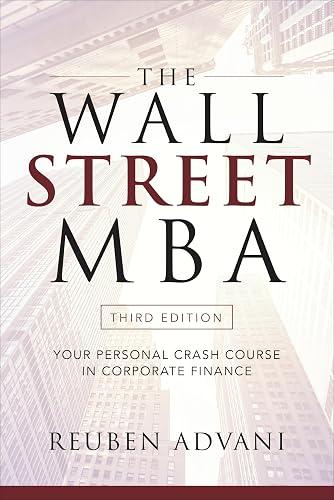
Book summary
by Reuben Advani
Premium summary · Opens in the app · 30 min read
There is a moment that comes for nearly every ambitious professional. You are sitting in a meeting, and someone projects a spreadsheet onto the wall. Columns of numbers fill the screen. People around the table nod knowingly. Someone says something about EBITDA, or working capital, or the cost of capital, and you feel the conversation slip away from you. You are smart. You are capable. But nobody ever taught you how to read the numbers.
**Author:** Reuben Advani
**Estimated Reading Time:** 2 hours 45 minutes
**What You'll Learn:**
- How to read and interpret the three core financial statements with confidence - Why accounting rules leave room for manipulation and how to spot red flags - The essential methods professionals use to value companies - How cost of capital drives every major corporate decision - Why mergers so often fail and how to evaluate deals critically - What derivatives actually do and why they became dangerous - How portfolio theory shapes investment strategy - Where finance is heading in the age of technology
**Who This Book Is For:**
This book is for anyone who wants to understand the language of business without spending two years in business school. Whether you are an entrepreneur trying to understand your own financials, a professional who wants to contribute meaningfully in meetings where numbers are discussed, an investor seeking to make better decisions, or simply a curious reader who has always felt that finance was a foreign language, this condensed edition will give you the tools to think like an MBA.
There is a moment that comes for nearly every ambitious professional. You are sitting in a meeting, and someone projects a spreadsheet onto the wall. Columns of numbers fill the screen. People around the table nod knowingly. Someone says something about EBITDA, or working capital, or the cost of capital, and you feel the conversation slip away from you. You are smart. You are capable. But nobody ever taught you how to read the numbers. This is not a rare experience. It is the norm. Most people, even highly educated people, never receive formal training in finance. They learn their own discipline deeply, whether that is marketing, engineering, law, or medicine, but the financial machinery that drives every organization remains opaque. And yet, in nearly every organization, the people who understand the numbers are the people who rise. They are the ones who can make a case for a new initiative, evaluate whether a project is worth pursuing, or spot trouble before it becomes a crisis. Reuben Advani wrote The Wall Street MBA to close this gap. His premise is simple: you do not need two years of business school to understand finance. You do not need to become an accountant or an investment banker. You need to understand the core concepts, the essential frameworks, and the language that financial professionals use. Once you have that foundation, you can participate in the conversation instead of watching it from the sidelines. The book exists because finance has a gatekeeping problem. The concepts themselves are not impossibly difficult. What makes them seem difficult is the jargon, the acronyms, the assumption…
Continue reading in the MinuteRead app
Get the complete 30-minute summary of The Wall Street MBA, Third Edition
Get the complete summary in the appThe balance sheet shows what a company owns and owes. The equation Assets = Liabilities + Equity must always balance.
The income statement shows revenue, expenses, and profit over time. Revenue is not the same as profit.
The cash flow statement shows actual cash movements. Cash is king, and a gap between profit and cash flow is a red flag.
Accounting can be manipulated. Read the footnotes and watch for red flags like negative cash flow and complex structures
Valuation is more art than science. Treat valuation models as tools for thinking, not precise measurements.
The cost of capital is the hurdle rate for investment decisions. Projects that earn less than the cost of capital destro
"The Wall Street MBA, Third Edition" is a strong fit if you want practical ideas around business, economics, money, especially themes like the balance sheet shows what a company owns and owes. the equation assets = liabilities + equity must always balance; the income statement shows revenue, expenses, and profit over time. revenue is not the same as profit. The MinuteRead summary distills these concepts into a focused read, whether you're deciding whether to buy the book or applying its lessons at work.
Motivated to help readers with i like to think of the balance sheet as the doctor's report for a company, Reuben Advani wrote “The Wall Street MBA, Third Edition” to package those ideas for a fast, focused read. In “The Wall Street MBA, Third Edition”, Reuben Advani focuses on i like to think of the balance sheet as the doctor's report for a company. Through “The Wall Street MBA, Third Edition”, Reuben Advani distills the core ideas on business into lessons readers can absorb in a single short s…
Continue Reading
Access the complete 30-minute summary and thousands more nonfiction books in the MinuteRead app.

Continue reading the complete summary in the MinuteRead app.






