 MinuteRead
30 min
Book summary
Premium summary · Opens in the app · 30 min read
Most organizations believe they already understand teams. They use the word constantly. They form task forces, assemble committees, and label every working group a team. They print the word on posters and weave it into mission statements. Yet despite all this enthusiasm, genuine team performance remains rare.
**Author:** Jon R. Katzenbach
**Estimated Reading Time:** 48 minutes
**What You'll Learn:**
- Why real teams outperform working groups and pseudo-teams - The five positions on the team performance curve - What separates high-performance teams from merely good ones - How leaders can build commitment without controlling - Why teams at the top face unique obstacles and how to overcome them - How to put team principles into practice immediately
**Who This Book Is For:**
This book is for anyone who works with other people and suspects that the whole could be greater than the sum of its parts. It is for managers who wonder why their "teams" fail to deliver, for executives who need to drive change through organizations, and for individual contributors who want to understand what makes the difference between a group that merely meets and a team that truly performs.
Most organizations believe they already understand teams. They use the word constantly. They form task forces, assemble committees, and label every working group a team. They print the word on posters and weave it into mission statements. Yet despite all this enthusiasm, genuine team performance remains rare. Jon Katzenbach spent years studying this gap between rhetoric and reality. As a director at McKinsey & Company, he observed hundreds of organizations across dozens of industries. He watched companies pour resources into team-building exercises, off-site retreats, and collaborative technologies. He also watched most of these efforts produce little measurable improvement in performance. The problem, he discovered, was not a lack of effort or intention. The problem was a fundamental misunderstanding of what a team actually is. A team is not simply a group of people who work together. It is not a collection of individuals who report to the same manager. It is not a committee, a task force, or a department. A real team is something far more specific and far more powerful. It is a small number of people with complementary skills who are committed to a common purpose, a set of performance goals, and an approach for which they hold themselves mutually accountable. This definition matters because it explains why so many attempts at teamwork fail. Organizations routinely assemble groups of people, give them a vague mandate, and expect team performance to emerge naturally. But real teams do not emerge naturally. They are built through deliberate choices, honest conflict, and sustained effort. They require individuals to surrender some measure of autonomy in exchange for something more valuable: the ability to achieve results that no individual could accomplish alone. The stakes are higher than most people realize. In an economy defined by complexity, speed, and constant change, individual performance is no longer sufficient. The challenges organizations…
Continue reading in the MinuteRead app
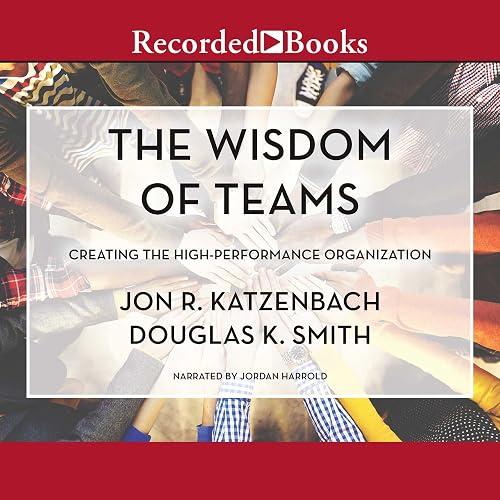
Get the complete 30-minute summary of The Wisdom of Teams
Get the complete summary in the appReal teams require a common purpose, specific performance goals, complementary skills, and mutual accountability.
Most groups that call themselves teams are not real teams. They are working groups or pseudo-teams.
The team performance curve has five positions: working group, pseudo-team, potential team, real team, and high-performan
Performance goals are the engine of team development. They must be specific, challenging, and measurable.
Conflict is a necessary part of becoming a real team. Constructive conflict focuses on ideas, not personalities.
Effective team leaders balance action and patience, do real work, and build commitment and confidence.
"The Wisdom of Teams" is a strong fit if you want practical ideas around business, management, leadership, especially themes like real teams require a common purpose, specific performance goals, complementary skills, and mutual accountability; most groups that call themselves teams are not real teams. they are working groups or pseudo-teams. The MinuteRead summary distills these concepts into a focused read, whether you're deciding whether to buy the book or applying its lessons at work.
Motivated to help readers with teams outperform individuals acting alone or in larger organizational groupings, Jon R. Katzenbach wrote “The Wisdom of Teams” to package those ideas for a fast, focused read. In “The Wisdom of Teams”, Jon R. Katzenbach focuses on teams outperform individuals acting alone or in larger organizational groupings. Through “The Wisdom of Teams”, Jon R. Katzenbach distills the core ideas on business into lessons readers can absorb in a single short sitting. Readers turn …
View all summaries by Jon R. KatzenbachContinue Reading
Access the complete 30-minute summary and thousands more nonfiction books in the MinuteRead app.

Continue reading the complete summary in the MinuteRead app.






