 MinuteRead
30 min
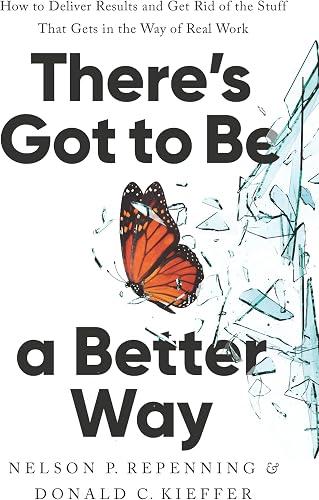
Book summary
by Nelson P. Repenning
Premium summary · Opens in the app · 30 min read
The modern organization often feels like a place where the system manages you rather than you managing it. You arrive each morning with a plan, and by mid-morning that plan has been shredded by urgent emails, unexpected crises, and the relentless pressure to respond to whatever seems most pressing. You work hard, you solve problems, you put out fires. And yet, somehow, the same fires reignite the next day, the same problems resurface, and the same chaos continues.
**Author:** Nelson P. Repenning
**Estimated Reading Time:** 45 minutes
**What You'll Learn:**
- Why well-intentioned efforts to "just get things done" trap organizations in cycles of firefighting and chaos - How to diagnose the real problems hiding beneath surface symptoms - A practical framework for designing work that adapts and improves continuously - How to connect people, visualize work, and regulate flow to achieve dramatic performance gains - How to lead with principles rather than initiatives to build lasting organizational capability
**Who This Book Is For:**
This book is for anyone who has ever felt that their organization manages them more than they manage it. It is for leaders frustrated by endless firefighting, for managers puzzled by why their teams are busy but not productive, and for individual contributors exhausted by workarounds that never seem to solve anything. If you have ever thought "there's got to be a better way," this book will show you how to find it.
The modern organization often feels like a place where the system manages you rather than you managing it. You arrive each morning with a plan, and by mid-morning that plan has been shredded by urgent emails, unexpected crises, and the relentless pressure to respond to whatever seems most pressing. You work hard, you solve problems, you put out fires. And yet, somehow, the same fires reignite the next day, the same problems resurface, and the same chaos continues. This experience is not a personal failure. It is not evidence that you lack discipline or that your colleagues are incompetent. It is the predictable result of a fundamental mismatch between how organizations are designed and the reality they must navigate. Most organizations are built on a static model. They create processes, procedures, and rules intended to handle predictable situations. They establish hierarchies, define roles, and set targets. Then they expect these structures to function effectively in a world that is dynamic, unpredictable, and constantly changing. When reality refuses to cooperate with the plan, people do what any reasonable person would do: they improvise. They create workarounds. They expedite urgent tasks. They find ways to get things done despite the system. These workarounds feel like solutions. They produce immediate results. The crisis gets resolved, the deadline gets met, the customer gets satisfied. But beneath the surface, something more troubling is happening. Each workaround reinforces the underlying dysfunction. Each expedited task teaches the organization that the official process doesn't work. Each heroic effort to save the day makes the next day's crisis more likely. Nelson Repenning calls this the firefighting trap. It is a vicious cycle in which short-term fixes create long-term problems, which then require more short-term fixes. The cycle is seductive because…
Continue reading in the MinuteRead app
Get the complete 30-minute summary of There's Got to Be a Better Way
Get the complete summary in the appWorkarounds feel like solutions but create long-term problems. Each temporary fix reinforces the underlying dysfunction.
The firefighting trap is self-reinforcing. Short-term fixes create the conditions for the next crisis.
Complex problems often have simple, overlooked solutions. They can only be found by going to see the work firsthand.
Solve the right problem. Formulate clear problem statements free of blame or proposed solutions.
Structure for discovery. Create clear targets, shared intent, explicit activities, and regular feedback.
Connect the human chain. Design effective handoffs for clear information and huddles for complex issues.
"There's Got to Be a Better Way" is a strong fit if you want practical ideas around business, leadership, management, especially themes like workarounds feel like solutions but create long-term problems. each temporary fix reinforces the underlying dysfunction; the firefighting trap is self-reinforcing. short-term fixes create the conditions for the next crisis. The MinuteRead summary distills these concepts into a focused read, whether you're deciding whether to buy the book or applying its lessons at work.
Motivated to help readers with well-intentioned efforts to “just get things done” can mire an organization in a vicious cycle of workarounds, Nelson P. Repenning wrote “There's Got to Be a Better Way” to package those ideas for a fast, focused read. In “There's Got to Be a Better Way”, Nelson P. Repenning focuses on well-intentioned efforts to “just get things done” can mire an organization in a vicious cycle of workarounds. Through “There's Got to Be a Better Way”, Nelson P. Repenning distills …
Continue Reading
Access the complete 30-minute summary and thousands more nonfiction books in the MinuteRead app.

Continue reading the complete summary in the MinuteRead app.






