 MinuteRead
30 min
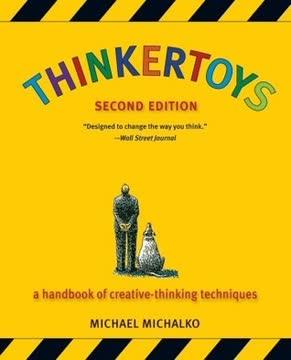
Most people believe creativity is a gift. You either have it or you don't. Some people are born with the ability to paint masterpieces, compose symphonies, or invent world-changing technologies. The rest of us are left to admire them from a distance, wishing we had been dealt a better hand.
**Author:** Michael Michalko
**Estimated Reading Time:** 45 minutes
**What You'll Learn:** How to generate breakthrough ideas on demand using proven creative thinking techniques. You will discover structured methods for challenging assumptions, making unexpected connections, visualizing problems in new ways, and turning raw ideas into practical solutions.
**Who This Book Is For:** Professionals who need to solve complex problems, entrepreneurs seeking innovative products and services, writers and artists facing creative blocks, team leaders who want to unlock their group's creative potential, and anyone who believes they are "just not creative" but wishes they were.
Most people believe creativity is a gift. You either have it or you don't. Some people are born with the ability to paint masterpieces, compose symphonies, or invent world-changing technologies. The rest of us are left to admire them from a distance, wishing we had been dealt a better hand. Michael Michalko spent years studying the world's most creative minds, from Leonardo da Vinci to Thomas Edison to modern-day innovators. What he discovered fundamentally challenges this belief. Creativity is not a mysterious talent bestowed on a lucky few. It is a skill, a set of learnable techniques, and a way of looking at the world that anyone can develop. The problem is that most of us were never taught how to think creatively. In fact, we were taught the opposite. From an early age, we learned to follow rules, memorize facts, and produce the "correct" answer. Our educational systems reward conformity and punish deviation. By the time we reach adulthood, our creative muscles have atrophied from disuse. Thinkertoys exists to reverse that damage. The book is a collection of practical techniques, mental exercises, and thinking tools designed to help you generate ideas on demand. Michalko developed these methods while working as a U.S. Army intelligence officer, where he led a team researching inventive-thinking methods for NATO. He later applied these same techniques to corporate problems with remarkable success. What makes Michalko's approach different is its emphasis on structure. Most creativity advice amounts to vague encouragement: "Think outside the box!" or "Be more imaginative!" That's not helpful. Michalko provides specific procedures, step-by-step processes, and concrete exercises that anyone can follow. You don't need to wait for inspiration to strike. You can manufacture it. The techniques in this book draw from the thinking patterns of history's greatest geniuses. Einstein used mental visualization to explore physics problems. Edison used systematic experimentation to generate thousands of ideas. Darwin used analogies from geology and economics to develop his theory of evolution. Michalko studied these patterns and distilled them into reproducible methods. The central premise is simple: to get ideas, you have to get your imagination to ask, "What if?" Most of us…
Continue reading in the MinuteRead app
Get the complete 30-minute summary of Thinkertoys
Get the complete summary in the appCreativity is a skill you can learn, not a talent you are born with.
Challenge your assumptions. Ask "What if this weren't true?"
Reverse conventional wisdom to see what it hides.
Use analogies to transfer solutions from one domain to another.
Force unexpected connections with random stimulation.
Let problems incubate. Your unconscious mind works while you rest.
"Thinkertoys" is a strong fit if you want practical ideas around business, design, self help, especially themes like creativity is a skill you can learn, not a talent you are born with; challenge your assumptions. ask "what if this weren't true?". The MinuteRead summary distills these concepts into a focused read, whether you're deciding whether to buy the book or applying its lessons at work.
Michael Michalko is a renowned creativity expert with a background in military intelligence. As a U.S. Army officer, he led a team researching inventive-thinking methods for NATO. Michael Michalko later applied these techniques to corporate problems with great success, leading to a career in developing and teaching creative-thinking workshops worldwide. He authored several bestselling books on creativity, including Thinkertoys, Thinkpak, and Cracking Creativity. His work focuses on practical app…
View all summaries by Michael MichalkoContinue Reading
Access the complete 30-minute summary and thousands more nonfiction books in the MinuteRead app.

Continue reading the complete summary in the MinuteRead app.






