 MinuteRead
30 min
Book summary
by The 30 Minute Expert Series
Premium summary · Opens in the app · 30 min read
The human mind is the most sophisticated information processing system ever known. It can perform calculations that would challenge supercomputers, recognize faces in milliseconds, and navigate complex social situations with remarkable ease. Yet for all its power, the mind is also prone to systematic errors that affect everything from everyday choices to life-altering decisions.
**Author:** The 30 Minute Expert Series **Based on the work of:** Daniel Kahneman **Estimated Reading Time:** 35 minutes
The hidden machinery of your mind operates through two distinct systems that shape every judgment, decision, and belief you hold. This condensed edition reveals how these systems work, why they lead you astray in predictable ways, and what you can do to make better choices. You will discover why losses hurt more than gains feel good, how arbitrary numbers influence your decisions, why experts are often overconfident, and what actually determines your happiness.
This book is for anyone who makes decisions, which is to say everyone. It will particularly resonate with professionals who negotiate, investors who evaluate risk, leaders who make high-stakes calls, and curious individuals who want to understand why they think what they think. If you have ever wondered why smart people make foolish choices, or why you sometimes act against your own best interests, this book provides the answers.
The human mind is the most sophisticated information processing system ever known. It can perform calculations that would challenge supercomputers, recognize faces in milliseconds, and navigate complex social situations with remarkable ease. Yet for all its power, the mind is also prone to systematic errors that affect everything from everyday choices to life-altering decisions. Daniel Kahneman spent decades uncovering these errors. His research, much of it conducted with his collaborator Amos Tversky, fundamentally changed our understanding of human judgment and decision-making. Before their work, the dominant view in economics and much of psychology held that people generally act rationally, weighing evidence carefully and making choices that serve their best interests. Kahneman and Tversky demonstrated that this view is deeply flawed. The problem is not that people are unintelligent or careless. The problem is that the mind relies on shortcuts that work well in many situations but fail in predictable ways in others. These shortcuts are not flaws in the system. They are features that evolved because they are efficient and usually good enough. But "usually good enough" leaves room for significant errors, and those errors compound when the stakes are high. Consider a simple question: Is it more dangerous to fly in an airplane or drive a car? Most people feel that flying is riskier. Yet the statistics are unambiguous. Commercial aviation is far safer per mile traveled than driving. Why does the intuition persist? Because plane crashes are dramatic, widely reported, and easy to recall. The vividness of the images makes the risk feel larger than it is. This is not a failure of intelligence. It is a failure of the mental shortcut that estimates risk based on how easily examples come to mind. This book explores dozens of…
Continue reading in the MinuteRead app
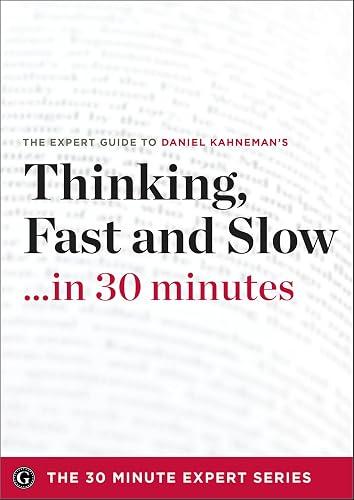
Get the complete 30-minute summary of Thinking Fast and Slow in 30 Minutes - The Expert Guide to Daniel Kahneman's Critically Acclaimed Book
Get the complete summary in the appYour mind has two systems: System 1 is fast and intuitive, System 2 is slow and deliberate. Most decisions are made by S
Cognitive biases are systematic errors that affect your judgments. They are predictable and therefore studyable.
Losses loom larger than gains. This asymmetry shapes decisions about risk, investment, and negotiation.
Initial information anchors your judgments, even when it is irrelevant. Establish your own reference points before enter
You are overconfident. Your confidence is a feeling, not a measure of accuracy. Seek objective feedback.
The way information is framed changes your choices. Reframe problems in multiple ways to see if your preferences change.
"Thinking Fast and Slow in 30 Minutes - The Expert Guide to Daniel Kahneman's Critically Acclaimed Book" is a strong fit if you want practical ideas around business, psychology, self help, especially themes like your mind has two systems: system 1 is fast and intuitive, system 2 is slow and deliberate. most decisions are made by s; cognitive biases are systematic errors that affect your judgments. they are predictable and therefore studyable. The MinuteRead summary distills these concepts into a focused read, whether you're deciding whether to buy the book or applying its lessons at work.
Motivated to help readers with "System 1 operates automatically and quickly, The 30 Minute Expert Series wrote “Thinking Fast and Slow in 30 Minutes - The Expert Guide to Daniel Kahneman's Critically Acclaimed Book” to package those ideas for a fast, focused read. In “Thinking Fast and Slow in 30 Minutes - The Expert Guide to Daniel Kahneman's Critically Acclaimed Book”, The 30 Minute Expert Series focuses on "System 1 operates automatically and quickly. Through “Thinking Fast and Slow in 30 Min…
Continue Reading
Access the complete 30-minute summary and thousands more nonfiction books in the MinuteRead app.

Continue reading the complete summary in the MinuteRead app.






