MinuteRead
30 min
Book summary
by Susan Rabiner
Premium summary · Opens in the app · 30 min read
Every year, thousands of intelligent, knowledgeable people write serious nonfiction books. They have spent years researching their subjects. They have developed original arguments. They have written carefully, revised diligently, and produced manuscripts that represent genuine contributions to their fields. Many of these books are excellent by any intellectual standard. Most of them will never be published.
**Author:** Susan Rabiner **Estimated Reading Time:** 45 minutes
**What You'll Learn:** Why serious nonfiction books get published, what editors actually look for when they evaluate a proposal, how to structure a book that keeps readers engaged, and how to position yourself as an author publishers trust.
**Who This Book Is For:** Writers of serious nonfiction who want to understand the business of publishing, authors preparing book proposals, academics seeking trade audiences, and anyone who has wondered why some worthy books find publishers while others do not.
Every year, thousands of intelligent, knowledgeable people write serious nonfiction books. They have spent years researching their subjects. They have developed original arguments. They have written carefully, revised diligently, and produced manuscripts that represent genuine contributions to their fields. Many of these books are excellent by any intellectual standard. Most of them will never be published. The reason has little to do with the quality of the writing or the importance of the ideas. It has everything to do with a fundamental misunderstanding about how publishing works. Most authors believe that publishers exist to recognize and reward good work. They imagine that if they write a smart, well-researched book, someone in the publishing industry will eventually recognize its merit and bring it to the world. This belief is not merely wrong. It is actively harmful. It leads authors to make decisions that undermine their chances of publication. It causes them to write books that cannot be sold. It sets them up for years of rejection and disappointment. Susan Rabiner spent decades working inside the publishing industry, first as an editor and later as a literary agent. She has read thousands of proposals, acquired hundreds of books, and watched countless authors struggle with the gap between their expectations and the realities of the business. In this book, she pulls back the curtain and explains what editors actually think about when they consider a project. The central insight is both simple and profound. Editors are not primarily evaluating your writing. They are evaluating whether your book can find an audience. Every decision they make, from whether to acquire your book to how much money to offer, from how much editing to invest to how to design the cover, flows from a single question: Will enough people buy this book to justify the investment? This does not mean editors are philistines who care nothing about ideas. Most editors enter publishing because they love books and ideas. But they work in a business, and that business requires them to make commercial judgments. An editor who acquires books that do not sell will not remain an editor for long. The pressure to identify commercially viable projects shapes every aspect…
Continue reading in the MinuteRead app
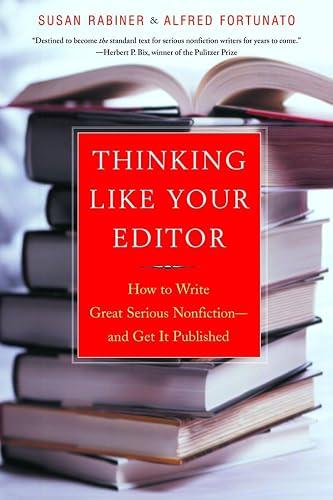
Get the complete 30-minute summary of Thinking Like Your Editor
Get the complete summary in the appEditors evaluate commercial viability first, not writing quality.
Identify your self-selecting audience before you start writing.
Write your proposal as a sales document, not a summary.
State your thesis clearly in the introduction.
Be fair to opposing viewpoints to build credibility.
Create narrative tension by structuring your book around a central question.
"Thinking Like Your Editor" is a strong fit if you want practical ideas around writing, reference, business, especially themes like editors evaluate commercial viability first, not writing quality; identify your self-selecting audience before you start writing. The MinuteRead summary distills these concepts into a focused read, whether you're deciding whether to buy the book or applying its lessons at work.
Motivated to help readers with every decision about your book, Susan Rabiner wrote “Thinking Like Your Editor” to package those ideas for a fast, focused read. In “Thinking Like Your Editor”, Susan Rabiner focuses on every decision about your book. Through “Thinking Like Your Editor”, Susan Rabiner distills the core ideas on writing into lessons readers can absorb in a single short sitting. Readers turn to this work when they want Susan Rabiner's perspective on the subject without working throug…
Continue Reading
Access the complete 30-minute summary and thousands more nonfiction books in the MinuteRead app.

Continue reading the complete summary in the MinuteRead app.