MinuteRead
30 min
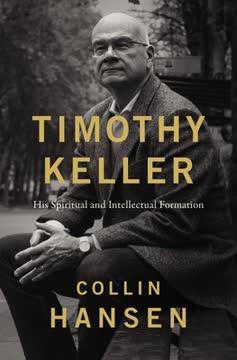
Some biographies chronicle a life. Others trace an idea. This book does both, following Timothy Keller from the cornfields of Pennsylvania to the canyons of Manhattan, where he built one of the most unlikely and influential churches in modern American history.
**Author:** Collin Hansen **Estimated Reading Time:** 45 minutes
### What You'll Learn
How a small-town kid from Pennsylvania became one of the most influential urban theologians of our time. The intellectual influences that shaped a unique approach to ministry. Why Redeemer Presbyterian Church became a model for engaging secular culture without abandoning orthodox faith. The art of communicating ancient truths to modern skeptics. How Keller's synthesis of Reformed theology, cultural analysis, and pastoral wisdom offers a path forward for Christians navigating a post-Christian world.
### Who This Book Is For
Pastors wondering how to lead churches in increasingly secular cities. Christians who feel caught between rigid traditionalism and cultural compromise. Skeptics curious about why thoughtful people still believe. Anyone who has wrestled with how faith can remain intellectually credible and culturally relevant without losing its soul.
Some biographies chronicle a life. Others trace an idea. This book does both, following Timothy Keller from the cornfields of Pennsylvania to the canyons of Manhattan, where he built one of the most unlikely and influential churches in modern American history. The question that drove Keller was deceptively simple: Can orthodox Christianity thrive in the most secular, skeptical, and sophisticated cities on earth? For much of the twentieth century, the answer appeared to be no. Churches fled urban centers for the suburbs. Theological conservatives retreated from cultural engagement. Liberals chased relevance at the expense of conviction. The city seemed hostile territory for traditional faith. Keller refused to accept this. He believed the gospel possessed resources that neither conservatives nor liberals had fully tapped. He believed secular people were asking questions that Christianity could answer better than any competing worldview. And he believed the city was not a problem to escape but a mission field to embrace. What made Keller different was not a single breakthrough insight but a rare capacity for synthesis. He read widely and eclectically. Jonathan Edwards and John Calvin sat on his shelf alongside C.S. Lewis and J.R.R. Tolkien. He devoured contemporary philosophers like Charles Taylor and Alasdair MacIntyre. He studied sociologists, literary critics, and cultural commentators. Then he wove these threads together into a coherent vision that was simultaneously ancient and contemporary, intellectually rigorous and pastorally tender. This book traces the formation of that vision. It follows Keller through his early encounters with InterVarsity Christian Fellowship at Bucknell University, where he first learned to connect faith with intellectual inquiry. It examines his years at Gordon-Conwell Theological Seminary, where he absorbed diverse theological traditions. It explores his nine-year pastorate in rural Virginia, where he learned to preach to ordinary people about ordinary life. And it culminates in New York City, where all these threads came together in the founding of Redeemer…
Continue reading in the MinuteRead app
Get the complete 30-minute summary of Timothy Keller
Get the complete summary in the appThe gospel critiques both moralism and relativism, offering a third way of grace.
The parable of the prodigal son is about two lost sons, not one. The elder brother is just as lost as the younger.
Preach the gospel to yourself daily. You are more flawed than you dare admit and more loved than you dare hope.
The quality of Christian community is the most powerful apologetic.
All work that serves human flourishing matters to God. There is no sacred-secular divide.
Cities are cultural engines. Reaching cities has disproportionate influence.
"Timothy Keller" is a strong fit if you want practical ideas around biography, christian, theology, especially themes like the gospel critiques both moralism and relativism, offering a third way of grace; the parable of the prodigal son is about two lost sons, not one. the elder brother is just as lost as the younger. The MinuteRead summary distills these concepts into a focused read, whether you're deciding whether to buy the book or applying its lessons at work.
Collin Hansen is a prominent figure in Christian journalism and publishing. As the editorial director for The Gospel Coalition, he plays a key role in shaping evangelical discourse. His background includes work at Christianity Today, where he served as an associate editor. Hansen's writing portfolio extends to various Christian publications, including Books & Culture, Leadership, and Christian History & Biography. His authorship of "Young, Restless, and Reformed" demonstrates his engagement with…
View all summaries by Collin HansenContinue Reading
Access the complete 30-minute summary and thousands more nonfiction books in the MinuteRead app.

Continue reading the complete summary in the MinuteRead app.