MinuteRead
15 min
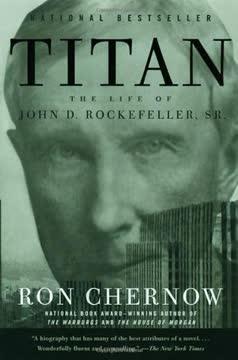
Book summary
by Ron Chernow
Premium summary · Opens in the app · 30 min read
Two men created the modern world. One was Otto von Bismarck, who unified Germany through blood and iron. The other was John D. Rockefeller, who unified the oil industry through cooperation and consolidation. Both men refuted the liberal dream that universal happiness would emerge from individual competition. Instead, they substituted monopoly and the corporate state, or at least movements toward them.
### By Ron Chernow
**Estimated Reading Time:** 45 minutes
**What You'll Learn**
The true story behind one of history's most misunderstood figures. This condensed edition reveals how a devout Baptist bookkeeper built the world's most powerful monopoly, why his methods sparked outrage and antitrust laws, and how the same man became America's greatest philanthropist. You will discover the inner workings of Standard Oil, the psychological forces that drove Rockefeller's relentless ambition, and the profound contradictions that defined his character.
**Who This Book Is For**
Anyone who wants to understand the origins of modern capitalism. Entrepreneurs seeking lessons in strategy and scale. Leaders grappling with questions of power and responsibility. Readers fascinated by the thin line between genius and ruthlessness. And anyone who suspects that the caricature of Rockefeller as a robber baron tells only half the story.
Two men created the modern world. One was Otto von Bismarck, who unified Germany through blood and iron. The other was John D. Rockefeller, who unified the oil industry through cooperation and consolidation. Both men refuted the liberal dream that universal happiness would emerge from individual competition. Instead, they substituted monopoly and the corporate state, or at least movements toward them. Rockefeller remains one of history's great paradoxes. He was a ruthless competitor who believed deeply in cooperation. A secretive man who sought to be a public benefactor. A devout Christian who crushed rivals without apparent mercy. A figure of immense wealth who lived with monastic simplicity. Ron Chernow's biography cuts through a century of caricature to reveal the human being behind the legend. What emerges is not a simple story of greed or greatness but a complex portrait of a man driven by forces he himself barely understood. The problem with most accounts of Rockefeller is that they flatten him into either villain or hero. The trust-busting journalists of his era painted him as an octopus whose tentacles strangled competition. Later admirers portrayed him as a genius of efficiency who brought order to chaos. Both views contain truth. Neither captures the whole man. Rockefeller matters today because the questions his life raised remain urgent. What is the proper relationship between business and government? When does efficiency become oppression? Can great wealth coexist with moral integrity? How should society treat those who win the economic game by rewriting its rules? These are not historical questions. They are the questions of every era that produces concentrated wealth and power. Chernow's approach is distinctive because he refuses to simplify. He spent years in archives, reading Rockefeller's letters, ledgers, and private papers. He interviewed descendants. He reconstructed the inner world of a man who spent his life hiding from public view. The result is a biography…
Continue reading in the MinuteRead app
Get the complete 30-minute summary of Titan
Get the complete summary in the appRockefeller's power came from the bookkeeper's mind. Know your numbers, control your costs, and you control your busines
Chaos creates opportunity. The early oil industry was a mess. Rockefeller imposed order and profited enormously.
Vertical integration reduces dependency. Control your supply chain so no one can control you.
Scale compounds advantage. Bigger companies get better terms, attract better talent, and survive downturns that kill sma
Silence is not a public relations strategy. If you do not tell your story, your enemies will tell it for you.
Legal defeat can be financial victory. The breakup of Standard Oil made Rockefeller the richest man in the world.
"Titan" is a strong fit if you want practical ideas around biography, history, business—especially themes like rockefeller's power came from the bookkeeper's mind. know your numbers, control your costs, and you control your busines; chaos creates opportunity. the early oil industry was a mess. rockefeller imposed order and profited enormously. The MinuteRead summary distills these concepts into a focused read, whether you're deciding whether to buy the book or applying its lessons at work.
Ron Chernow is a renowned American biographer and journalist born in 1949. After studying English Literature at Yale and Cambridge, he began his career as a freelance journalist. Chernow's expertise in financial history led to his first book, "The House of Morgan," which won the National Book Award in 1990. He has since written several acclaimed biographies, including "The Warburgs" and "Titan: The Life of John D. Rockefeller, Sr." Chernow's work is known for its meticulous research, engaging na…
View all summaries by Ron ChernowContinue Reading
Access the complete 30-minute summary and thousands more nonfiction books in the MinuteRead app.

Continue reading the complete summary in the MinuteRead app.