 MinuteRead
30 min
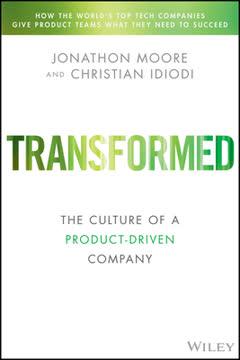
Book summary
by Marty Cagan
Premium summary · Opens in the app · 30 min read
Every year, companies around the world spend billions of dollars building software that nobody wants. They hire talented engineers, skilled designers, and experienced product managers. They adopt agile methodologies, invest in cloud infrastructure, and celebrate their digital transformation initiatives. Yet despite all this effort, most products fail to move the needle. They ship features that customers ignore. They miss deadlines by months. They burn out their best people.
**Author:** Marty Cagan
**Estimated Reading Time:** 45 minutes
**What You'll Learn:** How to move your organization from outdated feature-team thinking to the product operating model that powers the world's most innovative companies. You will discover why empowered teams outperform roadmaps, how product discovery prevents waste, and what it really takes to build technology products your customers love.
**Who This Book Is For:** Product leaders, engineering executives, founders, and anyone frustrated by building software that fails to deliver real business results. If you suspect your company's approach to technology is holding it back, this book will show you the path forward.
Every year, companies around the world spend billions of dollars building software that nobody wants. They hire talented engineers, skilled designers, and experienced product managers. They adopt agile methodologies, invest in cloud infrastructure, and celebrate their digital transformation initiatives. Yet despite all this effort, most products fail to move the needle. They ship features that customers ignore. They miss deadlines by months. They burn out their best people. The problem is not a lack of talent or effort. The problem is the operating model itself. For decades, most companies have treated technology as a cost center. They view software development as a delivery function. Business stakeholders decide what to build, product managers write requirements, designers create mockups, and engineers write code. The goal is simple: ship what was asked for, on time and on budget. This approach feels safe. It provides the illusion of control. It makes executives comfortable because they can see exactly what is being built and when it will be delivered. But this model has a fatal flaw. It optimizes for output rather than outcome. It rewards teams for shipping features rather than solving problems. It assumes that the people making requests know what customers actually need. And it systematically strips away the creativity, judgment, and problem-solving ability of the very people hired to build great products. Marty Cagan has spent his career studying the difference between companies that consistently innovate and those that struggle to keep up. He has worked with startups that grew into industry giants and with established enterprises trying to reinvent themselves. Through this work, he identified a pattern. The best companies do not simply have better ideas or smarter people. They operate differently. They use what Cagan calls the product operating model. This model rests on a simple premise: technology-powered products should be built by empowered, cross-functional teams that are given problems to solve rather than features to build. These teams work directly with customers, use data to inform their decisions, and are held accountable for business results rather than delivery dates. They discover solutions through experimentation rather than guessing. They ship…
Continue reading in the MinuteRead app
Get the complete 30-minute summary of Transformed
Get the complete summary in the appThe product operating model has three dimensions: how you build, how you solve problems, and how you decide which proble
Empowered product teams are given problems to solve, not features to build. Each role brings distinct expertise: product
Continuous delivery of small, incremental changes reduces risk and enables faster learning. Instrument everything so you
Product discovery reduces the four risks: value, usability, feasibility, and viability. Validate ideas before investing
Product leaders provide vision, strategy, team topology, and coaching. They focus on outcomes, not outputs.
Tech leads must engage in product discovery. Their technical expertise is essential for finding the best solutions.
"Transformed" is a strong fit if you want practical ideas around business, leadership, management, especially themes like the product operating model has three dimensions: how you build, how you solve problems, and how you decide which proble; empowered product teams are given problems to solve, not features to build. each role brings distinct expertise: product. The MinuteRead summary distills these concepts into a focused read, whether you're deciding whether to buy the book or applying its lessons at work.
Marty Cagan is a renowned product management expert and author. He has written several influential books on the subject, including "Inspired" and "Empowered," which are widely recognized in the tech industry. Cagan is the founder of the Silicon Valley Product Group (SVPG), a consulting firm that advises companies on product management and strategy. His work focuses on helping organizations transition to product-centric models and empowering product teams. Cagan's writing style is described as co…
View all summaries by Marty CaganContinue Reading
Access the complete 30-minute summary and thousands more nonfiction books in the MinuteRead app.

Continue reading the complete summary in the MinuteRead app.






