 MinuteRead
30 min
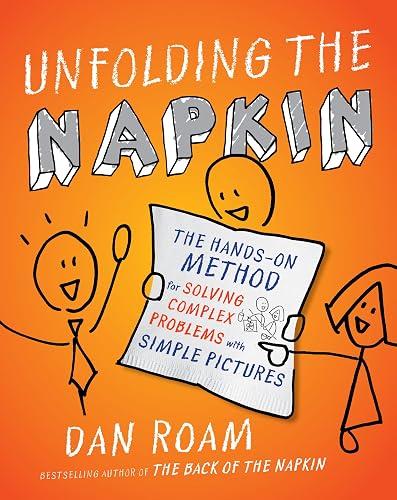
Book summary
by Dan Roam
Premium summary · Opens in the app · 30 min read
There is a quiet tragedy happening in conference rooms around the world every single day. Smart people with good ideas are failing to communicate them. They prepare elaborate presentations, build dense slide decks, and deliver carefully rehearsed speeches. And yet, when they finish, the audience is confused, disengaged, or politely pretending to understand.
**Author:** Dan Roam
**Estimated Reading Time:** 52 minutes
**What You'll Learn:** - Why drawing simple pictures is one of the most powerful problem-solving tools available to you - How to break down any complex problem into six basic components - How to use the SQVID framework to unlock creative thinking and tailor visuals to any audience - How to combine simple visual tools to generate over forty different pictures for almost any idea - How to use visual thinking in meetings, presentations, and everyday work
**Who This Book Is For:** This book is for anyone who has ever said "I can't draw" but still needs to communicate complex ideas. It is for business professionals who sit through endless slide presentations and wonder if there is a better way. It is for managers who need their teams to see problems clearly. It is for entrepreneurs who need to explain their vision quickly. It is for teachers, consultants, analysts, and anyone who works with ideas. If you can hold a pen and draw a circle, you already have what you need.
There is a quiet tragedy happening in conference rooms around the world every single day. Smart people with good ideas are failing to communicate them. They prepare elaborate presentations, build dense slide decks, and deliver carefully rehearsed speeches. And yet, when they finish, the audience is confused, disengaged, or politely pretending to understand. The problem is not a lack of intelligence. The problem is not a lack of effort. The problem is that we have forgotten how to think with pictures. Dan Roam discovered this truth in an unlikely place: a napkin. While working as a management consultant, he found himself in a meeting where words were failing. The discussion was going in circles. Nobody could agree on what the problem actually was. In a moment of frustration, he grabbed a napkin, drew a simple picture, and slid it across the table. The room went quiet. Then someone said, "That's it. That's exactly what we've been trying to say." That moment changed everything. Roam realized that drawing simple pictures was not a childish activity or a talent reserved for artists. It was a fundamental thinking tool that everyone could use. The napkin drawing worked because it forced clarity. It stripped away jargon and revealed the underlying structure of the problem. It gave people something concrete to look at, point to, and discuss. The challenge is that most of us stopped drawing when we were children. Somewhere around third grade, we decided we were not "good at art" and put down our crayons forever. We learned to express ourselves through words and numbers, and we forgot that pictures were ever an option.…
Continue reading in the MinuteRead app
Get the complete 30-minute summary of Unfolding the Napkin
Get the complete summary in the appYou can draw. If you can draw a square, a circle, a stick figure, and an arrow, you have everything you need.
There are only six types of problems: who/what, how much, where, when, how, and why.
Each problem type has a corresponding picture type: portrait, chart, map, timeline, flowchart, and plot.
Identify the problem type before choosing the picture type.
Use the SQVID framework to tailor your pictures to your audience.
Simple, hand-drawn pictures are more effective than polished presentations.
"Unfolding the Napkin" is a strong fit if you want practical ideas around business, design, self help, especially themes like you can draw. if you can draw a square, a circle, a stick figure, and an arrow, you have everything you need; there are only six types of problems: who/what, how much, where, when, how, and why. The MinuteRead summary distills these concepts into a focused read, whether you're deciding whether to buy the book or applying its lessons at work.
Motivated to help readers with if we can draw a square, Dan Roam wrote “Unfolding the Napkin” to package those ideas for a fast, focused read. In “Unfolding the Napkin”, Dan Roam focuses on if we can draw a square. Through “Unfolding the Napkin”, Dan Roam distills the core ideas on business into lessons readers can absorb in a single short sitting. Readers turn to this work when they want Dan Roam's perspective on the subject without working through the entire original volume. Dan Roam wrote “Un…
Continue Reading
Access the complete 30-minute summary and thousands more nonfiction books in the MinuteRead app.

Continue reading the complete summary in the MinuteRead app.






