MinuteRead
30 min
Book summary
Premium summary · Opens in the app · 30 min read
For decades, the dominant explanation for why great companies fail has been built around technology. The story goes something like this. A new technology emerges. Incumbents ignore it because it seems inferior or irrelevant to their best customers. Startups adopt the technology, improve it rapidly, and eventually move upmarket. The incumbents, trapped by their own success and unable to respond, collapse. This is the narrative of disruptive innovation that has shaped how executives think about st
**Author:** Thales S. Teixeira **Estimated Reading Time:** 45 minutes
**What You'll Learn**
Why some of the most successful startups of the past two decades did not invent new technologies, yet still managed to dismantle industry giants. You will learn how disruption actually works when viewed from the customer's perspective, why customers break apart the activities that companies have bundled together for decades, and how you can spot the next wave of disruption before it reaches your industry. You will also learn how incumbents can respond intelligently, and how any business can grow by focusing on what customers actually value.
**Who This Book Is For**
This book is for founders, executives, strategists, product managers, and investors who want to understand the real mechanics of digital disruption. It is also for anyone who has wondered why companies like Uber, Airbnb, Netflix, and Amazon succeeded not by inventing something entirely new, but by reorganizing how value is delivered to customers. If you want to think more clearly about where your industry is heading, this book will give you the tools to see it early.
For decades, the dominant explanation for why great companies fail has been built around technology. The story goes something like this. A new technology emerges. Incumbents ignore it because it seems inferior or irrelevant to their best customers. Startups adopt the technology, improve it rapidly, and eventually move upmarket. The incumbents, trapped by their own success and unable to respond, collapse. This is the narrative of disruptive innovation that has shaped how executives think about strategy for over twenty years. Thales Teixeira looked at the actual evidence and found a problem. Many of the most celebrated disruptors of the digital age did not invent new technologies. Uber did not invent the smartphone, GPS, or mobile payments. Airbnb did not invent the internet or online booking systems. Netflix did not invent streaming video. Dollar Shave Club did not invent razors. Birchbox did not invent cosmetics. Yet all of these companies disrupted established industries. If technology was not the driving force, then what was? Teixeira's answer is both simple and profound. Customers are the driving force. More specifically, customers are changing their behavior in ways that break apart the traditional chain of activities that companies have long bundled together. Disruption, in this view, is not primarily a technology problem. It is a customer behavior problem. This shift in perspective changes everything. When you believe technology is the cause of disruption, you respond by investing in technology. You build R&D labs, acquire startups, and try to invent the next big thing. But if customers are the cause, then the response must be different. You need to understand what customers are actually doing,…
Continue reading in the MinuteRead app
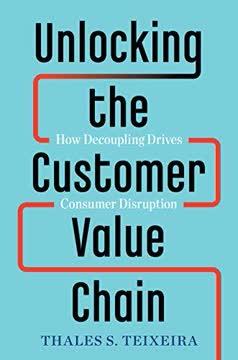
Get the complete 30-minute summary of Unlocking the Customer Value Chain
Get the complete summary in the appDisruption is driven by customers changing their behavior, not by new technology.
Decoupling is the act of breaking apart the customer value chain.
Customers decouple to reduce monetary, time, and effort costs.
The customer value chain is the full sequence of activities from awareness to disposal.
Activities that erode value are the most vulnerable to disruption.
Changes in customer consideration sets are the earliest warning sign.
"Unlocking the Customer Value Chain" is a strong fit if you want practical ideas around business, entrepreneurship, management, especially themes like disruption is driven by customers changing their behavior, not by new technology; decoupling is the act of breaking apart the customer value chain. The MinuteRead summary distills these concepts into a focused read, whether you're deciding whether to buy the book or applying its lessons at work.
Thales S. Teixeira is a Harvard professor and business expert known for his work on digital disruption and customer behavior. His research focuses on how companies can innovate by understanding and leveraging changes in consumer preferences. Teixeira has spent years studying successful startups and established companies to develop his theories on customer value chains and business model innovation. He challenges conventional wisdom about technological disruption, arguing that customer-centric ap…
View all summaries by Thales S. TeixeiraContinue Reading
Access the complete 30-minute summary and thousands more nonfiction books in the MinuteRead app.

Continue reading the complete summary in the MinuteRead app.