 MinuteRead
30 min
Book summary
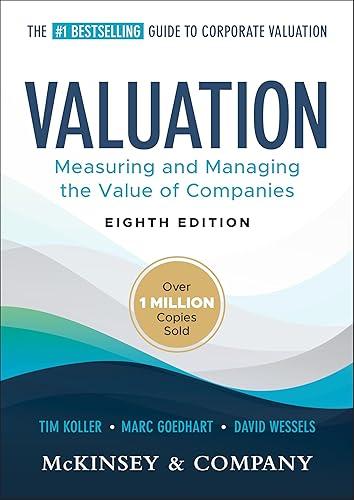
by Inc. McKinsey & Company
Premium summary · Opens in the app · 30 min read
Every year, thousands of executives make decisions that destroy billions of dollars in shareholder value. They do not do this intentionally. They do it because they operate with flawed mental models about what creates value in the first place.
**The Four Cornerstones of Corporate Finance**
By McKinsey & Company Inc.
**Estimated Reading Time:** 48 minutes
**What You'll Learn:**
- Why return on invested capital and growth are the twin engines of value creation - How the conservation of value principle exposes financial illusions - Why the expectations treadmill makes sustained outperformance so difficult - How the best owner principle transforms how you think about acquisitions and divestitures - Why understanding investor types changes how you interpret stock market movements - How long-term stock returns connect to fundamental economic forces
**Who This Book Is For:**
Executives and investors who want to move beyond financial jargon and understand what actually drives corporate value. Whether you lead a business unit, evaluate acquisitions, communicate with shareholders, or simply want to think more clearly about what makes companies worth owning, this book provides the foundational mental models that separate value creators from value destroyers.
Every year, thousands of executives make decisions that destroy billions of dollars in shareholder value. They do not do this intentionally. They do it because they operate with flawed mental models about what creates value in the first place. Consider a familiar scenario. A company announces an acquisition. The deal is justified on the grounds that it will be accretive to earnings per share. The stock price barely moves, or perhaps falls. Executives express confusion. The deal looks good on paper. The accounting works. Why does the market not celebrate? The answer lies in a fundamental misunderstanding of what value actually is. Value is not earnings per share. It is not revenue growth. It is not market share. It is not even profit. Value is the capacity of a business to generate cash flows over time, discounted at the appropriate cost of capital. Everything else is commentary. This insight seems simple. Yet the business world is filled with sophisticated people who forget it. They chase accounting outcomes. They pursue growth for its own sake. They make acquisitions to feel strategic. They repurchase shares to massage earnings per share. And in doing so, they destroy the very value they claim to be building. McKinsey & Company has spent decades advising the world's largest corporations on strategy, operations, and finance. The insights in this book emerge from that work. They are not academic theories. They are practical principles, tested in boardrooms and capital markets, that explain why some companies create extraordinary value while others flounder despite apparent success. The book rests on four cornerstones. The first is the principle that value creation is driven by two factors: return on invested capital and growth. Companies that earn high returns on their capital and find opportunities to reinvest at those high returns create enormous…
Continue reading in the MinuteRead app
Get the complete 30-minute summary of Value
Get the complete summary in the appValue is created only when a company earns returns on invested capital that exceed its cost of capital and grows by inve
Anything that does not increase cash flows does not create value. Financial engineering is an illusion.
For high-return companies, growth is the primary driver of additional value. For low-return companies, improving returns
Stock prices reflect expectations about future performance, not current performance. Strong performance raises the bar.
A business has no single intrinsic value. Its value depends on who owns it.
The best owner of a business is whoever can generate the highest cash flows from it.
"Value" is a strong fit if you want practical ideas around business, economics, management, especially themes like value is created only when a company earns returns on invested capital that exceed its cost of capital and grows by inve; anything that does not increase cash flows does not create value. financial engineering is an illusion. The MinuteRead summary distills these concepts into a focused read, whether you're deciding whether to buy the book or applying its lessons at work.
Motivated to help readers with the faster companies can grow their revenues and deploy more capital at attractive rates of return, Inc. McKinsey & Company wrote “Value” to package those ideas for a fast, focused read. In “Value”, Inc. McKinsey & Company focuses on the faster companies can grow their revenues and deploy more capital at attractive rates of return. Through “Value”, Inc. McKinsey & Company distills the core ideas on business into lessons readers can absorb in a single short sitting.…
Continue Reading
Access the complete 30-minute summary and thousands more nonfiction books in the MinuteRead app.

Continue reading the complete summary in the MinuteRead app.






