 MinuteRead
30 min
Book summary
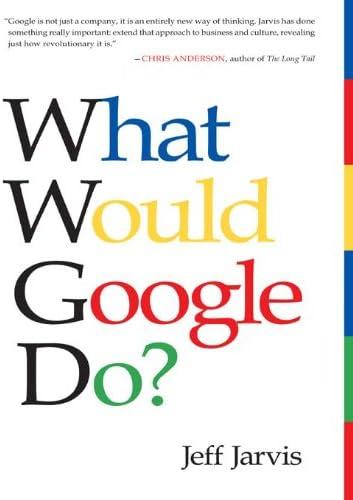
by Jeff Jarvis
Premium summary · Opens in the app · 30 min read
The internet did not simply change how we communicate. It changed how we think about power, trust, value, and organization. Yet most of us still operate with assumptions formed in an era of scarcity, control, and centralized authority. We treat customers as audiences to be managed. We treat information as property to be protected. We treat mistakes as failures to be hidden. And we wonder why the ground keeps shifting beneath us.
**Author:** Jeff Jarvis **Estimated Reading Time:** 45 minutes
**What You'll Learn:**
- Why giving up control is the fastest path to gaining influence - How networks and platforms have replaced products as the center of business - Why transparency beats secrecy in every modern industry - What happens when you think in terms of abundance instead of scarcity - How to apply Google's principles to your career, business, and community
**Who This Book Is For:**
Anyone who senses that the old rules of business, media, and institutions no longer work but isn't sure what should replace them. If you've ever wondered why some companies thrive in chaos while others collapse under the weight of their own rigidity, this book provides the answer.
The internet did not simply change how we communicate. It changed how we think about power, trust, value, and organization. Yet most of us still operate with assumptions formed in an era of scarcity, control, and centralized authority. We treat customers as audiences to be managed. We treat information as property to be protected. We treat mistakes as failures to be hidden. And we wonder why the ground keeps shifting beneath us. Jeff Jarvis wrote *What Would Google Do?* at a moment when the old order was visibly cracking. Newspapers were losing readers and advertisers. Music labels were suing their own customers. Automakers were spending billions on advertising while ignoring what people actually wanted. Governments were treating citizens as subjects rather than participants. In every industry, the instinct was to tighten control, build higher walls, and protect what remained of the old model. Google represented something different. It was not just a search engine or an advertising company. It was a philosophy in action. Google gave away its core product for free. It trusted users to tell it what they wanted through their searches and clicks. It built platforms that allowed others to create value. It made mistakes publicly and fixed them quickly. It treated the internet not as a threat but as the natural environment for a new kind of organization. The question Jarvis poses is deceptively simple: What would Google do if it ran your business, your industry, your school, your government? The answer requires more than adopting new tools. It requires abandoning old instincts. The central problem is that most institutions were built for a world of scarcity. Information was scarce, so newspapers controlled it. Distribution was scarce, so broadcasters controlled it. Shelf space was scarce, so retailers controlled it. Capital was scarce, so large corporations controlled it. The internet destroyed these scarcities. Information became abundant. Distribution became free. Shelf space became infinite. Capital became less relevant than attention and trust. When scarcity disappears, the…
Continue reading in the MinuteRead app
Get the complete 30-minute summary of What Would Google Do?
Get the complete summary in the appGive people control and they will use it well. Don't, and you will lose them.
Transparency builds trust. Trust is the currency of the digital age.
Build platforms, not products. Platforms scale through the creativity of others.
The wisdom of crowds beats the wisdom of experts when the conditions are right.
Embrace abundance. Fighting it is a losing battle.
Free is a business model, not a promotion. It creates scale that enables monetization.
"What Would Google Do?" is a strong fit if you want practical ideas around business, technology, internet, especially themes like give people control and they will use it well. don't, and you will lose them; transparency builds trust. trust is the currency of the digital age. The MinuteRead summary distills these concepts into a focused read, whether you're deciding whether to buy the book or applying its lessons at work.
Motivated to help readers with give the people control and we will use it, Jeff Jarvis wrote “What Would Google Do?” to package those ideas for a fast, focused read. Through “What Would Google Do?”, Jeff Jarvis distills the core ideas on business into lessons readers can absorb in a single short sitting. Readers turn to this work when they want Jeff Jarvis's perspective on the subject without working through the entire original volume. The book is structured so each chapter highlights a practica…
Continue Reading
Access the complete 30-minute summary and thousands more nonfiction books in the MinuteRead app.

Continue reading the complete summary in the MinuteRead app.






