 MinuteRead
30 min
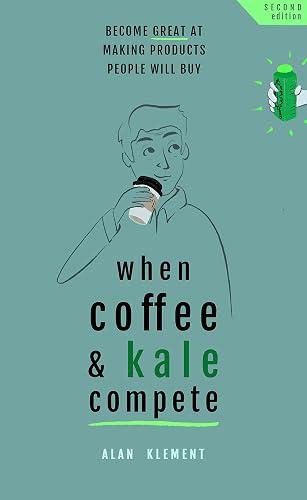
Book summary
by Alan Klement
Premium summary · Opens in the app · 30 min read
Every year, thousands of new products launch with great fanfare. Most of them fail. Not because they are poorly made. Not because they lack features. Not because the teams behind them were lazy or incompetent. They fail because they were built on a fundamental misunderstanding of why customers buy things.
**Author:** Alan Klement
**Estimated Reading Time:** 45 minutes
**What You'll Learn:**
* Why customers don't actually want your product or its features * How to see competition the way customers actually see it * The four emotional forces that drive every purchasing decision * How to describe customer motivation in a way that unlocks innovation * Why the best companies build systems of progress, not just products
**Who This Book Is For:**
This book is for product managers, entrepreneurs, marketers, designers, and anyone who has ever wondered why a perfectly good product failed to gain traction. It is for people who suspect that adding more features is not the answer. It is for innovators who want to understand the deeper reasons customers choose one solution over another, and why those reasons often have little to do with the product itself.
Every year, thousands of new products launch with great fanfare. Most of them fail. Not because they are poorly made. Not because they lack features. Not because the teams behind them were lazy or incompetent. They fail because they were built on a fundamental misunderstanding of why customers buy things. The conventional wisdom says customers want better products. Faster products. Cheaper products. Products with more features. So companies spend billions of dollars asking customers what they want, then building exactly what customers describe. And still, the failures pile up. Alan Klement's book When Coffee and Kale Compete tackles this problem head-on. The title itself is a riddle. How could coffee and kale possibly compete? One is a hot beverage. The other is a leafy green vegetable. They occupy entirely different product categories. They sit in different aisles of the grocery store. They serve different functions. And yet, Klement argues, they do compete. Not because they are similar products, but because customers hire them for the same job. The job in question is something like this: "Help me feel healthy and energized without sacrificing the small pleasures in my day." A customer who wants to feel better might consider drinking coffee for its energy boost. They might consider eating kale for its nutritional value. They might consider both. Or neither. The point is that from the customer's perspective, these two products are alternatives in a way that no traditional market analysis would ever capture. This is the core of Jobs to be Done theory, or JTBD. The theory has been around in various forms for decades, popularized by Clayton Christensen and others. But Klement's contribution is to strip away the jargon and the competing interpretations and present a version of JTBD that is both rigorous and practical. He calls it Jobs-As-Progress. The central claim is deceptively simple: customers don't want your…
Continue reading in the MinuteRead app
Get the complete 30-minute summary of When Coffee and Kale Compete
Get the complete summary in the appCustomers do not want your product. They want help making themselves better.
A Job to be Done is the transformation from a current struggle to a desired life-situation.
Competition is defined by customers based on progress, not by product categories.
Four forces shape demand: push, pull, anxiety, and inertia.
Customers cannot tell you what they want. They can only tell you about their struggles.
Describe jobs using the two-part structure: current struggle plus desired progress.
"When Coffee and Kale Compete" is a strong fit if you want practical ideas around business, design, entrepreneurship, especially themes like customers do not want your product. they want help making themselves better; a job to be done is the transformation from a current struggle to a desired life-situation. The MinuteRead summary distills these concepts into a focused read, whether you're deciding whether to buy the book or applying its lessons at work.
Motivated to help readers with "Customers don't want your product or what it does; they want help making themselves better." Progress over, Alan Klement wrote “When Coffee and Kale Compete” to package those ideas for a fast, focused read. In “When Coffee and Kale Compete”, Alan Klement focuses on "Customers don't want your product or what it does; they want help making themselves better." Progress over. Through “When Coffee and Kale Compete”, Alan Klement distills the core ideas on business into…
Continue Reading
Access the complete 30-minute summary and thousands more nonfiction books in the MinuteRead app.

Continue reading the complete summary in the MinuteRead app.






