 MinuteRead
30 min
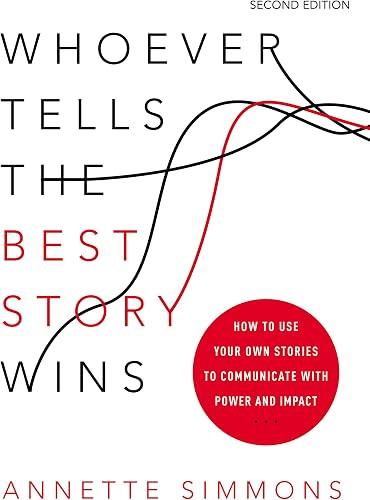
Book summary
by Annette Simmons
Premium summary · Opens in the app · 30 min read
Consider two headlines. The first reads: "Man Stabs Son in Crowded Restaurant." The second reads: "Father Performs Emergency Tracheotomy to Save Choking Son." Both describe the same event. Both are factually accurate. Yet one triggers horror and the other triggers admiration. The difference is not in the facts. The difference is in the story that frames them.
**Author:** Annette Simmons
**Estimated Reading Time:** 42 minutes
**What You'll Learn:**
* Why stories shape human perception more powerfully than facts alone * How to build a personal repertoire of six essential story types * How to find, craft, and refine stories from your own experience * How to use sensory detail to make your stories unforgettable * How to listen for the stories that already shape your audience's world * How to apply storytelling to leadership, relationships, and organizational life
**Who This Book Is For:**
Anyone who has ever struggled to make an idea stick. Anyone who has watched a well-reasoned argument fail while a simple anecdote changed the room. Anyone who leads teams, sells products, teaches students, raises children, or simply wants to be heard and understood. If you have ever felt that your message matters but your delivery falls flat, this book is for you.
Consider two headlines. The first reads: "Man Stabs Son in Crowded Restaurant." The second reads: "Father Performs Emergency Tracheotomy to Save Choking Son." Both describe the same event. Both are factually accurate. Yet one triggers horror and the other triggers admiration. The difference is not in the facts. The difference is in the story that frames them. This is the central problem Annette Simmons addresses in *Whoever Tells the Best Story Wins*. We live in a world drowning in information. Data streams across our screens at unprecedented speed. Facts are available to anyone with a phone. Yet despite this abundance, people feel more disconnected, more misunderstood, and more isolated than ever. The reason is simple: facts do not create meaning. Stories do. Simmons argues that human beings are not primarily rational creatures who occasionally feel emotions. We are emotional creatures who occasionally use reason. Our decisions, our loyalties, our beliefs, and our actions are shaped not by the most accurate data but by the most compelling narrative. We do not see the world as it is. We see the world as we have learned to story it. This insight matters because most of us have been trained to communicate in exactly the wrong way. We have been taught to lead with facts, to support our arguments with evidence, to present logical cases. We have been told that objectivity is the highest virtue and that subjective experience is unreliable. Yet when we try to influence others, persuade a colleague, inspire a team, or comfort a friend, we discover that our carefully constructed arguments fall flat. The other person nods politely and then does what they were going to do anyway. The reason is not that our facts were wrong. The reason is that we never connected. We never made the other person feel…
Continue reading in the MinuteRead app
Get the complete 30-minute summary of Whoever Tells the Best Story Wins
Get the complete summary in the appStories, not facts, are the fundamental unit of human meaning and influence.
Nothing is true more than 50 to 70 percent of the time. Embrace subjectivity.
Build a repertoire of six story types: Who-I-Am, Why-I-Am-Here, Teaching, Vision, Values-in-Action, and I-Know-What-You-
Find stories in four places: times you shined, times you failed, mentors who influenced you, and media that resonated.
Use sensory detail to transform reports into experiences.
Answer three questions before telling a story: Who am I? Why am I here? What is the highest possible outcome?
"Whoever Tells the Best Story Wins" is a strong fit if you want practical ideas around business, leadership, self help, especially themes like stories, not facts, are the fundamental unit of human meaning and influence; nothing is true more than 50 to 70 percent of the time. embrace subjectivity. The MinuteRead summary distills these concepts into a focused read, whether you're deciding whether to buy the book or applying its lessons at work.
Motivated to help readers with stories help people feel acknowledged, Annette Simmons wrote “Whoever Tells the Best Story Wins” to package those ideas for a fast, focused read. In “Whoever Tells the Best Story Wins”, Annette Simmons focuses on stories help people feel acknowledged. Through “Whoever Tells the Best Story Wins”, Annette Simmons distills the core ideas on business into lessons readers can absorb in a single short sitting. Readers turn to this work when they want Annette Simmons's pe…
Continue Reading
Access the complete 30-minute summary and thousands more nonfiction books in the MinuteRead app.

Continue reading the complete summary in the MinuteRead app.






