 MinuteRead
30 min
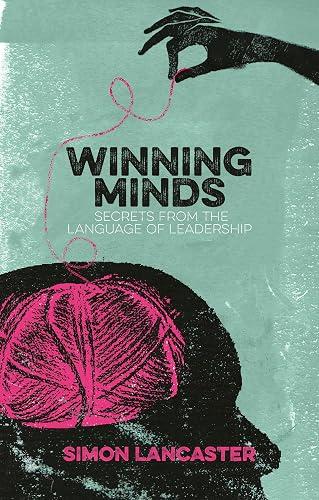
Book summary
by Simon Lancaster
Premium summary · Opens in the app · 30 min read
Every day, in boardrooms and classrooms, on factory floors and campaign trails, people attempt to lead. Most fail. Not because their ideas are bad. Not because their intentions are weak. But because they fundamentally misunderstand how the human mind decides what to believe, whom to trust, and what to follow.
**Author:** Simon Lancaster **Estimated Reading Time:** 45 minutes
**What You'll Learn:** - How the human brain actually processes leadership communication - The secret language patterns that history's greatest leaders have used - Why metaphors shape reality more powerfully than facts - How to craft stories that trigger trust, attention, and motivation - The rhetorical devices that make speeches unforgettable - How to build cultures through shared narratives - Practical techniques you can apply in your next conversation, presentation, or speech
**Who This Book Is For:** Leaders who want to inspire rather than merely instruct. Managers who need to align teams around a vision. Entrepreneurs pitching ideas to investors. Teachers, coaches, parents, and anyone who has ever needed to win another person's mind. If you communicate with other human beings and want your words to actually land, this book is for you.
Every day, in boardrooms and classrooms, on factory floors and campaign trails, people attempt to lead. Most fail. Not because their ideas are bad. Not because their intentions are weak. But because they fundamentally misunderstand how the human mind decides what to believe, whom to trust, and what to follow. Simon Lancaster has spent his career writing speeches for some of the most powerful people in the world. He has watched prime ministers deliver lines he crafted. He has seen CEOs turn struggling companies around with a single address. He has observed, up close, the invisible machinery of influence. And what he discovered is that leadership is not about logic. It is not about data. It is not about having the best argument or the most impressive credentials. Leadership is an emotional contract. This is a radical claim in a world that prizes rationality. We like to believe that we evaluate arguments on their merits, that we weigh evidence carefully, that we are too sophisticated to be swayed by a well-turned phrase or a confident posture. But neuroscience tells a different story. The human brain evolved over millions of years to make snap judgments about safety, status, and belonging. Long before we developed the capacity for abstract reasoning, we developed the capacity to instantly assess whether someone should be trusted, followed, or feared. Those ancient circuits still run the show. They operate beneath conscious awareness, shaping our perceptions and decisions before our logical minds even get a vote. Great leaders have always understood this intuitively. They know that before you can win an argument, you must win the person. Before you can persuade with reason, you must connect with emotion. Before you can inspire action, you must establish trust. Lancaster's insight is that this process is not mysterious. It is not a gift bestowed on a charismatic few. It…
Continue reading in the MinuteRead app
Get the complete 30-minute summary of Winning Minds
Get the complete summary in the appLeadership is an emotional contract: meet emotional needs, gain support.
Win the instinctive mind first, the emotional mind second, the logical mind third.
Metaphors shape reality. Choose them deliberately.
More than 90 percent of your impact is non-verbal.
Stories trigger oxytocin, cortisol, and dopamine. Use the three-part arc: characters, conflict, resolution.
Culture is built from stories. Change the stories to change the culture.
"Winning Minds" is a strong fit if you want practical ideas around business, leadership, language, especially themes like leadership is an emotional contract: meet emotional needs, gain support; win the instinctive mind first, the emotional mind second, the logical mind third. The MinuteRead summary distills these concepts into a focused read, whether you're deciding whether to buy the book or applying its lessons at work.
Motivated to turn hard-won expertise into something readers can use every day, Simon Lancaster wrote “Winning Minds” to distill the ideas behind the work into clear, actionable lessons. Through “Winning Minds”, Simon Lancaster distills the core ideas on business into lessons readers can absorb in a single short sitting. Readers turn to this work when they want Simon Lancaster's perspective on the subject without working through the entire original volume. The book is structured so each chapter h…
Continue Reading
Access the complete 30-minute summary and thousands more nonfiction books in the MinuteRead app.

Continue reading the complete summary in the MinuteRead app.






