 MinuteRead
30 min
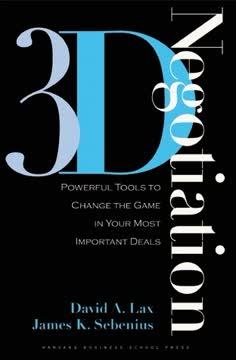
Book summary
by David A. Lax
Premium summary · Opens in the app · 30 min read
Most people think negotiation happens at the table. Two sides sit down, exchange offers, make concessions, and eventually reach a deal or walk away. The entire discipline of negotiation, as practiced for decades, has focused on this face-to-face interaction. Books teach you to anchor high, read body language, listen actively, and know when to walk away. These are useful skills. But they are dangerously incomplete.
**Author:** David A. Lax and James K. Sebenius
**Estimated Reading Time:** 45 minutes
**What You'll Learn:**
- Why most negotiators leave enormous value on the table - How to set up negotiations before you ever sit down at the table - How to design deals that create value instead of just dividing it - How to use tactics effectively once you are face to face - How to think strategically while acting opportunistically
**Who This Book Is For:**
This book is for anyone who negotiates anything. That means you. Whether you are closing a multimillion-dollar acquisition, negotiating a job offer, navigating a business partnership, or working through a complex family decision, the principles in this book apply. It is especially valuable for executives, entrepreneurs, sales professionals, lawyers, consultants, and anyone who finds themselves in high-stakes negotiations where the obvious approach is not working.
Most people think negotiation happens at the table. Two sides sit down, exchange offers, make concessions, and eventually reach a deal or walk away. The entire discipline of negotiation, as practiced for decades, has focused on this face-to-face interaction. Books teach you to anchor high, read body language, listen actively, and know when to walk away. These are useful skills. But they are dangerously incomplete. The problem is that by the time you sit down at the table, most of your negotiating room has already been determined. The parties are set. The issues are defined. The alternatives are known. The stakes are fixed. If you have not shaped these elements before the conversation begins, you are playing a game whose rules were written without you. Consider a negotiation between two companies over a supply contract. The buyer wants lower prices. The seller wants higher margins. They sit down and haggle. Each side makes small concessions. Eventually they land somewhere in the middle. Both sides feel vaguely dissatisfied. This is how most negotiations go. But what if the buyer could have brought in a second supplier to create competition? What if the seller could have restructured the deal to include volume guarantees that lowered its costs? What if the two parties could have redesigned the agreement so that both got more of what they actually wanted? These questions are not answered at the table. They are answered before the table. David Lax and James Sebenius have spent decades studying negotiations that worked and negotiations that failed. They have advised on some of the largest deals in corporate history. They have taught at Harvard Business School. And they have reached a conclusion that challenges the conventional wisdom: the most important negotiation moves happen away from the table. Their framework is called 3-D Negotiation. The three dimensions are setup, deal…
Continue reading in the MinuteRead app
Get the complete 30-minute summary of 3-D Negotiation
Get the complete summary in the app**Work in three dimensions.** Setup, deal design, and tactics are all essential. Most people focus only on tactics.
**Set up before you sit down.** Improve your alternatives, choose the right parties, and set the right agenda before the
**Map the landscape.** Identify all parties, uncover interests, and assess no-deal options.
**Dovetail differences.** Look for differences in priorities, valuations, and preferences. Trade on these differences to
**Move northeast.** Expand the pie instead of just fighting over it.
**Design deals to last.** Build in flexibility, anticipate challenges, and balance commitment with adaptability.
"3-D Negotiation" is a strong fit if you want practical ideas around business, psychology, communication, especially themes like **work in three dimensions.** setup, deal design, and tactics are all essential. most people focus only on tactics; **set up before you sit down.** improve your alternatives, choose the right parties, and set the right agenda before the. The MinuteRead summary distills these concepts into a focused read, whether you're deciding whether to buy the book or applying its lessons at work.
David A. Lax is a renowned expert in the field of negotiation and deal-making. As the co-author of "3-D Negotiation," he brings his extensive experience and knowledge to the book. Lax is known for his innovative approach to negotiation, focusing on a three-dimensional framework that goes beyond traditional tactics. He has a background in academia and consulting, having taught at Harvard Business School and co-founded a negotiation advisory firm. Lax's work emphasizes the importance of strategic …
View all summaries by David A. LaxContinue Reading
Access the complete 30-minute summary and thousands more nonfiction books in the MinuteRead app.

Continue reading the complete summary in the MinuteRead app.






