MinuteRead
30 min
In the late 1800s, a group of Italian immigrants settled in a small town in Pennsylvania called Roseto. They built homes, started families, and created a community that would eventually baffle the medical establishment. Doctors noticed something strange: the people of Roseto were not dying of heart disease. In an era when heart attacks were the leading cause of death for men under sixty-five, Roseto's death rate from heart disease was nearly half the national average. There were no suicides, no
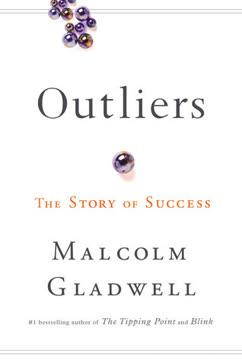
**Author:** Malcolm Gladwell **Estimated Reading Time:** 45 minutes
### What You'll Learn
Why do some people achieve extraordinary success while others with equal talent do not? The answer is not what you have been told. This book dismantles the myth of the self-made individual and reveals the hidden architecture of success: the timing of your birth, the culture you inherit, the opportunities that accumulate, and the legacies that shape how you think and act. You will learn why Canadian hockey players are born in January, why the Beatles succeeded and others did not, why Korean Air planes used to crash, and why Bill Gates and Steve Jobs were both born in 1955. More importantly, you will learn to see success differently, and to recognize the opportunities and legacies shaping your own life.
### Who This Book Is For
This book is for anyone who has ever looked at a wildly successful person and wondered what they have that others lack. It is for parents thinking about how to raise children who can navigate the world. It is for professionals trying to understand why some organizations fail while others thrive. And it is for anyone who suspects the stories we tell about success are incomplete, and wants a fuller, more honest picture of how people rise to the top.
In the late 1800s, a group of Italian immigrants settled in a small town in Pennsylvania called Roseto. They built homes, started families, and created a community that would eventually baffle the medical establishment. Doctors noticed something strange: the people of Roseto were not dying of heart disease. In an era when heart attacks were the leading cause of death for men under sixty-five, Roseto's death rate from heart disease was nearly half the national average. There were no suicides, no alcoholism, no drug addiction, and very little crime. Researchers descended on the town looking for answers. They studied diet and found that 41 percent of calories came from fat. They looked at exercise habits and found nothing unusual. They examined genetics and found no protective factor. The mystery deepened until they stopped studying individuals and started studying the town itself. Roseto was a community where three generations lived under one roof, where twenty-two civic organizations served a population of just two thousand, where people stopped to talk on the street, and where displays of wealth were socially discouraged. The town was egalitarian, close-knit, and socially cohesive. People were not dying of heart disease because they were not dying of loneliness. This discovery contains the central insight of Outliers. When we study success, we almost always study the individual. We ask what successful people are like: their personality, their intelligence, their work…
Continue reading in the MinuteRead app
Get the complete 30-minute summary of Outliers
Get the complete summary in the appSuccess is not purely individual. It depends on opportunity, timing, culture, and accumulated advantage.
The Matthew Effect means small initial advantages compound into large differences over time. Arbitrary cutoffs create la
World-class mastery requires roughly 10,000 hours of deliberate practice, and accumulating those hours requires extraord
Intelligence has a threshold. Beyond an IQ of about 120, additional intelligence does not translate into additional achi
Practical intelligence, the ability to navigate social situations and institutions, is learned from family background an
Meaningful work has three qualities: autonomy, complexity, and a clear connection between effort and reward.
"Outliers" is a strong fit if you want practical ideas around psychology, business, self help—especially themes like success is not purely individual. it depends on opportunity, timing, culture, and accumulated advantage; the matthew effect means small initial advantages compound into large differences over time. arbitrary cutoffs create la. The MinuteRead summary distills these concepts into a focused read, whether you're deciding whether to buy the book or applying its lessons at work.
Malcolm Timothy Gladwell is a Canadian journalist, author, and public speaker known for his thought-provoking books on social sciences. Born in 1963, he has been a staff writer for The New Yorker since 1996 and has published seven books, including bestsellers like "The Tipping Point" and "Blink." Gladwell's work often explores unexpected implications of social science research, making academic concepts accessible to a wide audience. He hosts the podcast Revisionist History and co-founded Pushkin…
View all summaries by Malcolm GladwellContinue Reading
Access the complete 30-minute summary and thousands more nonfiction books in the MinuteRead app.

Continue reading the complete summary in the MinuteRead app.