MinuteRead
5 min
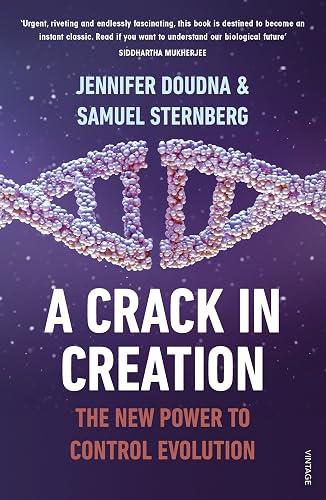
A Crack In Creation will teach you all about the power of gene editing that is made possible with CRISPR by detailing how it works, the benefits and opportunities it opens up, and the ethical risks of using it on humans.
A Crack In Creation will teach you all about the power of gene editing that is made possible with CRISPR by detailing how it works, the benefits and opportunities it opens up, and the ethical risks of using it on humans.
The acronym CRISPR stands for clustered regularly interspaced short palindromic repeats. Sounds complex, right? Think of it more simply as a part of bacterial DNA that lets us cut and modify genes as we please.
To understand how this all works, you need to know about three parts that allow these bacteria to cut through virus DNA to fight it:
CRISPR-associated, or CAS gene, specifically the Cas9 gene CRISPR RNA tracrRNA
Each of these three components has an important role in what bacteria does to modify DNA. The Cas9 gene lets the bacteria cut through virus DNA to disable its effects. It knows where to slice because CRISPR RNA acts as a messenger to tell Cas9 where to go make the snip. Last we have tracrRNA, which turns on the cutting action.
So we know that this happens naturally in our world, all around us, all the time. The next question researchers asked was whether they could use CRISPR to cut specific DNA in a lab. And it turns out this is possible.
When CRISPR makes it’s slice, there’s a space right afterward that the body begins to repair itself. Utilizing that opportunity, scientists can insert whatever DNA sequence they want to, which modifies the traits of the organism. Thus, we can change whatever we desire to be different about our genes. This can upgrade many aspects of our lives as we’re about to see.
Let’s take a look at some of the practical applications of this tool. The ability to modify genes gives us a chance to create crops that produce more, resist sickness, and are healthier. The citrus industry, for example, has a problem with what’s called yellow dragon disease. Utilizing gene editing, we could end the decimation of plantations in Asia that this plague causes. We can also modify our food to be better for us, like taking trans fats out of soybean oil for example. Some pigs in Canada have already been genetically modified to have better digestion. This reduces phosphorus in their waste that causes algal blooms that kill aquatic animals. For humans, we’ve got over 7,000 diseases that result from a single gene mutation each. All of these could be gone with CRISPR. Even HIV, which affects millions around the world, may be preventable with gene editing. It could also find a cure for fatal diseases like muscular dystrophy. This amazing new tool even has a chance at stopping cancer entirely. Because DNA…
Continue reading in the MinuteRead app
Get the complete 5-minute summary of A Crack In Creation
Get the complete summary in the appScientists have found a way to utilize the natural phenomenon of CRISPR that happens in bacteria.
We can use gene editing to grow healthier crops and eliminate some diseases.
Although this new breakthrough sounds all good, we must answer some questions and ethical implications about it.
"A Crack In Creation" is a strong fit if you want practical ideas around future, health, philosophy, especially themes like scientists have found a way to utilize the natural phenomenon of crispr that happens in bacteria; we can use gene editing to grow healthier crops and eliminate some diseases. The MinuteRead summary distills these concepts into a focused read, whether you're deciding whether to buy the book or applying its lessons at work.
Motivated to help readers with crack In Creation will teach you all about the power of gene editing that is made possible with CRISPR by, Samuel Doudna wrote “A Crack In Creation” to package those ideas for a fast, focused read. In “A Crack In Creation”, Samuel Doudna focuses on crack In Creation will teach you all about the power of gene editing that is made possible with CRISPR by. Through “A Crack In Creation”, Samuel Doudna distills the core ideas on future into lessons readers can absorb in…
View all summaries by Samuel DoudnaContinue Reading
Access the complete 5-minute summary and thousands more nonfiction books in the MinuteRead app.

Continue reading the complete summary in the MinuteRead app.