MinuteRead
30 min
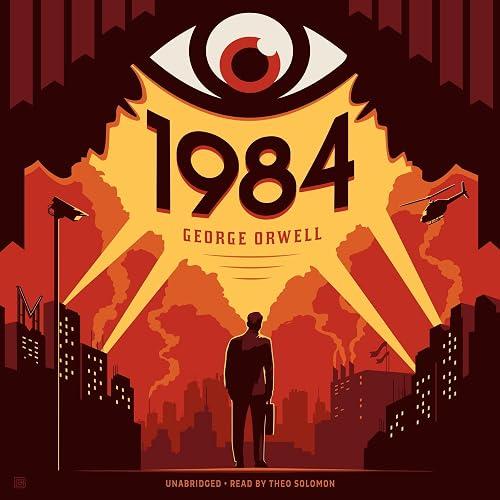
1984 is the story of a man questioning the system that keeps his futuristic but dystopian society afloat, a story which quickly gets dark once he gives in to his natural curiosity and desire to be free.
1984 is the story of a man questioning the system that keeps his futuristic but dystopian society afloat, a story which quickly gets dark once he gives in to his natural curiosity and desire to be free.
The book is structured into three parts, and in the first, we get to know the protagonist Winston Smith. At nearly 40 years old and in bad physical shape, Winston is somewhat of an anti-hero. He works in the Ministry of Truth in London, which is part of Oceania, one of three large superstates, who are constantly at war with one another.
Winston’s job at the record department is to, ironically, falsify historic records. The goal is to erase everything that contradicts or makes “the Party,” the governing political power, look bad. Originals are burned in giant furnaces, and every newspaper article gets rewritten every time the Party decides a new reality is in order.
One of Winston’s colleagues works on the Party’s latest edition of the “Newspeak” dictionary. Newspeak is a language devised specifically to eliminate rebellious thinking at the root. Think about it: If you didn’t have the vocabulary to express an idea, wouldn’t that also make you less likely to think of that idea in the first place?
For example, if the word “freedom” was erased from the English language, would Americans still understand it the way it was meant in the Constitution? In the book, the word “free” still exists, but by means of deleting many other words associated with it, future “Newspeakers” would only be able to use it “in such statements as ‘This dog is free from lice.'” Political or intellectual freedom “no longer existed even as concepts, and were therefore of necessity nameless.”
The form of language shapes how we can express ourselves, and how we can express ourselves shapes how and what we think. Therefore, language may be the single-most important way to either empower or enslave humans. This concept is called linguistic relativity. It’s a little overstated, but in a way, “if you have no means of saying it, you can’t think it.”
“If thought corrupts language, language can also corrupt thought,” Winston notes at one point. Cherish your words, and be mindful of them.
Besides altering language and falsifying history, the Party also controls its citizens via more direct means. For one, everyone could be a spy, and children regularly report their parents to “the Thought Police,” a sort of Gestapo which makes inconvenient people vanish at a moment’s notice. Another theme in the book is using technology to practice mass surveillance. Every home has a “telescreen,” a monitor that’s both recording and broadcasting at all times, and there are cameras and microphones…
Continue reading in the MinuteRead app
Get the complete 5-minute summary of 1984
Get the complete summary in the appLanguage is the defining way in which humans are either empowered or controlled.
Freedom means being able to say what’s true, what you believe, and to make your own decisions.
A totalitarian state wins when it can gaslight its citizens into giving up their individuality.
"1984" is a strong fit if you want practical ideas around culture, classics, dystopia, especially themes like language is the defining way in which humans are either empowered or controlled; freedom means being able to say what’s true, what you believe, and to make your own decisions. The MinuteRead summary distills these concepts into a focused read, whether you're deciding whether to buy the book or applying its lessons at work.
George Orwell is one of England's most famous writers and social commentators. Among his works are the classic political satire Animal Farm and the dystopian nightmare vision Nineteen Eighty-Four. Orwell was also a prolific essayist, and it is for these works that he was perhaps best known during his lifetime. They include Why I Write and Politics and the English Language. His writing is at once insightful, poignant and entertaining, and continues to be read widely all over the world. Eric Arth…
View all summaries by George OrwellContinue Reading
Access the complete 5-minute summary and thousands more nonfiction books in the MinuteRead app.

Continue reading the complete summary in the MinuteRead app.