MinuteRead
30 min
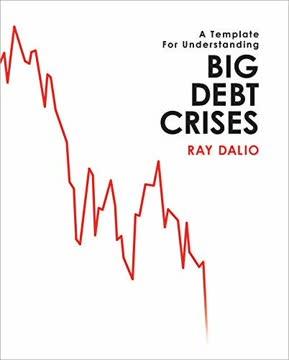
Ray Dalio has spent more than four decades studying how economies work. As the founder of Bridgewater Associates, one of the world's largest hedge funds, he built his career on the belief that economic events follow patterns. These patterns repeat because human nature repeats. People borrow, people lend, people become overconfident, and people panic. The details change, but the underlying mechanics remain remarkably consistent.
**Author:** Ray Dalio
**Estimated Reading Time:** 45 minutes
**What You'll Learn:**
- Why economies move through predictable cycles of boom and bust - How debt builds silently beneath the surface of prosperity - What separates manageable downturns from catastrophic depressions - The four tools policymakers use to fight debt crises - How deflationary and inflationary collapses differ - Why the 1930s and 1920s Germany remain essential case studies - How economic pain can fuel political extremism - What you can do to protect yourself when the next crisis arrives
**Who This Book Is For:**
This book is for anyone who wants to understand the forces that shape economies, markets, and societies. It is for investors who need to see beyond the headlines, for business leaders who must navigate changing conditions, for policymakers who carry the weight of difficult decisions, and for curious readers who sense that economic events are not as random as they appear. If you have ever wondered why financial crises keep happening despite all our advances, this book will give you a framework for understanding them.
Ray Dalio has spent more than four decades studying how economies work. As the founder of Bridgewater Associates, one of the world's largest hedge funds, he built his career on the belief that economic events follow patterns. These patterns repeat because human nature repeats. People borrow, people lend, people become overconfident, and people panic. The details change, but the underlying mechanics remain remarkably consistent. This book emerged from a simple observation. Dalio noticed that most people, including many professional economists and investors, do not understand debt crises. They treat each crisis as a unique event, a black swan that no one could have predicted. But Dalio saw something different. He saw that debt crises are not anomalies. They are a natural part of how economies function. They are predictable, understandable, and even manageable if you know what to look for. The problem is that most people never learn the mechanics of debt. They hear terms like deleveraging, quantitative easing, and deflation without truly grasping what these concepts mean in practice. They watch financial news without understanding why markets are moving. They feel the effects of economic downturns without knowing why they happen or how they might end. This ignorance is not just frustrating. It is dangerous. When people do not understand the forces shaping their lives, they become vulnerable to fear, to bad decisions, and to political manipulation. Dalio wrote this book to solve that problem. He wanted to create a template, a mental model that anyone could use to understand debt crises as they unfold. The book is not a theoretical exercise. It is grounded in detailed case studies of…
Continue reading in the MinuteRead app
Get the complete 30-minute summary of A Template for Understanding Big Debt Crises
Get the complete summary in the appDebt cycles drive economic booms and busts. They are predictable and inevitable.
Each short-term cycle leaves the economy more leveraged than before.
Long-term debt cycles end in severe crises when interest rate cuts stop working.
Central banks are the most powerful institutions in managing debt crises.
Deflationary deleveragings are caused by failing to print money aggressively enough.
Inflationary deleveragings are caused by printing money excessively.
"A Template for Understanding Big Debt Crises" is a strong fit if you want practical ideas around economics, finance, business, especially themes like debt cycles drive economic booms and busts. they are predictable and inevitable; each short-term cycle leaves the economy more leveraged than before. The MinuteRead summary distills these concepts into a focused read, whether you're deciding whether to buy the book or applying its lessons at work.
Raymond Dalio is a prominent American investor, hedge fund manager, and philanthropist. Born in 1949, he is best known as the founder of Bridgewater Associates, one of the world's largest hedge funds. Dalio's investment strategies and economic principles have gained widespread recognition in the financial industry. He is known for his unique management philosophy, which emphasizes radical transparency and idea meritocracy. Dalio has authored several books on economics and personal development, s…
View all summaries by Ray DalioContinue Reading
Access the complete 30-minute summary and thousands more nonfiction books in the MinuteRead app.

Continue reading the complete summary in the MinuteRead app.