 MinuteRead
30 min
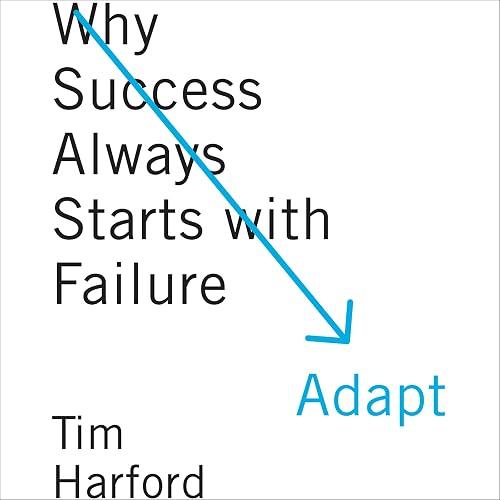
Adapt proposes a surprising approach to accepting failure as a part of the innovation process.
Adapt proposes a surprising approach to accepting failure as a part of the innovation process.
A study conducted by economist Paul Ormerod states that the extinction rate of companies and species are quite similar over a time frame of 500 million years. Who could’ve predicted that?
In another experiment from the book, experts tried to forecast the future of different companies, events, or even states, and they rarely came true.
Therefore, predictions are lucky guesses, and they should not be treated as facts. Most likely, they will fail to come true, and we have to learn how to manage our emotions when it happens. But how do we do that?
Harford suggests that we should consider failure a natural part of any process or plan. And rather than being disappointed, you should just eliminate that variable from then on and try again. Moreover, you should expect to fail many times before you encounter a successful approach to your problem. By following this mentality, whenever failure happens, you won’t take it too bad.
Most of the time, organizations and leaders feel like they have more control over a problem than they actually do. This feeling of false know-how combined with formal authority often empowers them. Therefore, they make utopic decisions under the impression of total control.
The book points towards centralization and its capacity to hinder innovation. Given the example of a top-down organization, the author explains how high-level managers cannot make better decisions than local executives that are accustomed to the place and problem.
Another example is the Gulf War in Iraq. A general on the battlefield suggested that the army won over some employees of Saddam Hussein, but the high-level American authorities ignored them. Faced with this issue, individuals defied orders and formed a successful collaboration between citizens and troops.
These examples teach us that there are certain situations when the innovative instinct surpasses the rational one. To be innovative, you have to think outside the box, even though you may fail. This doesn’t mean that you should defy authorities, but rather experiment with your creativity outside your usual framework.
Innovation relies heavily on creativity and critical thinking. Therefore, we have to find ways to harness the creative process, brainstorming, and reasoning skills. We’ve seen how organizations often fail to do so due to high levels of centralization and bureaucracy. Now, let’s see how to achieve the opposite! Hartford suggests that if you want to enhance innovation, there are two ways to do this. The first one is patenting. By giving monopoly over an idea to the one that came up with it, you encourage that person and the people around them to be more innovative. Why? Because through…
Continue reading in the MinuteRead app
Get the complete 5-minute summary of Adapt
Get the complete summary in the appExpectation beats disappointment when forecasts go wrong.
Bureaucracy and authority hold back innovation processes.
Gifting prizes or awards can boost innovation and critical thinking.
"Adapt" is a strong fit if you want practical ideas around business, creativity, economics, especially themes like expectation beats disappointment when forecasts go wrong; bureaucracy and authority hold back innovation processes. The MinuteRead summary distills these concepts into a focused read, whether you're deciding whether to buy the book or applying its lessons at work.
Motivated to help readers with adapt proposes a surprising approach to accepting failure as a part of the innovation process, Tim Harford wrote “Adapt” to package those ideas for a fast, focused read. In “Adapt”, Tim Harford focuses on adapt proposes a surprising approach to accepting failure as a part of the innovation process. Through “Adapt”, Tim Harford distills the core ideas on business into lessons readers can absorb in a single short sitting. Readers turn to this work when they want Tim …
View all summaries by Tim HarfordContinue Reading
Access the complete 5-minute summary and thousands more nonfiction books in the MinuteRead app.

Continue reading the complete summary in the MinuteRead app.






