MinuteRead
30 min
Book summary
Premium summary · Opens in the app · 30 min read
There is a particular kind of loneliness that does not come from being physically alone. It comes from being surrounded by people who cannot truly see you. It comes from growing up in a home where your feelings were treated as inconvenient, your needs as excessive, and your inner world as irrelevant. This is emotional loneliness, and it is one of the most painful and least recognized forms of human suffering.
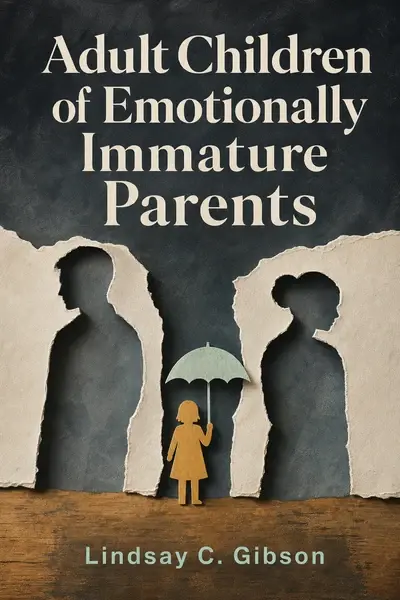
**Author:** Lindsay C. Gibson, PsyD
**Estimated Reading Time:** 45 minutes
**What You'll Learn:** How to recognize the lasting impact of growing up with emotionally immature parents, understand the patterns that shaped your emotional life, and reclaim your authentic self through practical strategies for healing.
**Who This Book Is For:** Anyone who grew up feeling unseen, unheard, or emotionally alone in their family. If you have struggled with self-doubt, people-pleasing, difficulty setting boundaries, or a nagging sense that something was missing in your childhood, this book will help you understand why and show you a path forward.
There is a particular kind of loneliness that does not come from being physically alone. It comes from being surrounded by people who cannot truly see you. It comes from growing up in a home where your feelings were treated as inconvenient, your needs as excessive, and your inner world as irrelevant. This is emotional loneliness, and it is one of the most painful and least recognized forms of human suffering. Lindsay C. Gibson has spent decades as a clinical psychologist working with adults who carry this invisible wound. They come to therapy with a confusing mix of symptoms. Some are highly capable and successful yet feel hollow inside. Others struggle with anxiety, depression, or relationships that never seem to work. Many cannot articulate what is wrong. They just know something is missing. They often say things like, "I had a fine childhood. My parents provided for me. I don't know why I feel this way." What Gibson discovered through years of clinical work is that these individuals share a common history. They grew up with parents who were physically present but emotionally absent. Their parents may have been loving in their own limited way. They may have provided food, shelter, education, and even material abundance. But they could not provide the one thing children need most: emotional connection. Emotionally immature parents are not necessarily bad people. Many are doing the best they can with the limited emotional tools they possess. But their limitations have profound consequences for their children. A child who grows up without emotional intimacy learns to doubt their own feelings. They learn that their needs are too much. They learn to hide parts of themselves to maintain whatever connection is available. They develop coping strategies that help them survive childhood but sabotage their adult lives. This book exists because millions of adults are walking around with the invisible wounds of emotional neglect, not understanding why they feel the way they do. They blame themselves. They think something is wrong with them. They wonder why they cannot simply get over their childhood and move on. The truth is that their struggles…
Continue reading in the MinuteRead app
Get the complete 30-minute summary of Adult Children of Emotionally Immature Parents
Get the complete summary in the appEmotional loneliness comes from emotional neglect, not physical absence.
Emotionally immature parents fear genuine emotion and cannot provide the connection children need.
There are four types of emotionally immature parents: emotional, driven, passive, and rejecting.
Children develop coping styles: internalizers blame themselves, externalizers blame others.
The healing fantasy keeps you striving for love your parents cannot give.
The role self is the mask you wear to fit into your family system.
"Adult Children of Emotionally Immature Parents" is a strong fit if you want practical ideas around psychology, self help, mental health, especially themes like emotional loneliness comes from emotional neglect, not physical absence; emotionally immature parents fear genuine emotion and cannot provide the connection children need. The MinuteRead summary distills these concepts into a focused read, whether you're deciding whether to buy the book or applying its lessons at work.
Lindsay C. Gibson, PsyD is a clinical psychologist specializing in psychotherapy for adult children of emotionally immature parents. She maintains a private practice in Virginia Beach, Virginia, and has authored multiple books on the subject. Gibson has experience as an adjunct assistant professor of graduate psychology at the College of William and Mary and Old Dominion University. She contributes a monthly column on well-being for Tidewater Women magazine. Her work focuses on helping individua…
View all summaries by Lindsay C. GibsonContinue Reading
Access the complete 30-minute summary and thousands more nonfiction books in the MinuteRead app.

Continue reading the complete summary in the MinuteRead app.