MinuteRead
30 min
Book summary
Premium summary · Opens in the app · 30 min read
Imagine walking into a store and feeling an immediate sense of calm. The lighting is warm but not dim. The air carries a subtle scent you cannot quite identify but find yourself wanting to inhale more deeply. The products are arranged with generous space between them, each one inviting your attention. The music playing softly in the background seems chosen for this exact moment. You pick up an item and the weight of it in your hand feels substantial, considered, right. You buy it without checkin
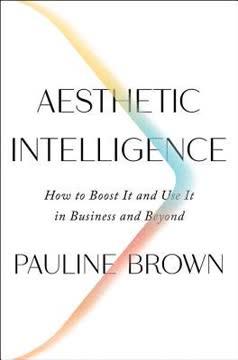
**Author:** Pauline Brown
**Estimated Reading Time:** 48 minutes
**What You'll Learn:**
- Why aesthetics has become a critical competitive advantage in modern business - How to develop your own aesthetic intelligence, regardless of your background - The four pillars of aesthetic strategy: attunement, interpretation, articulation, and curation - How sensory engagement creates lasting emotional connections with customers - Why curation matters more than ever in an age of abundance - How to apply aesthetic principles to products, brands, and customer experiences
**Who This Book Is For:**
This book is for business leaders, entrepreneurs, marketers, product designers, and anyone who suspects that spreadsheets and strategy frameworks alone cannot explain why some products inspire devotion while others merely satisfy a need. If you have ever wondered why a plain white t-shirt can command a thousand dollars, why a coffee shop can charge five times the market rate for a latte, or why some brands survive decades while others vanish despite superior functionality, this book will give you the lens to see what you have been missing.
Imagine walking into a store and feeling an immediate sense of calm. The lighting is warm but not dim. The air carries a subtle scent you cannot quite identify but find yourself wanting to inhale more deeply. The products are arranged with generous space between them, each one inviting your attention. The music playing softly in the background seems chosen for this exact moment. You pick up an item and the weight of it in your hand feels substantial, considered, right. You buy it without checking the price. Now imagine walking into another store. The fluorescent lights hum overhead. Products crowd every surface. Signs shout about discounts. The air smells faintly of cleaning fluid. You find what you came for, pay, and leave as quickly as possible. The products are functionally identical to those in the first store. But the experience could not be more different. The difference is aesthetics. And aesthetics, Pauline Brown argues, is not a luxury. It is the defining competitive advantage of our time. Brown spent decades at the highest levels of the luxury industry, including serving as Chairman of LVMH North America, the world's largest luxury goods conglomerate. She watched companies like Louis Vuitton, Dior, and Dom Pérignon command extraordinary prices and inspire extraordinary loyalty. But she also noticed something that surprised her: the principles that made luxury brands successful were not limited to luxury. They were being applied, often unconsciously, by the most successful companies in every sector. Apple. Starbucks. Trader Joe's. Airbnb. These companies were not winning because their products were functionally superior. They were winning because they understood something most business leaders had forgotten how to see. The…
Continue reading in the MinuteRead app
Get the complete 30-minute summary of Aesthetic Intelligence
Get the complete summary in the appAesthetic intelligence is a learnable skill, not an innate gift. Anyone can develop it through deliberate practice.
Aesthetics creates economic value through differentiation, perceived quality, emotional connection, and meaning.
The four pillars of aesthetic intelligence are attunement, interpretation, articulation, and curation.
Attunement means waking up your senses and noticing the aesthetic details that others miss.
Interpretation means understanding why aesthetic choices evoke specific responses and using that understanding to make d
Articulation means communicating aesthetic vision clearly so that others can execute it consistently.
"Aesthetic Intelligence" is a strong fit if you want practical ideas around business, design, psychology, especially themes like aesthetic intelligence is a learnable skill, not an innate gift. anyone can develop it through deliberate practice; aesthetics creates economic value through differentiation, perceived quality, emotional connection, and meaning. The MinuteRead summary distills these concepts into a focused read, whether you're deciding whether to buy the book or applying its lessons at work.
Pauline Brown is a former Chairman of LVMH North America and an expert in the luxury goods industry. She has extensive experience in brand management and aesthetic-driven businesses. Brown has taught at Harvard Business School and is a frequent speaker on the topic of aesthetic intelligence. Her background in high-end products is evident in her writing, which draws heavily from her personal experiences in the industry. Brown's approach emphasizes the importance of multisensory experiences and em…
View all summaries by Pauline BrownContinue Reading
Access the complete 30-minute summary and thousands more nonfiction books in the MinuteRead app.

Continue reading the complete summary in the MinuteRead app.